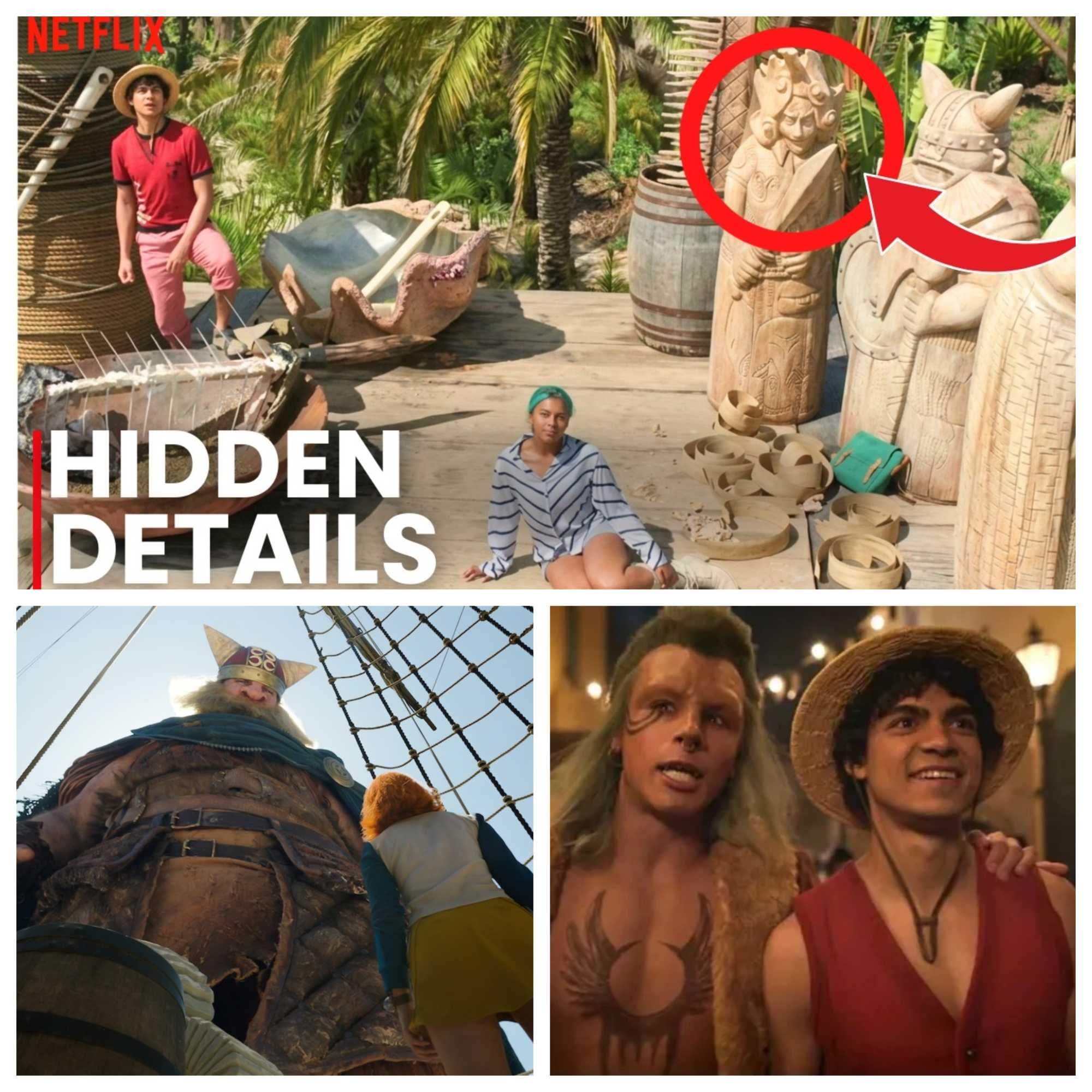
Netflix’s live-action adaptation of One Piece continues to impress with its faithful yet creative take on Eiichiro Oda’s legendary manga. Season 2, centered on the Alabasta Saga, not only delivers high-seas adventure and emotional depth but also plants subtle seeds for stories far beyond the current timeline. These Easter eggs, background nods, and dialogue hints demonstrate meticulous planning, rewarding attentive viewers and manga readers alike while building anticipation for future seasons.
One standout detail appears in Episode 6 during a gathering of kingdom rulers. Wapol, the former king of Drum Kingdom, casually mentions the assassination of the Fishman Kingdom’s queen, a tragedy that even a powerful Warlord couldn’t prevent. This references Queen Otohime of Fish-Man Island, a pacifist leader who advocated for harmony between humans and fish-men. Her murder, tied to broader racial tensions, sets the stage for the Fishman Island arc—likely several seasons away. The mention also subtly introduces Jinbe, the noble fish-man warrior destined to join the Straw Hat Pirates as their helmsman, highlighting themes of prejudice and redemption that will dominate later storylines.
In Episode 5, a newspaper held by Mr. 5 during discussions of Alabasta’s rebellion features a small headline about Water 7. This waterlogged city, famous for its shipwrights and canal architecture, becomes central in the Water 7 and Enies Lobby arcs. Those sagas involve shocking revelations about Nico Robin’s tragic past with the World Government, the pursuit of the ancient weapon Pluton, and the recruitment of Franky as the crew’s shipwright and cyborg powerhouse. The early nod ensures viewers sense the larger world expanding, with the Straw Hats’ journey heading toward inevitable clashes with global powers.
Usopp’s tall tale in Episode 4 provides another clever foreshadow. While boasting to the giant Brogy, Usopp claims to have battled a giant mole monster using a 5-ton hammer. This directly mirrors his upcoming fight in the Alabasta arc against Miss Merry Christmas, a Baroque Works agent who ate the Mole Mole Fruit and transforms into a burrowing creature. Usopp’s victory with a massive hammer weapon becomes one of his most memorable underdog moments, showcasing his resourcefulness and growth from coward to brave sniper.
Luffy’s interactions in Episode 2 carry profound symbolic weight. When waking from being swallowed by Laboon the whale, Luffy mutters “Dad” in a dazed state. This fleeting word alludes to his childhood raised by the mountain bandit Curly Dadan alongside sworn brothers Ace and Sabo. Their bonds, forged in hardship and later shattered by tragedy, form the emotional backbone of Luffy’s drive for freedom. Future seasons will delve deeply into this backstory, exploring loss, brotherhood, and the Will of D.
Also in Episode 2, Luffy strikes a distinctive pose while promising to return to Laboon. The stance echoes the legendary Sun God Nika, whose joyful, liberating figure ties directly to the true nature of Luffy’s Gum-Gum Fruit—revealed as the mythical Human-Human Fruit, Model: Nika. A Nika-like statue in the season reinforces this ancient legend’s existence in the world, hinting at Luffy’s eventual Gear Fifth awakening and transformation into a symbol of ultimate freedom.
Smaller but charming details include the newspaper headline about a pet shop reopening in East Blue, referring to Chouchou’s shop in Orange Town—destroyed during Buggy’s attack in Season 1. This suggests community recovery after chaos, a recurring theme. Pandaman, Oda’s signature Easter egg mascot, appears multiple times: as festival toys in Loguetown, on newspapers, and even embroidered on Sanji’s apron, maintaining the playful tradition across adaptations.
A conversation between Garp and the executed Pirate King Gol D. Roger stands out for its historical depth. Roger dubs Garp the “Hero of God Valley,” referencing a secret incident 38 years prior where the Marine hero and pirate teamed against the Rocks Pirates led by Rocks D. Xebec. This battle involved powerful figures, possibly Celestial Dragons, and its cover-up by the World Government underscores corruption themes. God Valley’s legacy will likely resurface in major flashbacks, connecting to Blackbeard, Shanks, and the series’ endgame.
These hidden layers prove the adaptation’s commitment to long-term storytelling. By embedding manga-accurate foreshadowing, Season 2 bridges immediate adventure with epic scope, keeping both newcomers and veterans engaged. As the Straw Hats sail toward greater dangers, these details remind us that every moment builds toward One Piece’s grand conclusion.
With strong performances, stunning visuals, and clever scripting, the live-action series honors its source while carving its path. Fans can expect these seeds to bloom spectacularly in coming seasons, turning subtle hints into unforgettable payoffs.
News
Outlander Season 8 Episode 4 Sneak Peek: Claire’s Resurrection Power Changes Everything as War Looms.
Outlander Season 8 continues to deliver the high-stakes drama, time-travel romance, and historical intensity that has defined the series since its beginning. With Episode 3 still fresh in fans’ minds,…
Sullivan’s Crossing Season 4 Trailer Breakdown: Maggie’s Secret Marriage to Liam Threatens Everything With Cal.
Sullivan’s Crossing returns for its highly anticipated fourth season with a trailer for Episode 1 titled “Curveballs” that wastes no time diving straight into emotional turmoil. The series, based on…
Beauty in Black Season 3 Trailer Breakdown: Kimmie & Mallorie’s Power Takeover Sets Up the Most Explosive Finale Yet.
Beauty in Black, Tyler Perry’s gripping Netflix crime drama, has rapidly evolved into one of the platform’s most talked-about series, delivering high-octane family betrayals, corporate intrigue, and fierce female empowerment….
Beauty in Black Season 3: Tyler Perry’s Explosive Final Season Predictions – Betrayal, Revenge, and a Shocking Power Shift.
Beauty in Black has quickly become one of Netflix’s most addictive Tyler Perry dramas, blending high-stakes family intrigue, crime, revenge, and unexpected alliances into a gripping saga. Season 2 delivered…
Old Money Season 2: Nihal’s Heartbreaking Departure Sets Up the Ultimate Revenge and Redemption Story.
Netflix’s Turkish drama Old Money burst onto the scene as a gripping tale of wealth, ambition, betrayal, and fractured family ties. Season 1 captivated audiences with its sleek portrayal of…
Bridgerton Season 5: Francesca’s Tragic Love Story Explained – Why It Could Be the Most Emotional Season Yet.
Bridgerton has captivated audiences with its blend of scandal, passion, and Regency-era romance, but no sibling’s journey has quite the emotional weight as the one awaiting Francesca Bridgerton in Season…
End of content
No more pages to load