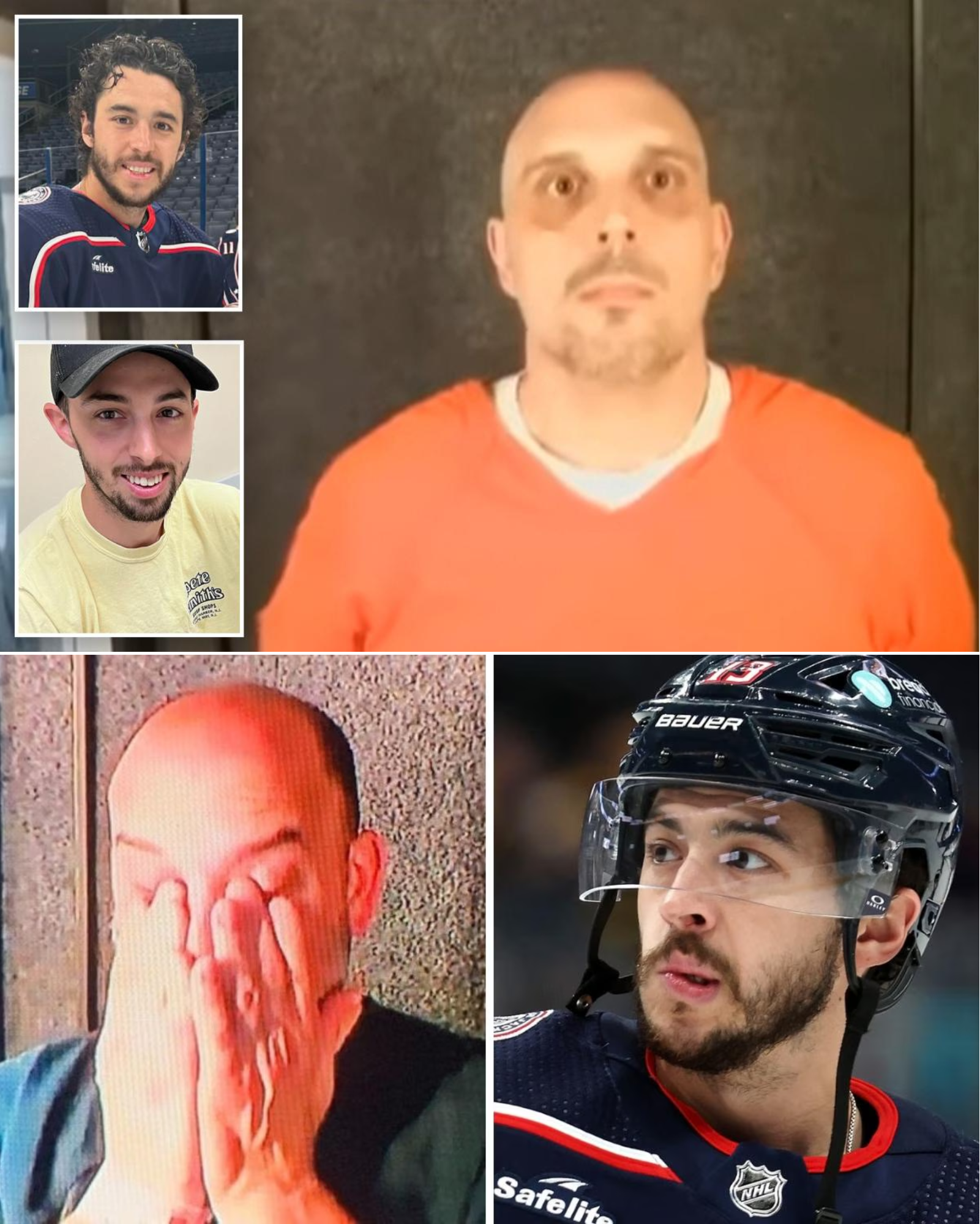
The August 29, 2024, bicycle crash that claimed the lives of NHL standout Johnny Gaudreau and his brother Matthew has entered a volatile new phase following revelations about conflicting blood alcohol concentration results. Sean Higgins, the driver accused of striking the brothers from behind on a dark rural road in Oldmans Township, New Jersey, now stands at the center of a scientific and legal dispute that could fundamentally alter the trajectory of the case.
Johnny Gaudreau, at 31, was at the peak of a celebrated career with the Columbus Blue Jackets—known for his electrifying playmaking, relentless work ethic, and infectious positivity that made him a favorite among teammates and fans. Matthew, 29, shared his brother’s passion for the sport and was preparing to start a family. The brothers were riding together the night before their sister’s wedding when Higgins’ vehicle allegedly veered into their path, killing them instantly. The tragedy sent shockwaves through the hockey community, prompting tributes from across the league and a moment of silence at multiple arenas during the following season.
Higgins faced swift and severe charges: two counts of first-degree aggravated manslaughter, two counts of second-degree vehicular homicide by reckless driving, tampering with evidence, and leaving the scene of a fatal accident. Prosecutors built their case around evidence of impairment, citing an initial BAC of 0.087 from blood drawn at the crash site—above New Jersey’s legal limit of 0.08. Additional factors included Higgins’ reported failure of field sobriety tests, his admission to drinking while driving, and the claim that he briefly left the scene before returning.
On February 24, 2026, during a virtual appearance in Salem County Superior Court, defense attorney Richard F. Klineburger III introduced a pivotal challenge. A second toxicology analysis, conducted by an independent expert, re-evaluated the original blood sample. The critical distinction lay in methodology: the state’s initial test measured plasma alcohol concentration, which typically produces higher readings than whole blood due to alcohol’s distribution in blood components. When properly converted to whole-blood equivalent—a standard required under New Jersey law for legal impairment—the expert calculated Higgins’ BAC at 0.075, below the 0.08 threshold.
This adjustment, if accepted, strikes at the heart of the prosecution’s intoxication narrative. Klineburger argued that the grand jury, presented with the higher 0.087 figure, may have been misled into returning the indictment on the most serious charges. He filed a motion to dismiss the entire indictment, asserting prosecutorial error in evidence presentation and requesting the court suppress the original BAC result or declare it unreliable. The defense also submitted a revised plea offer to the state, though terms remain confidential.
Assistant Prosecutor Michael Mestern requested time to review the new report and confer with the state’s toxicology consultant. He indicated that any decision on re-indictment, charge reduction, or continued pursuit would follow careful evaluation of the scientific claims. Judge Michael J. Silvanio scheduled the next hearing for April 14, 2026, to allow both sides to address the dispute fully.
The BAC controversy revives earlier defense efforts that had met resistance. In January 2026, the court denied a motion to suppress Higgins’ on-scene statements, ruling them voluntary and admissible. Previous attempts to challenge other evidence were also rejected. Yet the toxicology issue carries unique weight because it directly undermines a cornerstone of the aggravated manslaughter counts, which hinge on proving reckless conduct under the influence.
Legal observers note that even a sub-0.08 BAC does not automatically exonerate Higgins. New Jersey law allows vehicular homicide convictions based on reckless behavior alone—factors like speed, inattention, failure to maintain lane, or leaving the scene can suffice without legal intoxication. Prosecutors could pivot to emphasize these elements, arguing impairment was still present and contributed to the outcome. The defense counters that removing the intoxication pillar weakens the case from first-degree aggravated manslaughter (potentially 10–30 years per count) toward lesser offenses carrying significantly reduced penalties.
The Gaudreau family’s response has remained composed and focused on healing rather than public commentary. Meredith Gaudreau, Johnny’s wife, has used social media to share memories of her husband and brother-in-law, emphasizing family unity and the joy the brothers brought to those around them. Johnny left behind a wife and two young children; Matthew was engaged to be married. The family’s quiet dignity contrasts with the intense scrutiny surrounding the case.
The hockey world continues to feel the loss deeply. On February 22, 2026, the U.S. men’s national team carried Johnny’s jersey onto the ice after securing Olympic gold in Milan-Cortina, a gesture that moved fans worldwide. Former teammates, coaches, and rivals have spoken of the brothers’ character and the enduring pain of their absence. Many express hope that whatever legal outcome emerges will honor the victims through truth and fairness.
This development also raises broader concerns about forensic consistency in vehicular fatality prosecutions. Plasma versus whole-blood testing discrepancies are documented in toxicology literature, yet errors in initial reporting can have cascading effects on charging decisions and public perception. If the defense motion succeeds, prosecutors may need to seek a new grand jury indictment with corrected evidence, prolonging an already emotionally charged process.
Higgins remains out on bail pending further proceedings. The April hearing will likely determine whether the case proceeds on original terms, faces downgraded charges, or undergoes significant restructuring. For the Gaudreau family and the wider community still mourning, the pursuit of justice now navigates uncharted scientific terrain.
In the end, technical debates over decimals cannot erase the human cost: two brothers lost forever, families forever altered, and a sport left to remember what was taken too soon. Whatever the courts decide, the tragedy’s shadow will linger long after the legal dust settles.