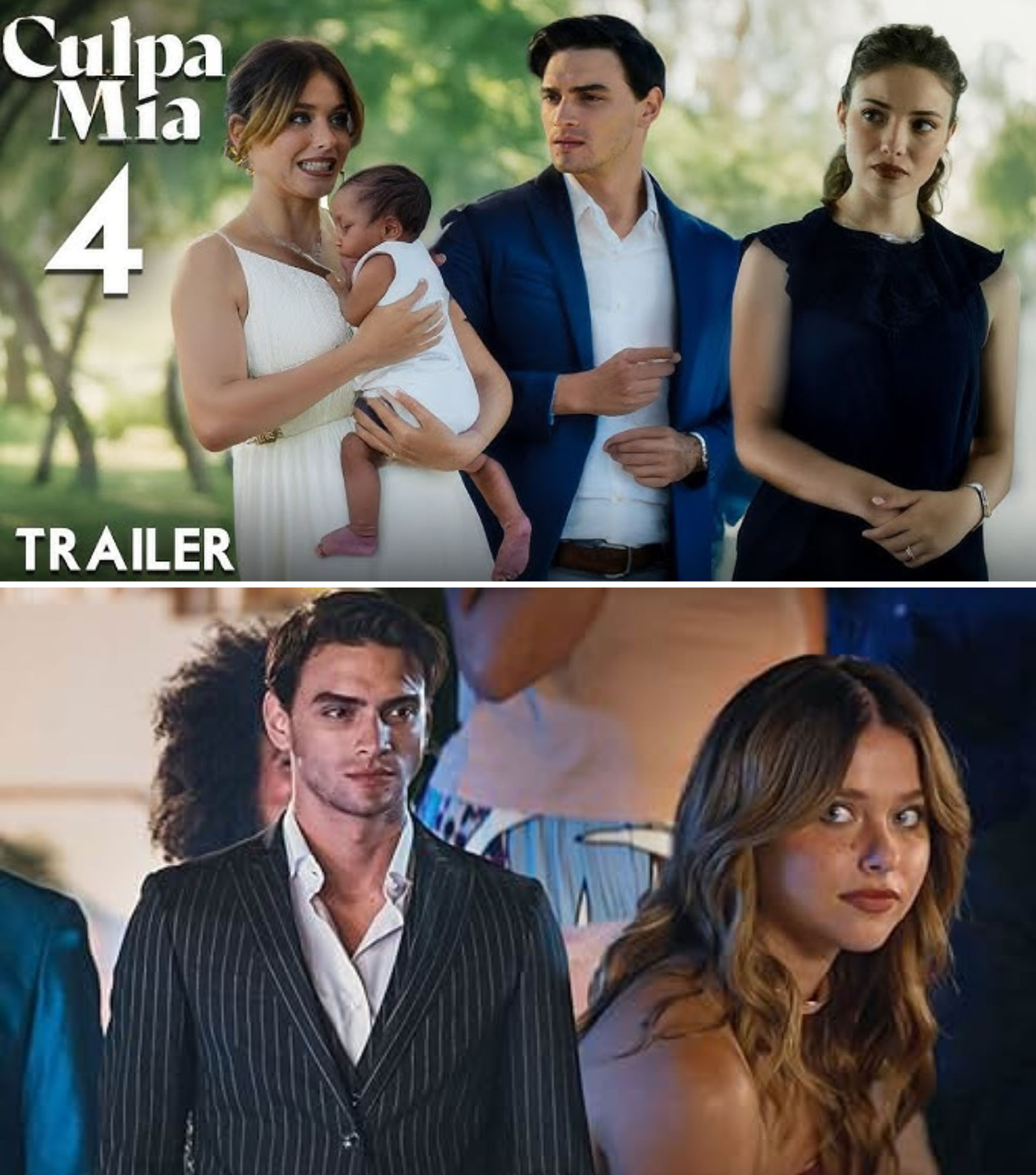
Noah and Nick’s journey reaches a poignant climax in the Culpables trilogy’s final chapter, Culpa Nuestra (Our Fault), where the once-forbidden step-siblings finally choose each other despite years of pain, separation, and external pressures. After reuniting at Jenna and Lion’s wedding, the couple confronts lingering resentments, ego clashes, and the weight of their shared history. In a powerful resolution, they decide to leave the chaos behind—packing up and driving away together in Nick’s signature car, symbolizing a commitment to start over away from family interference and past mistakes. The scene radiates joy: Noah’s smile returns, Nick’s guarded heart opens fully, and the open road ahead promises freedom. Yet, as the credits roll, a subtle undercurrent lingers—hints of unfinished business, unresolved family ties, and the couple’s unbreakable passion that refuses to fade quietly.
This ending strikes a perfect balance between closure and possibility. The trilogy, adapted from Mercedes Ron’s bestselling novels, has followed Noah (Nicole Wallace) and Nick (Gabriel Guevara) from explosive attraction in Culpa Mía (My Fault) through turbulent challenges in Culpa Tuya (Your Fault) to mature reconciliation in Culpa Nuestra. Their relationship began as taboo—step-siblings drawn together amid family upheaval—but evolved into a genuine bond tested by jealousy, misunderstandings, new partners, and personal growth. By Culpa Nuestra’s conclusion, four years after their breakup, both have changed: Noah pursues independence and career ambitions, while Nick shoulders greater responsibilities. The wedding reunion forces them to face what never truly died—their intense connection.
The drive-away scene encapsulates this growth. Nick begs Noah to stay when he learns of her pregnancy, but she initially flees, overwhelmed by fear and pride. He chases her down, leading to an emotional confrontation where they acknowledge past hurts: his possessiveness, her guarded heart, the betrayals that tore them apart. In the end, they choose forgiveness and each other. The car symbolizes their shared passion for racing and risk-taking, now redirected toward building a life together. As they speed off, the camera lingers on the horizon, evoking hope but also uncertainty—will family drama follow? Can they truly escape the past?
Fans immediately latched onto this ambiguity. The ending feels joyful—Noah and Nick together, a baby on the way, barriers finally crumbling—but the open-ended tone leaves room for more. Noah’s pregnancy adds new stakes: parenthood amid their volatile history. Nick’s family empire and lingering tensions with relatives suggest complications ahead. Wallace and Guevara have teased in interviews that the characters’ chemistry remains electric, hinting the actors themselves sense unfinished business. Ron, the author, has not ruled out expansions, noting the characters’ world feels alive beyond the books.
This has fueled massive demand for a fourth film. Social media overflows with petitions, fan edits, and hashtags like #CulpaMia4 and #NoahAndNickForever. Viewers argue the trilogy wrapped the core romance but left threads dangling: How do they navigate pregnancy? Will Nick’s father accept the relationship? What about lingering rivals or external threats? Prime Video’s success with the series—making Culpa Tuya its biggest international original launch—makes a sequel commercially viable. The London remake (My Fault: London) expands the universe, proving the story resonates globally.
Critics praise the ending for maturity. Unlike earlier films’ dramatic highs, Culpa Nuestra emphasizes emotional growth. Noah and Nick communicate, compromise, and choose love consciously. The drive-away avoids a rushed wedding or fairy-tale fix; instead, it promises ongoing effort. Yet fans crave more—seeing them as parents, facing real-world challenges, or simply more racing-fueled passion. Wallace has said she’d love exploring Noah as a mother teaching her child to race, while Guevara envisions Nick evolving into a responsible yet adventurous partner.
The trilogy’s impact extends beyond romance. It tackles trauma, family dynamics, and toxic patterns, with Noah and Nick breaking cycles through self-awareness. Their choice to leave reflects healing—prioritizing their bond over toxic environments. The open road symbolizes endless potential, mirroring how fans see the story: not confined to three films but ready for new chapters.
As petitions grow and social buzz intensifies, Prime Video faces pressure. No official fourth film announcement exists, but the massive viewership and emotional investment suggest opportunity. If renewed, Culpa Mía 4 could explore post-reunion life: parenthood struggles, career ambitions, or new threats testing their commitment. For now, the ending stands as bittersweet triumph—joyful yet incomplete, mirroring real relationships.
Noah and Nick’s drive into the sunset captivates because it feels earned yet unfinished. Fans beg for more not from dissatisfaction but love: they want to witness the couple thrive beyond survival. In a genre often criticized for toxicity, their story ends on hope, growth, and mutual choice. Whether Prime Video delivers a fourth chapter or not, the characters’ enduring appeal proves some loves, like Noah and Nick’s, refuse to fade quietly.
News
“It’s All Because She Changed Her Will”: Savannah Guthrie’s Emotional Confession Shakes Up the Nancy Guthrie Disappearance Case.
The disappearance of Nancy Guthrie has gripped the public since January 31, 2026, when the 68-year-old retired public affairs worker from the University of Arizona vanished from her home in…
Ordinary Dad Turns Hero: One Father’s Instinct Saved Lives After Deadly Tennessee School Bus Crash.
On a Friday afternoon that started with excitement and laughter, a routine field trip for Kenwood Middle School students in Clarksville, Tennessee, turned into a scene of devastation that no…
Two Empty Seats at Kenwood Middle School as Students Return After Fatal Bus Crash – Sisters Hold Solidarity Sign.
Two empty seats will greet students and staff at Kenwood Middle School in Clarksville, Tennessee, when classes resume on Monday morning following the devastating school bus crash on Friday, March…
Kenwood Bus Dashcam Footage Raises Unanswered Question: Why the Slow Drift Across Highway 70 With No Braking?
A quiet morning field trip turned into tragedy on March 27, 2026, when a Montgomery County Schools bus from Kenwood Middle School in Clarksville, Tennessee, collided head-on with a Tennessee…
Possible Shoe Print in Blood? 3 Shocking Expert Theories on Nancy Guthrie Porch Evidence – Day 62 Update.
The disappearance of 84-year-old Nancy Guthrie has gripped the nation for 62 days, with her daughter, NBC News anchor Savannah Guthrie, publicly pleading for answers while the investigation continues to…
Outlander Season 8 Episode 4 Sneak Peek: Claire’s Resurrection Power Changes Everything as War Looms.
Outlander Season 8 continues to deliver the high-stakes drama, time-travel romance, and historical intensity that has defined the series since its beginning. With Episode 3 still fresh in fans’ minds,…
End of content
No more pages to load