Neighbor’s Chilling Observation: Vanessa Murana Reveals Signs Something Was Wrong with Genesis Reid’s Mother Long Before the Disappearance.
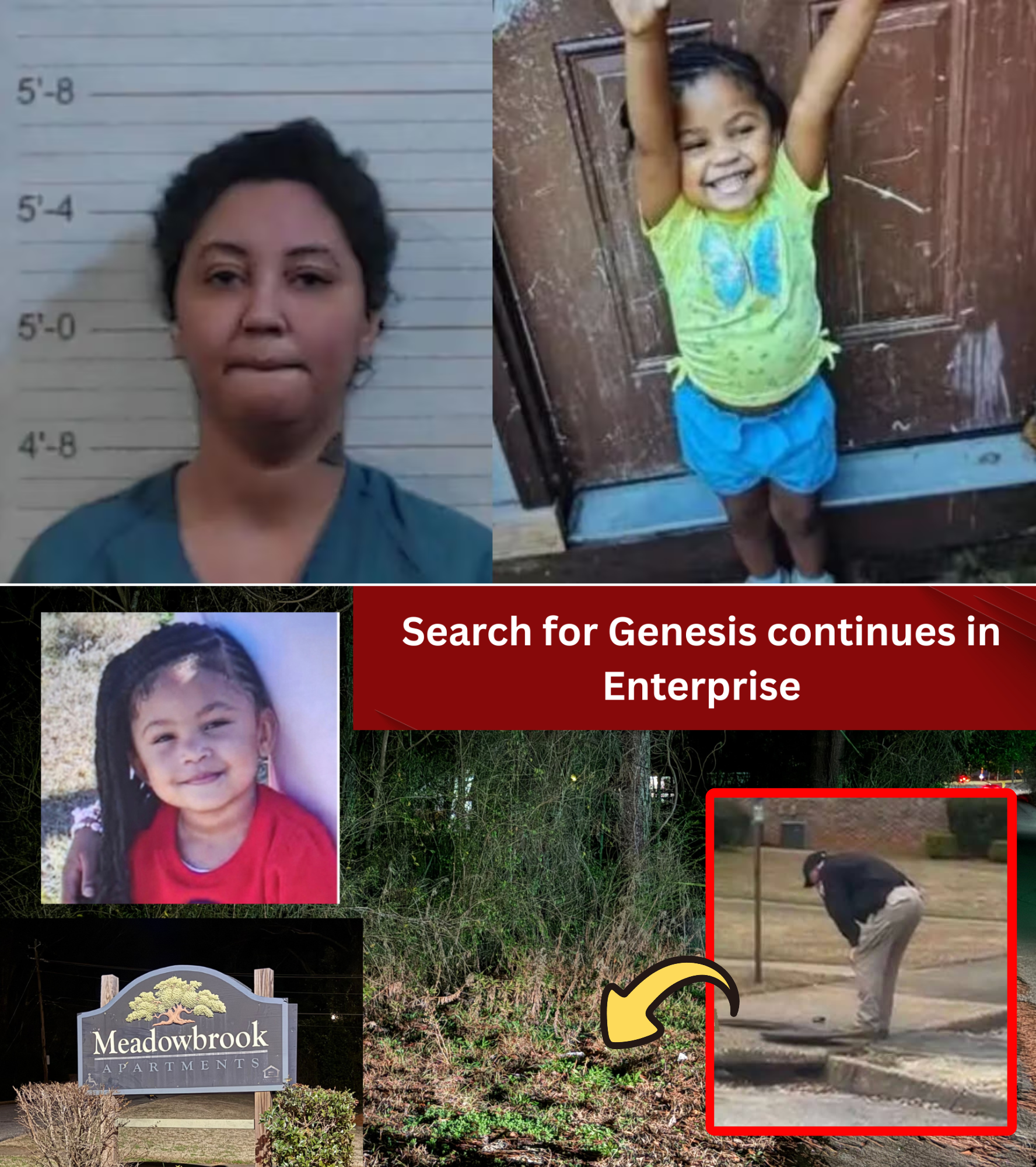
In the tight-knit apartment community on Apache Drive in Enterprise, Alabama, Vanessa Murana’s words have sent ripples of unease through residents still reeling from the disappearance of 2-year-old Genesis Nova Reid. As the mother, Adrienne Reid, faces capital murder charges and the grim possibility of the death penalty, Murana—a fellow resident and self-described close friend of Adrienne—has come forward with observations that cast new light on the weeks leading up to the toddler’s alleged fate.
Murana, who lives in the same complex, recounted joining the frantic early-morning search on February 16, 2026, after Adrienne reported Genesis missing around 3 a.m. Residents mobilized quickly, with many staying up from 4 a.m. onward to comb the area. Murana emphasized her support for finding the child safely, stating she would “never go against” what Adrienne had said. Yet her comments carried an undercurrent of concern that has since gained traction in local discussions and media reports.
What stands out most in Murana’s account is the noticeable absence of Genesis in the neighborhood routine. She revealed that she and other neighbors had not seen the little girl in weeks—some claiming they last spotted her around Christmas 2025. The toddler and her mother used to take regular walks through the community, a daily sight that suddenly stopped. This shift in behavior, subtle at first, now appears significant in hindsight, especially given the timeline uncovered by investigators.
Police determined Genesis had not been seen alive since Christmas Day, with Adrienne allegedly placing her body in a duffel bag and discarding it in a dumpster on December 26. Surveillance footage from the complex captured Adrienne wheeling a large bag toward the dumpster that night, followed by a return trip days later with items associated with Genesis. The delayed missing-person report—over 50 days after the child was last confirmed alive—intensified scrutiny on Adrienne’s actions and statements.
Murana’s description adds a personal layer to the emerging picture. As someone who considered Adrienne a friend, her reluctance to contradict the mother’s initial account is understandable, yet the admission of not seeing Genesis for an extended period aligns with broader neighbor reports. One resident noted the pair had ceased their usual neighborhood strolls, while others echoed that the child had been invisible in the community since late December. These observations suggest Adrienne may have isolated herself and her daughter in the weeks before the reported disappearance, a pattern that investigators now view as consistent with efforts to conceal what allegedly occurred.
The community’s shock deepened when Adrienne was first arrested for providing false information to law enforcement—a felony—before charges escalated to capital murder and abuse of a corpse. Coffee County District Attorney James Tarbox announced intentions to seek the death penalty, citing the premeditated disposal of a child under 14 by a parent or guardian as qualifying under Alabama law. The case’s reliance on circumstantial evidence—video, timeline discrepancies, and Adrienne’s alleged “campaign of deceit, lies, manipulation, and destruction of evidence”—mirrors high-profile precedents where no body was immediately recovered.
Murana’s input, though measured, underscores the human element in what has become a national tragedy. She stressed the priority of bringing Genesis home safely, reflecting the collective hope that persisted during the initial search. Pink lights illuminated the area in vigils, billboards displayed the child’s smiling face, and residents rallied in solidarity. Yet as evidence mounted and the heartbreaking conclusion emerged—that Genesis had been murdered and discarded—the mood shifted to one of profound sorrow and anger.
Neighbors’ accounts like Murana’s highlight how small behavioral changes can signal deeper issues. The end of routine walks, the sudden invisibility of a once-visible toddler, and Adrienne’s late-night movements with a heavy bag all form pieces of a puzzle that investigators pieced together methodically. The landfill search, aided by the National Center for Missing and Exploited Children, continues amid the challenges of compacted waste and vast debris layers, potentially lasting weeks more.
For Murana and others in the community, the revelations bring mixed emotions: loyalty to a friend clashing with the undeniable signs something was terribly wrong. Her statement serves as a reminder that neighbors often notice shifts before outsiders do—changes in routine, diminished presence, unexplained absences. In this case, those observations have contributed to the narrative that prosecutors are building, one where the mother’s actions allegedly betrayed the trust placed in her as Genesis’s protector.
The broader implications resonate far beyond Enterprise. Cases like this force difficult conversations about parental accountability, the signs of distress in families, and the importance of community vigilance. While Murana’s words offer no definitive proof, they add emotional weight to the timeline: a child who vanished from view long before being reported missing, a mother whose behavior shifted in ways that now seem ominous, and a neighborhood left questioning what they might have missed.
As the legal process advances toward trial, Adrienne Reid remains in custody. The absence of Genesis’s remains continues to haunt the investigation, yet the circumstantial case appears robust. For Vanessa Murana and the residents of Apache Drive, the memory of a little girl who once brightened their daily walks lingers painfully, a stark contrast to the silence that followed.