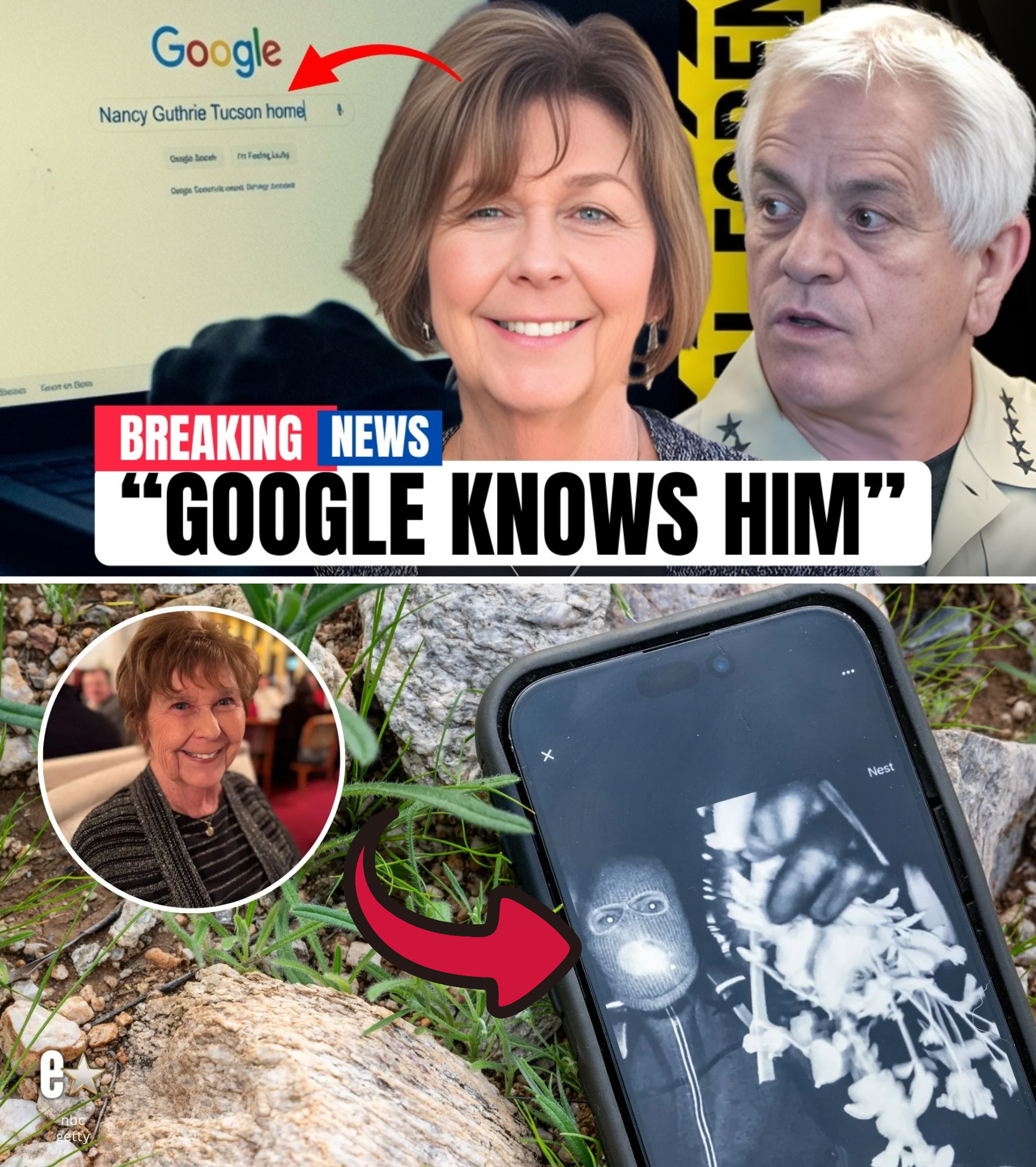
The disappearance of 84-year-old Nancy Guthrie from her quiet Tucson home on February 1, 2026, began like many missing-persons cases: a sudden void, an empty house, blood on the porch, and surveillance footage showing a masked figure tampering with cameras under cover of darkness. What sets this case apart is not the physical evidence alone—though a discarded glove with DNA, an Ozark Trail backpack, and Ring camera captures of nighttime reconnaissance are compelling—but a digital footprint so detailed and prolonged that it has become the cornerstone of the investigation.
Fox News Digital uncovered seven Google searches spanning June 2025 to January 2026, each one a deliberate step in a 244-day planning timeline. The progression is methodical and chilling. It started innocently enough in June 2025 with a search for Nancy Guthrie’s exact address in Tucson, Arizona. By November and December, queries shifted to images of the home itself—exterior shots, layout details, possible entry points. In December came the financial angle: “Savannah Guthrie salary NBC,” a clear attempt to gauge potential ransom value based on her daughter’s high-profile career as co-anchor of the Today Show. The final confirmation search occurred on January 11, 2026—exactly three weeks before the abduction—re-checking the address from the same Tucson-area IP range.
Investigators stress a critical truth: no Google search is truly anonymous when law enforcement obtains proper subpoenas. Every query ties to an IP address. Every IP address routes through an internet service provider that keeps subscriber records. With court orders, those records yield real names, billing addresses, and account details. The suspect who took elaborate physical precautions—wearing a mask, disabling cameras, disconnecting pacemaker monitoring equipment to avoid immediate alerts—apparently never considered that their online reconnaissance was building a timestamped prosecution timeline.
The physical operation lasted just 41 minutes. Around 2 a.m. on February 1, someone approached the residence, tampered with the doorbell camera, entered the home, and removed Nancy Guthrie. Blood droplets on the porch suggest a brief struggle or injury during extraction. Neighbors reported no unusual noise; the suspect’s movements were practiced and quiet. Yet the digital prelude lasted over eight months, turning what might have been dismissed as random crime into a premeditated kidnapping with clear motive indicators.
Pima County Sheriff’s Department and federal authorities have not publicly named a suspect, but multiple sources confirm the Google trail originates from the Tucson metropolitan area. Cross-referencing IP data with physical evidence is narrowing the field rapidly. The Ozark Trail backpack seen in surveillance stills matches models sold at local Walmart and Academy Sports locations; purchase records are being pulled. DNA from the glove discarded near the scene is being processed for CODIS hits. Vehicle sightings from nearby traffic cameras are undergoing plate enhancement.
Adding complexity, authorities have hinted the suspect may not have acted alone. A separate release noted possible accomplices, and investigators have expanded inquiries into Mexico using cross-border cooperation channels. Investigative genealogy—using public DNA databases to build family trees—has also entered the case, a technique that has solved decades-old cold cases in recent years. With Nancy Guthrie still missing more than three weeks after the abduction, time is critical; every digital and genetic lead is being prioritized to prevent the trail from going cold.
Savannah Guthrie has remained largely silent publicly, consistent with her private nature, though sources close to the family describe profound shock and daily coordination with law enforcement. Colleagues at NBC have expressed support while refraining from on-air speculation. The Today Show briefly acknowledged the situation in early February, asking viewers with information to contact the tip line.
The broader lesson emerging from this case is stark: digital habits once considered private are increasingly the weakest link in criminal planning. In an era where search engines log queries, smart-home devices record motion, and ISPs retain connection data for months or years, the line between preparation and self-incrimination has blurred. The suspect meticulously covered physical tracks—gloves, mask, quick entry/exit—yet left a breadcrumb trail in the cloud that may prove far more damning.
Forensic experts reviewing the released footage note behavioral tells: deliberate, unhurried movements suggesting rehearsal; familiarity with camera blind spots implying prior scouting (corroborated by the image searches); even the choice of nighttime hours to minimize witnesses. Yet the same discipline failed online. No VPN appears to have been used consistently, no Tor browser, no burner accounts. Simple, repeated queries from a residential IP range created a pattern too clear to ignore.
As the investigation intensifies, tips continue to pour in. Authorities released additional stills from the January 31 reconnaissance footage, hoping someone recognizes the build, gait, or clothing of the masked individual. A dedicated hotline and online portal accept anonymous submissions. Rewards for information leading to Nancy Guthrie’s safe return or the arrest and conviction of those responsible have been offered through private channels.
The convergence of old-school detective work—canvassing neighborhoods, analyzing blood spatter, tracing retail purchases—with modern digital forensics illustrates how investigations evolve. In this instance, the very tool the perpetrator used to gather intelligence has become the instrument of their potential downfall. Seven searches. 244 days. One monumental oversight.
Until Nancy Guthrie is found, the case remains active and urgent. Every click, every query, every moment of overconfidence is now evidence. And somewhere, someone who thought they planned the perfect crime is realizing the internet never forgets.