Four weeks after 84-year-old Nancy Guthrie vanished from her Catalina Foothills home in Tucson, the investigation shows no signs of slowing despite the quieter scene outside her residence. On day 28 (February 28, 2026), NewsNation’s Brian Entin reported live from the property, describing a stark contrast to the early days when media trucks, generators, and search teams dominated the street. The shift reflects a deliberate refocusing of resources: some FBI agents have moved operations to Phoenix to comb through thousands of hours of traffic camera and regional surveillance footage, while a dedicated contingent remains in Tucson coordinating with local authorities. The Pima County Sheriff’s Office continues assigning detectives to the case but has redirected personnel to handle surging local crimes, underscoring the balance agencies must strike in prolonged high-profile probes.
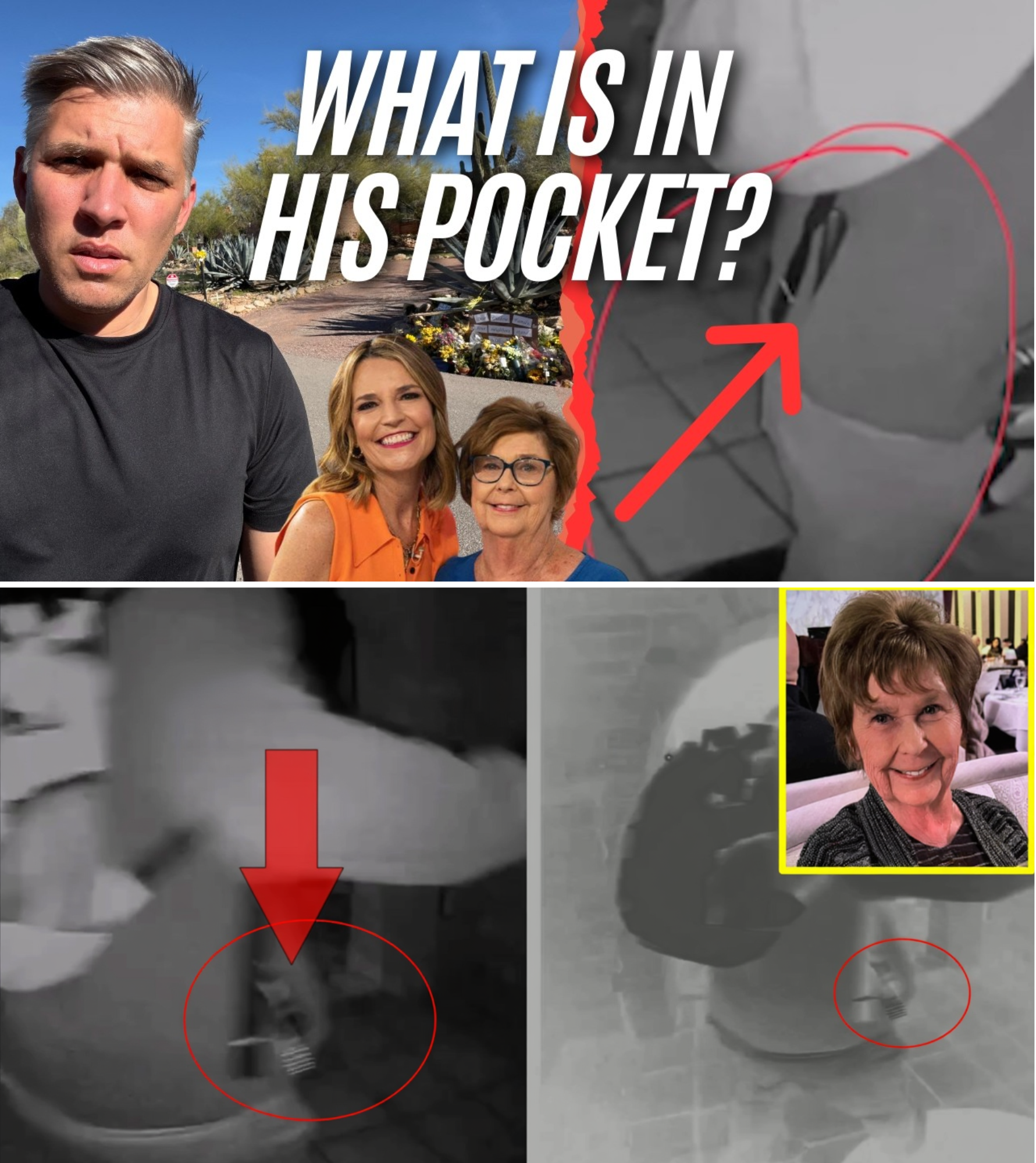
Central to the latest discussion is the single released still image from Nancy’s Google Nest doorbell camera, capturing the masked suspect tampering with the device in the pre-dawn hours of February 1. Online observers and amateur sleuths have fixated on a noticeable bulge in the suspect’s right-front pocket, with what appears to be a short antenna or protrusion visible. Speculation exploded across social media and true-crime forums: phone? Flashlight? Something more sinister?
To address the question, Entin brought in Tracy Walder, a former FBI agent and CIA officer with expertise in behavioral analysis and covert operations. Walder examined the enhanced image and leaned toward two plausible explanations. First, a walkie-talkie for short-range, encrypted communication with an accomplice or getaway driver. Cell phones, she noted, would trigger geo-fencing alerts and carrier records, making them risky for a planned operation. A basic two-way radio avoids digital footprints while allowing real-time coordination—ideal if the suspect needed confirmation that the camera was disabled or the coast was clear.
The second possibility: a portable signal jammer, a device capable of disrupting Wi-Fi, cellular, or alarm frequencies within a small radius. While no electronics were reported stolen from the home, Walder acknowledged that jammers are commercially available and could explain why the Nest camera feed cut abruptly without alerting Nancy’s phone or security system. She cautioned, however, that jammers are less common in residential abductions and might be overkill unless the suspect anticipated sophisticated countermeasures.
Walder shifted attention to the suspect’s backpack, visible in the footage. She theorized it likely contained restraint tools—zip ties, duct tape, rope—or materials for body transport, such as tarps or blankets. The presence of blood confirmed as Nancy’s at the scene raised grim possibilities: she may have been injured or deceased before removal, turning what appeared a kidnapping into potential homicide concealment. Walder expressed deep concern over the absence of any proof-of-life communication, noting that in many abduction cases, perpetrators eventually demand ransom or provide evidence to prolong negotiations. Here, silence prevails.
The crime’s targeted nature stands out. Walder rejected random burglary theories, pointing to the suspect’s deliberate approach: covering the camera with nearby foliage, wearing gloves and mask, and choosing a time when the home was unoccupied except for Nancy. “This is not a house you just come upon and decide to rob,” she said, suggesting prior surveillance or knowledge of the family’s routines. The suspect’s amateurish camera concealment—using grass rather than professional tools—contrasts with the apparent planning, hinting at someone driven by obsession or personal motive rather than pure criminal professionalism.
Entin and Walder addressed broader investigative mechanics. Polygraphs, used to screen tips and suspects, are quick 30-60 minute sessions focused on key questions; results help prioritize leads but remain inadmissible in court. U.S. attorneys have walked the crime scene recently, signaling preparation for potential prosecution once evidence solidifies. The $1 million family reward, funded by the Guthries, continues to incentivize tips, with anonymity guaranteed unless the caller is implicated. Walder praised the FBI’s ability to shield sources while verifying credibility.
Viewer questions poured in: no link to the Tucson Gem Show crowds, no confirmed vacant homes used as staging, and a separate 911 call about a yelling woman in a vehicle was unrelated. Entin dismissed fabricated online claims of Google searches or other leads as misinformation. He maintained optimism, stating the case is far from cold and that resources—genetic genealogy, video analytics, financial tracing—will eventually yield answers.
Nancy’s family, led by Savannah Guthrie, persists in public appeals for information, emphasizing hope despite the emotional toll. The reward remains payable only upon recovery per FBI guidelines. As the investigation enters its fifth week, the pocket detail—whether walkie-talkie, jammer, or mundane item—symbolizes how one overlooked clue can shift momentum. With blood evidence, DNA from gloves, and now intense scrutiny of the suspect’s gear, the case balances between heartbreaking impasse and impending breakthrough.