Mother and Daughter Among Five Italians Killed in Maldives Cave Dive Nightmare: Experts Warn of Deadly Gas Mix and Panic at 200ft.
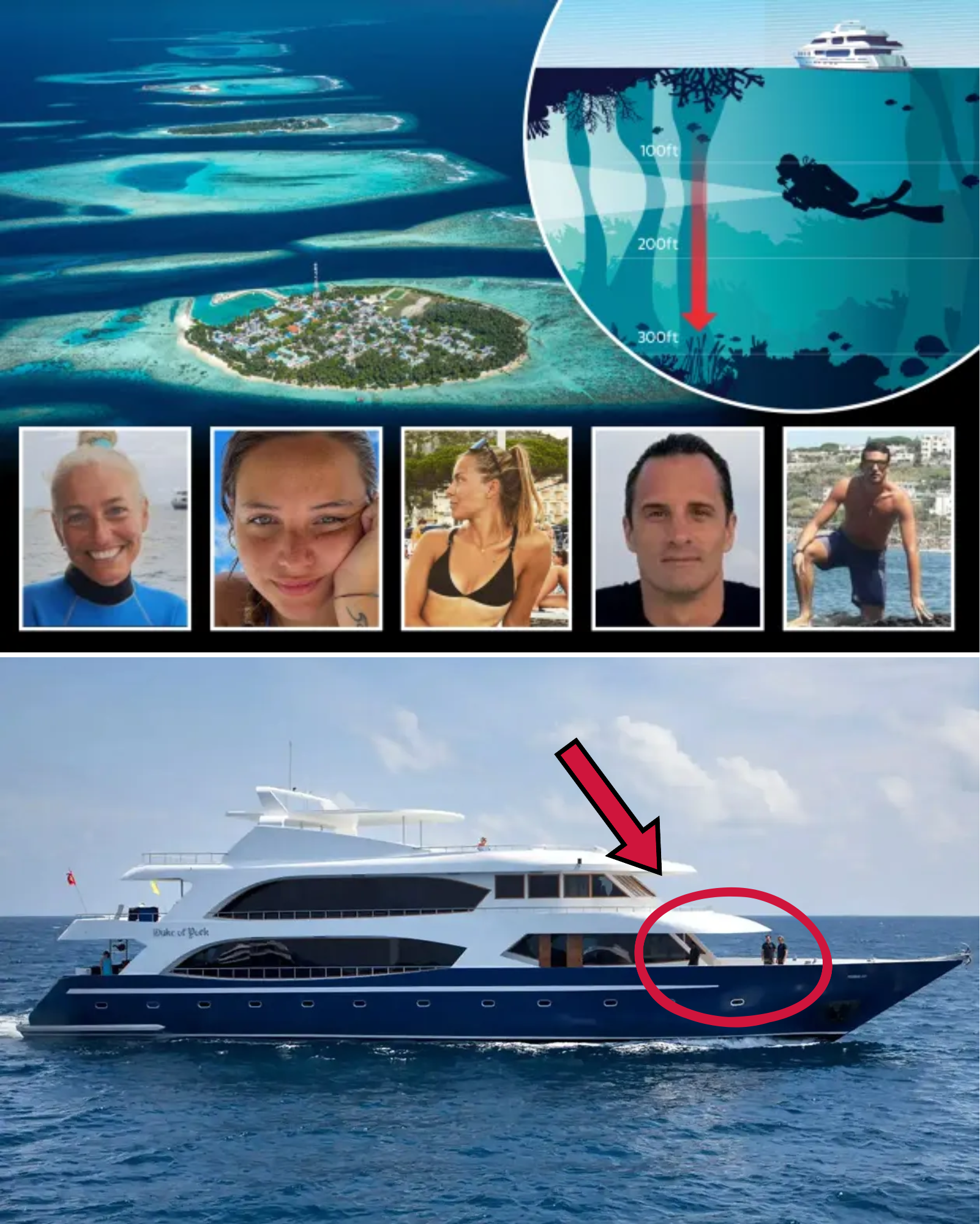
A high-end diving expedition in the Maldives has turned into one of the country’s worst underwater tragedies, claiming the lives of five Italian tourists who vanished inside a deep, murky cave system during what was supposed to be an unforgettable luxury getaway. The victims — including a respected university professor and her 22-year-old daughter — were exploring caves near Vaavu Atoll from the liveaboard yacht Duke of York when disaster struck.
The group consisted of Monica Montefalcone, 51, an associate professor at the University of Genoa, her daughter Giorgia Sommacal, 22, researcher Muriel Oddenino, 31, diving instructor Gianluca Benedetti, and 31-year-old Federico Gualtieri. They descended on Thursday morning for a recreational cave dive around Alimathaa island, a site known for its dramatic underwater caverns. At least one body was recovered from a chamber reaching nearly 200 feet (60 meters), while strong currents have hindered efforts to retrieve the others still believed to be trapped inside.
Maldivian police have opened a full investigation into safety protocol breaches. Standard recreational diving limits in the Maldives are usually restricted to around 30 meters for safety, yet this group pushed to 50 meters and beyond without apparent advanced technical certification. The incident has raised urgent questions about whether the operator allowed inexperienced or under-equipped divers into high-risk cave environments.
Diving safety experts and online communities have rapidly developed several chilling theories. Top among them is a catastrophic error in the breathing gas mixture. At depths exceeding 40-50 meters, even minor mistakes with nitrox or trimix can trigger oxygen toxicity, causing convulsions, blackout, and rapid drowning. Forum discussions among technical divers highlight how recreational groups attempting these depths without redundant systems and proper analysis are taking enormous risks.
Nitrogen narcosis is another strong possibility. Often described as feeling drunk underwater, the condition severely impairs judgment at 50 meters, leading to disorientation, euphoria, or fatal decision-making inside confined caves. Combined with stirred-up silt that reduces visibility to zero, a single moment of panic can create a deadly chain reaction: thrashing bodies, lost guide lines, skyrocketing air consumption, and entanglement.
Surface conditions on the day reportedly included strong winds and a yellow weather alert, potentially complicating ascents and adding stress. The £1,700-per-person trip was marketed as a premium experience for advanced divers, but critics now question the briefing quality, equipment checks, and presence of sufficient safety support. Maldives authorities are examining the yacht operator’s procedures, tank filling records, and adherence to local diving regulations.
This tragedy hits particularly hard because of the personal connections among the victims. Monica Montefalcone, a passionate marine biologist, was enjoying a family adventure with her daughter and colleagues rather than conducting official research. The loss of two generations in one family has sent shockwaves through Italy’s academic community. Friends remember Monica as an experienced diver with a deep love for ocean conservation.
The Duke of York, operated largely by foreign staff, remains at the center of the probe. Operations may be suspended while investigators reconstruct the final moments of the dive. Previous incidents in Maldivian waters — including the deaths of a British couple late last year — have already highlighted concerns that the booming adventure tourism sector sometimes prioritizes thrilling experiences over rigorous safety standards.
Rescue teams, including Maldivian military divers and Italian specialists, continue working in challenging conditions. The remote location and difficult underwater terrain have slowed progress, leaving families in agonizing limbo as they await news of full recovery.
As theories spread online, authorities caution against premature conclusions. Yet the evidence so far points to a perfect storm of depth, environment, and possible human error. Cave diving at these levels demands specialized training, redundant gas supplies, guideline protocols, and calm decision-making under pressure — elements that may have been insufficient for a recreational group.
The Maldives markets itself as an aquatic paradise with crystal lagoons and vibrant reefs. This heartbreaking event serves as a sobering reminder that beauty below the surface can quickly become lethal when limits are pushed. Depths beyond 30-40 meters enter the realm of technical diving, requiring years of experience, specialized equipment, and meticulous planning.
For the grieving families in Italy, the pain is intensified by distance and uncertainty. As the investigation unfolds, broader questions emerge about accountability in the global dive tourism industry. Were the divers properly qualified and briefed? Were the gas mixes independently verified? Did surface teams react quickly enough when the group failed to surface on schedule?
“Beauty in Black” no longer feels like an abstract warning. In the silent, dark caves of Vaavu Atoll, five lives pursuing wonder paid the ultimate price. Their story underscores a vital truth: no amount of luxury or paradise scenery removes the ocean’s unforgiving rules.
As recovery efforts continue and the full report awaits, this tragedy may finally drive stricter regulations for deep and cave diving in tourist hotspots. For now, the world mourns five souls who entered the water full of excitement and never returned. Their final dive serves as a tragic lesson that sometimes the most beautiful places hide the deadliest dangers.