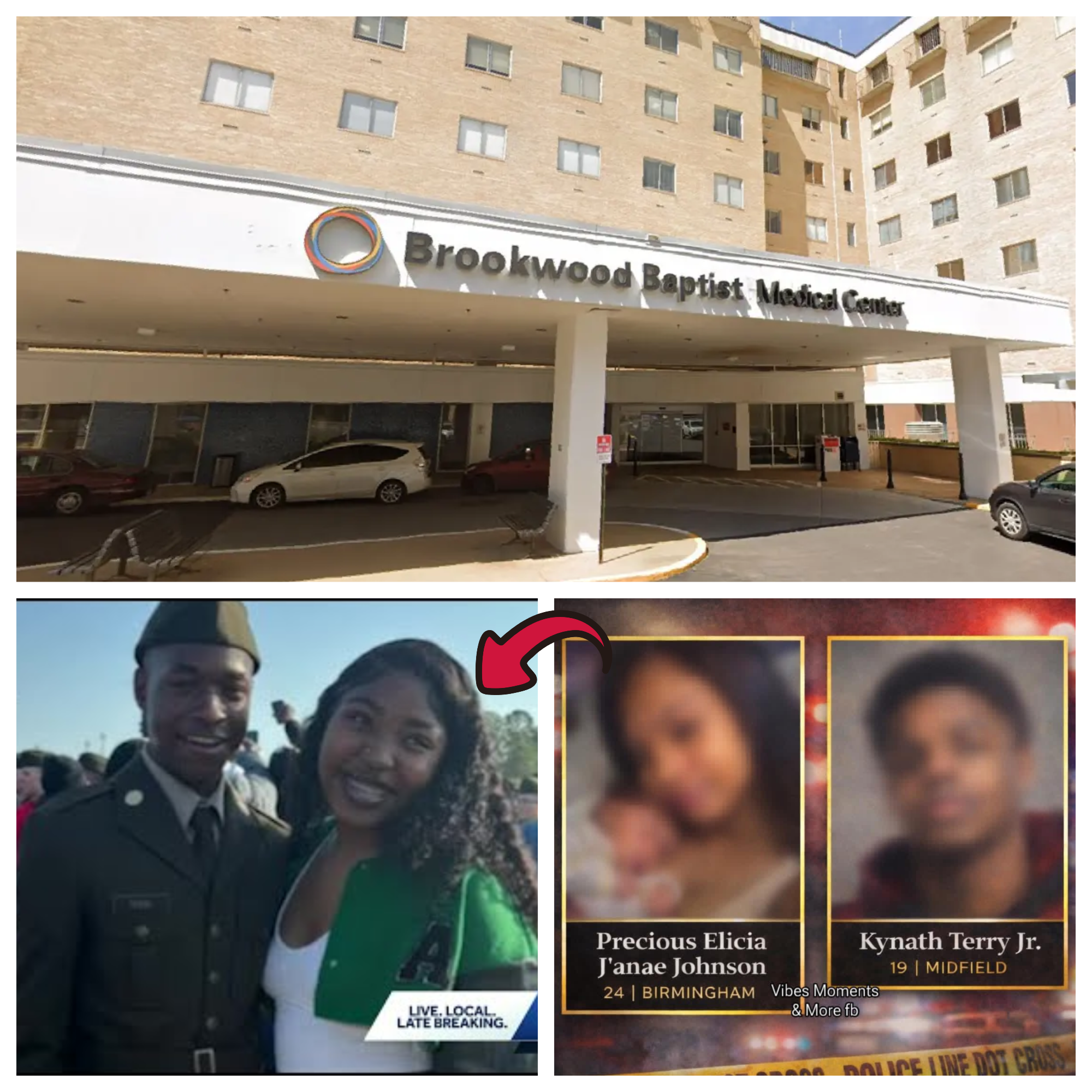
The Women’s Medical Center at Baptist Health Brookwood Hospital in Homewood, Alabama, became the scene of a devastating tragedy on the evening of March 1, 2026, when a young couple’s celebration of new life ended in fatal violence. Precious Elicia J’anae Johnson, 24, of Birmingham, had just given birth to the couple’s first child when her husband, Kynath William Terry Jr., 19, of Midfield, allegedly shot her multiple times in her hospital room before taking his own life in an apparent domestic murder-suicide.
Homewood Police responded to reports of shots fired around 9:25 p.m. on the fifth floor of the Women’s Center, an area typically reserved for postpartum recovery. Officers arrived to find both individuals deceased from gunshot wounds: Johnson from multiple shots, and Terry from a self-inflicted wound. No other patients, staff, or visitors were harmed, and the newborn was confirmed unharmed, though not present in the room during the incident according to police statements. The baby was quickly placed under appropriate protective care.
The Jefferson County Coroner’s Office officially ruled Johnson’s death as resulting from multiple gunshot wounds sustained during what they classified as a domestic assault murder-suicide. Terry’s death was attributed to a self-inflicted gunshot. Authorities emphasized the event stemmed from the couple’s personal relationship, with family members confirming the pair were married. Preliminary investigations point to no involvement of additional suspects, and the hospital was placed on temporary lockdown as a precaution until the area was declared safe.
Details about the couple’s background remain limited, but reports indicate Terry had recently completed training with the Army National Guard before their marriage. Family members, including Terry’s mother, expressed profound shock in media interviews, stating they were unaware of any escalating conflicts that could have led to such extreme actions. Some accounts suggest Johnson had preferred limited family presence during the birth, potentially indicating underlying tensions, though no concrete motive has been publicly disclosed by investigators.
The timing of the violence—mere hours after a successful delivery—has amplified the horror for the community and sparked widespread discussion about the pressures of early parenthood, particularly for a teenage father. Domestic violence experts note that postpartum periods can heighten existing relational strains, sometimes leading to tragic outcomes when support systems are inadequate or warning signs go unheeded. The case has prompted renewed calls for mental health resources, conflict resolution services, and proactive interventions in young families facing challenges.
Security concerns have surged in the aftermath. Journalists accessing the labor and delivery unit less than 24 hours later reported walking through unchecked, highlighting potential gaps in visitor screening and weapon prevention protocols in sensitive hospital areas. Danne Howard, president of the Alabama Hospital Association, called the incident isolated but unprecedented in her long career, affirming that Baptist Health would conduct a required after-action review and implement necessary improvements to protocols. The event echoes a prior suspected murder-suicide in the Birmingham area just months earlier, underscoring rare but recurring risks in healthcare settings.
Community mourning has been swift and visible. Online tributes, vigils, and fundraisers have emerged to honor Precious Johnson’s memory as a young mother whose life was abruptly ended at what should have been a pinnacle of joy. Friends and acquaintances describe her as vibrant and caring, with the loss leaving a profound void for those who knew her. Discussions have also turned to the orphaned newborn’s future, with extended family likely stepping in amid legal processes to determine guardianship and support.
Police continue piecing together the sequence of events through witness accounts, hospital surveillance if available, medical records, and any relevant communications. With both parties deceased, the investigation focuses on understanding the precipitating factors rather than pursuing criminal charges against a living suspect. No additional details on how the firearm entered the facility have been released, though such questions fuel public debate on hospital safety measures.
This incident serves as a sobering reminder of how personal crises can erupt in public spaces dedicated to healing and birth. The juxtaposition of new life and sudden death in the same room has left many grappling with the fragility of human relationships and the need for vigilance against hidden domestic turmoil. As authorities wrap up their probe and the hospital strengthens safeguards, the focus remains on supporting the surviving child and both grieving families through an unimaginable loss.
The broader implications extend beyond Alabama, prompting national conversations about preventing violence in healthcare environments, addressing youth mental health in the context of parenthood, and ensuring that moments meant for celebration never turn deadly. For now, the Women’s Center at Brookwood Hospital stands as a site of profound sorrow, where hope was born and extinguished in heartbreaking proximity.