Leaked 911 Call Exposes Kyle Busch’s Terrifying Final Minutes: Coughing Blood Before Collapse.
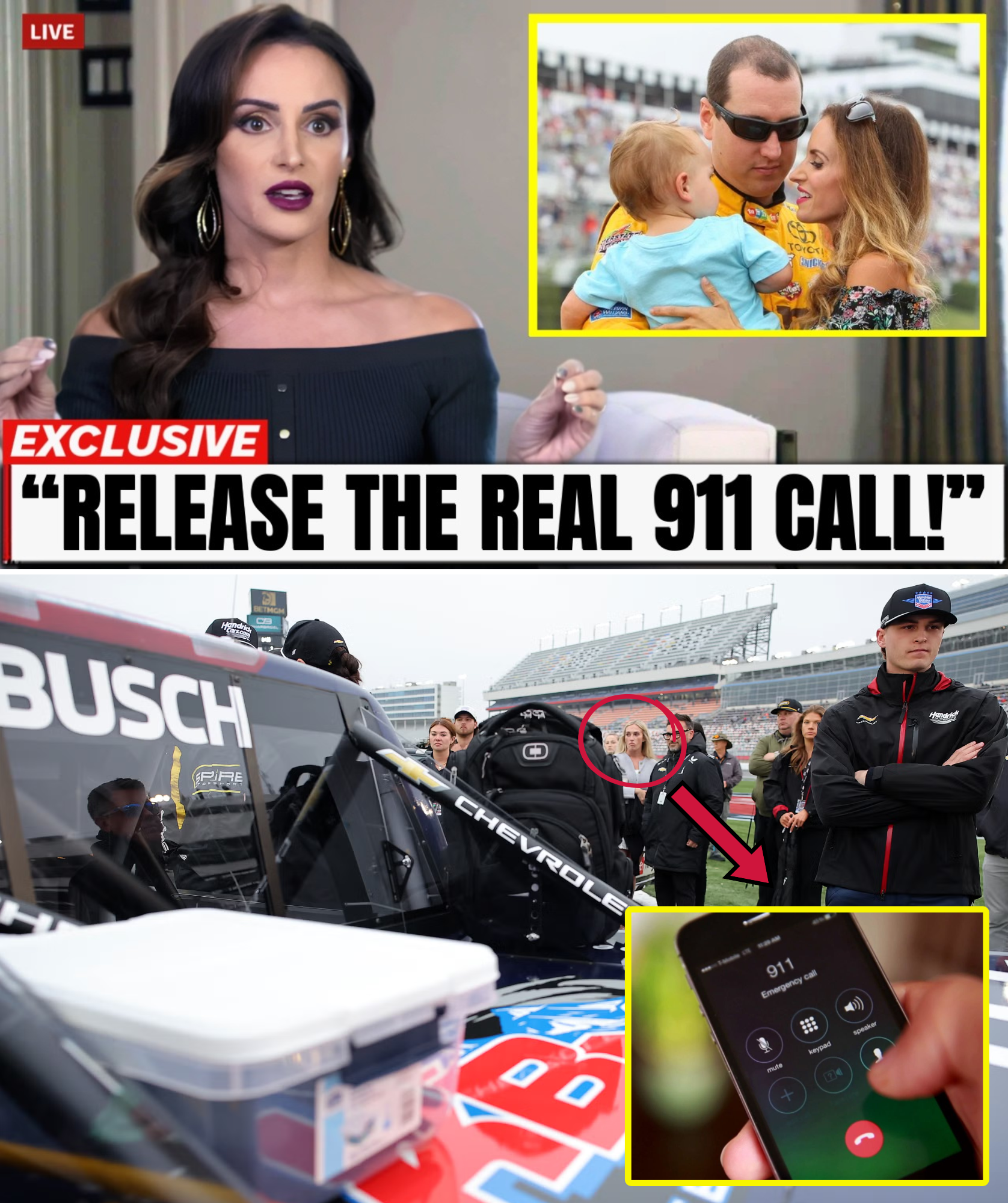
The racing world is still in mourning after the sudden death of NASCAR star Kyle Busch at just 41 years old. But new revelations from a leaked 911 call, reportedly highlighted by his wife Samantha Busch, are shedding disturbing light on the terrifying moments leading up to his hospitalization and eventual passing. What was intended as a routine simulator session turned into a medical nightmare that ended far too soon.
On May 20, 2026, at the GM Charlotte Technical Center in Concord, North Carolina, Kyle Busch was deep into a training session in a Chevrolet racing simulator, preparing for the Coca-Cola 600. According to multiple reports and the newly surfaced 911 audio, Busch suddenly began experiencing severe symptoms. An unidentified caller from the facility dialed emergency services around 5:30 PM, describing a harrowing scene.
“I’ve got an individual that’s shortness of breath, very hot, thinks he’s going to pass out, and he’s producing a little bit of blood, coughing up some blood,” the caller told the dispatcher calmly but urgently. He repeatedly emphasized that Busch was still conscious: “He is awake. He’s on the bathroom floor right now.” The caller provided precise directions to the facility and even requested that responders turn off sirens upon arrival to avoid causing further alarm.
This audio has sent shockwaves through the NASCAR community. The image of the two-time Cup Series champion — known for his intense focus and the trademark helmet he rarely removed — lying on a bathroom floor struggling to breathe paints a devastating picture. Samantha Busch, Kyle’s wife since 2010, is said to have played a role in bringing attention to the leaked call, helping fans and the public understand the gravity of what unfolded that afternoon.
Busch was quickly transported to a hospital in Charlotte, where he fought valiantly but passed away on May 21. His family later released a statement attributing his death to severe pneumonia, though no full autopsy details have been made public. The rapid progression from simulator session to medical emergency has left many questioning how such a fit athlete could deteriorate so quickly.
Kyle Busch’s career was built on grit and determination. Born in Las Vegas in 1985, “Rowdy” rose through the ranks with unmatched talent, securing 63 Cup Series victories, championships in 2015 and 2019, and a reputation as one of the most competitive drivers of his generation. He had just added another Truck Series win at Dover weeks earlier, showing no signs of slowing down. His move to Richard Childress Racing had reignited his passion, and the simulator was a key part of his preparation routine.
Friends and fellow drivers have been vocal in their tributes. Dale Earnhardt Jr. described him as a fierce competitor who gave everything to the sport. Denny Hamlin remembered their on-track battles with respect. The entire NASCAR family chose to proceed with the Coca-Cola 600, turning the weekend into a celebration of Busch’s life rather than canceling the event. Special helmet designs and moments of silence honored the No. 8 car he made famous.
Beyond the track, Busch was a dedicated husband and father. With Samantha, he raised two children, Brexton and Lennix. His brother Kurt, also a champion, and the rest of the family have remained largely private during this difficult time, asking for space to grieve.
The leaked 911 call has sparked intense discussion about health monitoring in professional racing. Simulators are meant to be safe training environments, yet they still replicate the extreme physical and mental stresses of actual competition. Medical experts suggest that symptoms like coughing blood and overheating could point to a severe respiratory infection or complications from underlying conditions exacerbated by the confined, high-focus setting of the simulator.
Questions remain: Could better real-time health tracking have caught warning signs earlier? Should facilities like the GM Technical Center have medical personnel on standby during all sessions? These are conversations the industry is now forced to confront in the wake of this tragedy.
The dashboard of the simulator reportedly showed normal activity until the sudden silence — mirroring the abrupt shift from racing legend to medical emergency. Busch’s helmet, still on or nearby when help arrived, has become a symbol of his total dedication. He lived every lap as if it were his last, and unfortunately, that intensity may have masked how serious his condition had become.
As more details from the 911 audio and investigation emerge, fans continue to flood social media with #RowdyForever tributes. Memorials at tracks across the country show flowers, helmets, and messages from supporters who grew up watching Busch’s fiery personality light up the sport.
Kyle Busch’s story is one of triumph mixed with heartbreaking fragility. From prodigy to polarizing champion, he never backed down. The leaked call doesn’t just reveal symptoms — it humanizes the final moments of a man who pushed limits until his body could push no more. The silence that followed on that simulator dashboard may linger, but his legacy on the track and in the hearts of racing fans will roar on for years to come.
In the end, the champion who never took his helmet off left us far too soon, reminding everyone in NASCAR and beyond that life can change in a single lap.