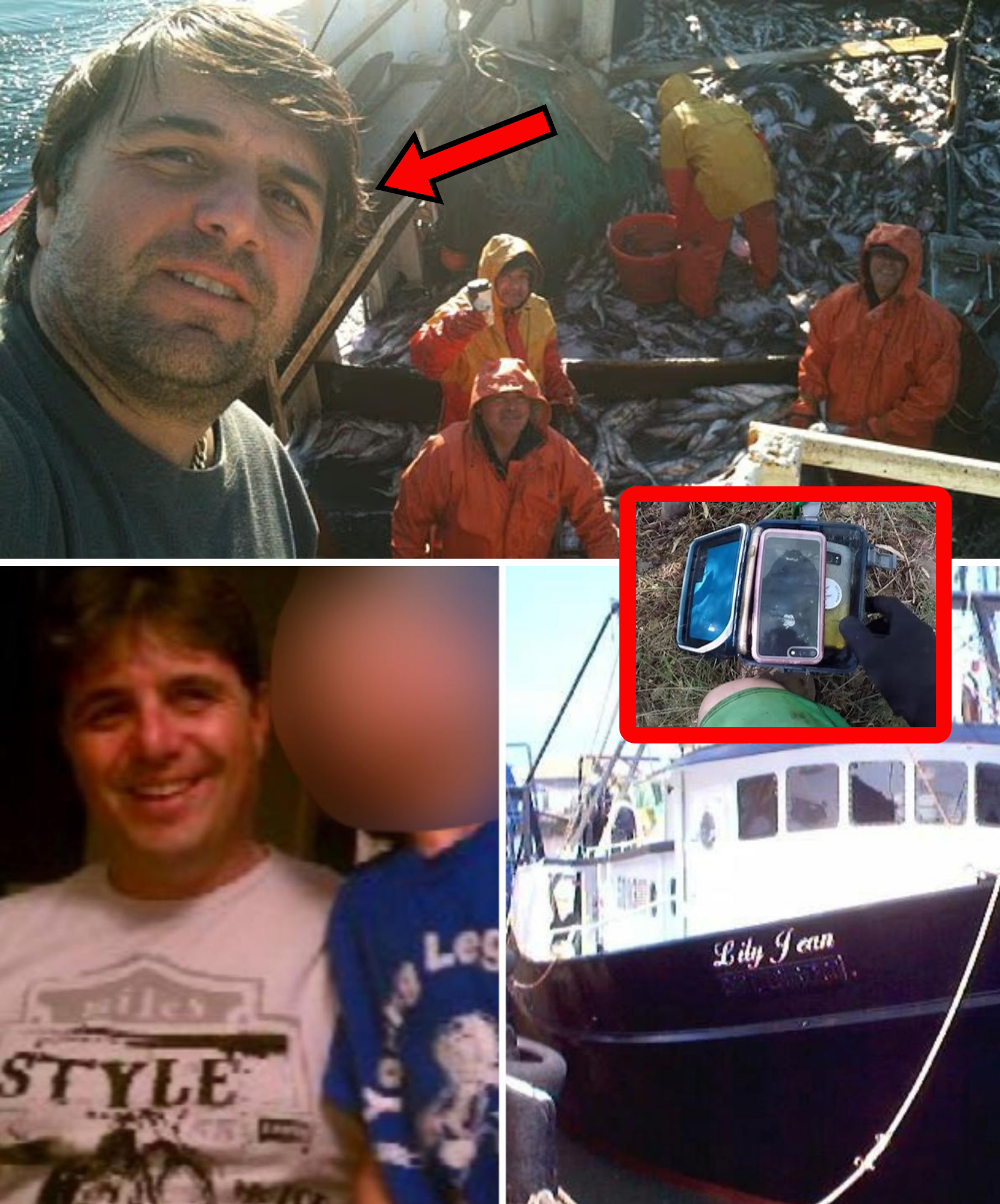
The emergency beacon from the fishing vessel Lily Jean activated at precisely 6:50 a.m. on January 30, 2026, sending its final automated distress ping across the frigid Atlantic. This solitary signal—registered approximately 25 miles off Cape Ann, Massachusetts—became the radar’s haunting last warning, marking the abrupt end for a 72-foot groundfish trawler loaded with catch and just hours from safe harbor in Gloucester. No voice mayday followed, no radio contact, no indication of struggle—only the beacon’s cry when the boat submerged or capsized, leaving seven souls presumed lost in waters where survival without protection lasts mere minutes.
Captain Accursio “Gus” Sanfilippo, 55, a fifth-generation Gloucester fisherman whose life on the water was once televised in a 2012 History Channel “Nor’Easter Men” episode, led the crew. Portrayed as calm, generous, and deeply knowledgeable, Sanfilippo mentored younger hands and navigated dangers with quiet confidence. He had named the Lily Jean after his daughter, a personal touch that now deepens the tragedy. The crew comprised deckhands Paul Beal Sr. and his son Paul Beal Jr., John Paul Rousanidis (33), Freeman Short (31), Sean Therrien, and 22-year-old NOAA fisheries observer Jada Samitt from Virginia. The father-son pair’s loss amplified the grief, as families mourned generations erased together.
The EPIRB alert reached U.S. Coast Guard Sector Boston watchstanders, who immediately attempted radio contact with no reply. An urgent marine information broadcast went out, mobilizing resources: an MH-60 Jayhawk helicopter from Air Station Cape Cod, a small boat from Station Gloucester, and the cutter Thunder Bay. Teams arrived to find a scattered debris field near the ping’s coordinates, an empty life raft deployed automatically, and one body in the water. Rescue efforts spanned over 1,047 square miles in 24 hours amid punishing cold—air near 6°F (-14°C), water around 40°F (4°C)—but yielded no further survivors or remains. The search suspended on January 31 after exhausting viable leads, with all seven presumed dead from hypothermia.
The ping’s bizarre finality lies in its isolation. The Lily Jean was returning to port for routine gear repairs after a standard winter trip, not battling a historic gale. Yet the beacon activated without warning signals, suggesting a catastrophic event unfolded in seconds: perhaps severe spray-induced icing destabilizing the fish-heavy vessel, a rogue wave, or sudden structural compromise in extreme cold. Freezing spray, a notorious hazard for New England trawlers, can accumulate rapidly on decks and rigging, shifting weight and causing capsizing before crews can react or send mayday. The automatic EPIRB—triggered by water immersion or manual activation—provided the only alert, while the empty raft’s deployment indicated sinking too fast for anyone to board it amid chaos.
Rear Adm. Michael Platt, commander of the Coast Guard’s Northeast District, initiated a formal investigation days later, expected to last months. It examines stability records, maintenance history, weather logs, and factors like icing or equipment failure. The National Transportation Safety Board assists, focusing on lessons for vessel classes and technical concerns rather than blame. Many such sinkings remain mysteries without survivors or black-box data typical on fishing boats.
Sanfilippo’s last known words came in a 3 a.m. phone call to friend Captain Sebastian Noto. Complaining of bitter cold freezing air vents and holes, he said casually, “I quit. It’s too cold,” sounding weary but calm—not alarmed. Hours later, the ping at dawn sealed the fate. This contrast heightens the shock: a routine gripe turned prophetic in hindsight, underscoring how quickly conditions can turn lethal.
Samitt’s role spotlighted dangers for fisheries observers—young scientists gathering data for sustainable management amid commercial risks. NOAA expressed deep sorrow, halting deployments temporarily due to the tragedy and weather. Her family’s tribute praised her bravery, compassion, and conviction: she saw herself as a vital crew member protecting oceans, proving it on every trip.
Gloucester, America’s oldest fishing port, mourned deeply. Vigils filled St. Ann’s Church and the Fisherman’s Memorial, flowers piling at the bronze skipper statue gazing seaward. Fundraisers via Fishing Partnership Support Services, the Gloucester Fishing Community Preservation Fund (with Cape Ann Savings Bank’s seed donation and anonymous matching), and family GoFundMes provide support—no sick pay or safety nets in this unforgiving trade.
State Senator Bruce Tarr, who knew Sanfilippo personally, called him a “good skipper” and harbor pillar, struggling to fathom the loss so near shore. Governor Maura Healey honored the “brave individuals” sustaining seafood supply nationwide. The incident revives calls for enhanced safety: better de-icing systems, mandatory immersion suits, improved emergency training, and mental health resources for crews facing isolation and peril.
The Lily Jean’s final ping—a lone beacon in the radar’s silence—captures the essence of sudden maritime doom: almost home, catch secured, then erased by icy Atlantic hell. It serves as a stark reminder of commercial fishing’s deadly statistics and the invisible heroism behind every haul. In Gloucester, resilience persists, but the names of Gus Sanfilippo, Paul Beal Sr., Paul Beal Jr., John Paul Rousanidis, Freeman Short, Sean Therrien, and Jada Samitt join the long memorial rolls—etched forever in stone, stories, and a community’s enduring grief.
News
The Black Bag in the Ravine: Chilling Discovery in the Death of American Airlines Flight Attendant Eric Gutierrez.
The tragic case of 32-year-old American Airlines flight attendant Eric Fernando Gutierrez Molina took an even darker turn as investigators in Colombia recovered a black bag linked to the missing…
The Secret Weekend Pattern: How the FBI’s Latest Breakthrough May Finally Trap Nancy Guthrie’s Abductor.
As March 2026 draws to a close, the disappearance of 84-year-old Nancy Guthrie from her home in Tucson’s Catalina Foothills has entered its 55th day with no arrest and no…
The Insider Who May Have Opened the Door: FBI Hunts for the Person Who Knew Nancy Guthrie’s Home Too Well.
In the affluent Catalina Foothills neighborhood of Tucson, Arizona, where residents often leave garage doors open and security feels routine, the abduction of 84-year-old Nancy Guthrie on the night of…
The Vacant House Perch: SWAT Commander Reveals How the Kidnapper Likely Staged Nancy Guthrie’s Abduction.
In the upscale Catalina Foothills of Tucson, Arizona, where million-dollar homes boast layered security and residents pride themselves on knowing every face and vehicle, the disappearance of 84-year-old Nancy Guthrie…
The Empty House Next Door: Chilling Clues FBI Uncovered in Nancy Guthrie’s Kidnapping.
In the exclusive Catalina Foothills neighborhood of Tucson, Arizona, where seven-figure mansions sit behind layered security gates and vigilant residents know every vehicle and routine, an unthinkable crime shattered the…
The Hidden Daughter Who Inherited the Entire Guthrie Ranch – The Will No One Saw Coming.
In the rugged hills near Billings, Montana, the Guthrie family ranch stood as a symbol of American grit for decades. What began as a modest 30-acre lease in the 1940s…
End of content
No more pages to load