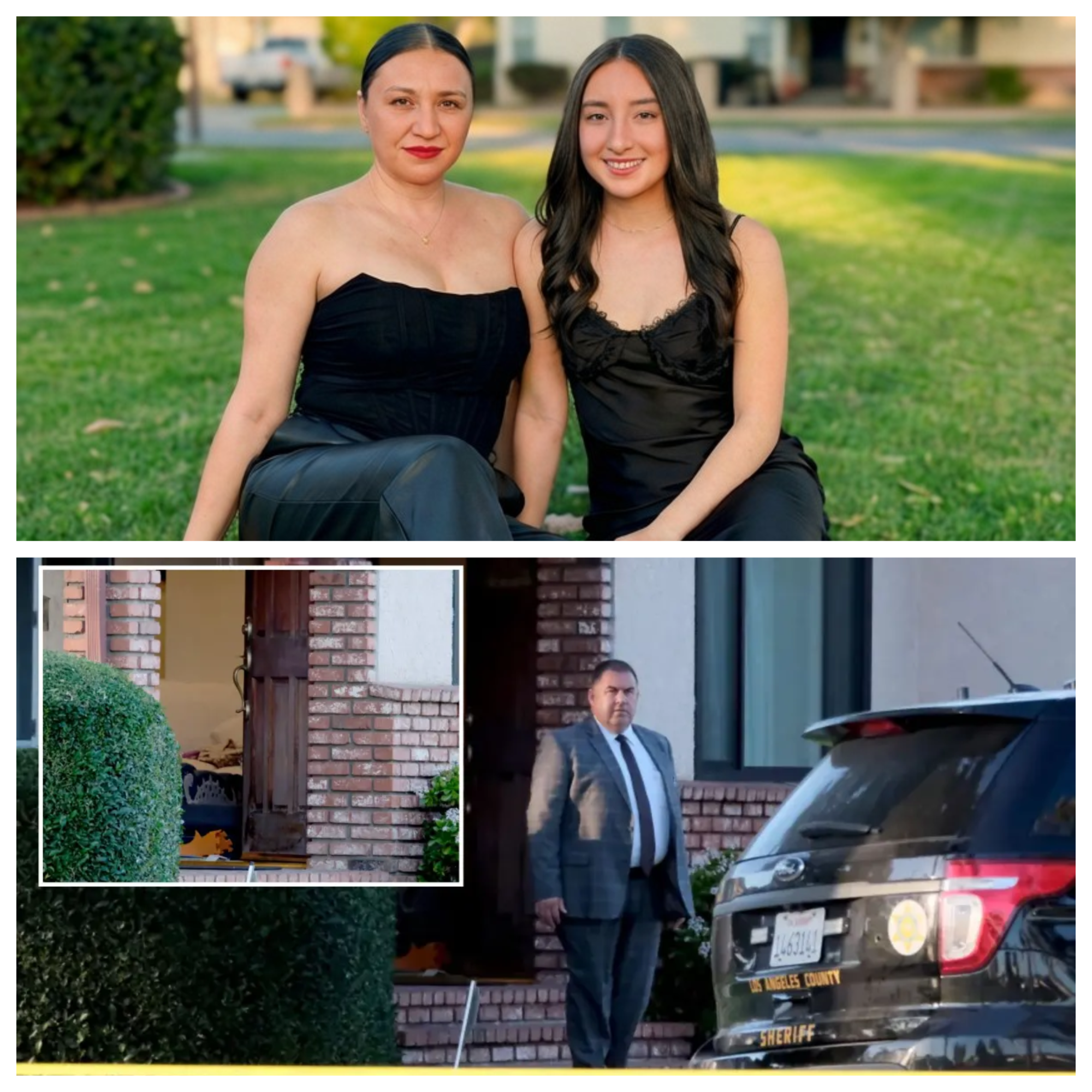
Hector Lionel Alfaro’s name was once just another quiet resident in the suburban calm of Lakewood, California. Neighbors described him as reserved, a family man who kept to himself in the modest home on a tree-lined street. But on the morning of January 16, 2026, that ordinary facade shattered in an explosion of gunfire that claimed three lives and left one young woman forever changed.
Around 8 a.m., deputies from the Los Angeles County Sheriff’s Department responded to reports of shots fired inside a residence in the 20000 block of the area. What they discovered was a scene of unimaginable horror. Roxana Rodriguez, 48, Alfaro’s wife, lay dead from gunshot wounds. Nearby was their youngest daughter, Sienna Alfaro, just 17 years old, also fatally shot. Hector Lionel Alfaro, believed to be in his 50s, had turned the firearm on himself, ending his life in the same room where he had destroyed his family.
The sole survivor was the couple’s eldest daughter, a 19-year-old woman whose identity has been shielded in most reports out of respect for her ongoing trauma. According to authorities, she awoke to the terrifying sound of gunshots echoing through the house. In statements to investigators, she recounted how her father entered her room and fired multiple rounds in her direction. Miraculously, she was not struck by any bullets—a fact that has left family, friends, and the community grappling with questions of fate, chance, or something more inexplicable.
The surviving daughter managed to escape the immediate danger and alert authorities, though the damage was already irreversible. Paramedics pronounced Roxana and Sienna dead at the scene, while Alfaro was found deceased from a self-inflicted wound. The Los Angeles County Sheriff’s Department quickly classified the incident as a murder-suicide, with no evidence suggesting outside involvement. Detectives continue to piece together the events leading up to that fateful morning, but no clear motive has been publicly confirmed.
In the hours and days that followed, the Lakewood community rallied in grief. A candlelight vigil was organized almost immediately, drawing dozens of mourners who clutched flickering flames against the evening chill. Friends, classmates, and extended family members gathered to honor Roxana and Sienna, sharing memories of a devoted mother who worked tirelessly and a bright teenager full of dreams. Sienna, a high school senior, was remembered for her infectious smile, her love of music, and her close bond with her older sister. Roxana was described as the heart of the household, always ready with a warm meal or a listening ear.
A GoFundMe campaign was launched to support the surviving daughter and extended family, covering funeral expenses, counseling, and the sudden upheaval of their lives. Donations poured in from strangers moved by the story, with messages emphasizing the need for mental health awareness and intervention in domestic crises. “No family should ever face this,” one contributor wrote. “But if sharing helps prevent even one more tragedy, it’s worth it.”
The surviving daughter’s voice emerged publicly in the days after the vigil. In interviews granted through family representatives, she spoke haltingly about the love she still held for her father despite the horror. She described a man who had struggled silently—perhaps with undiagnosed depression, financial pressures, or marital strain—but whose actions that morning defied comprehension. “He was my dad,” she reportedly said, tears evident even in transcripts. “I don’t understand why he did this. I just want my mom and sister back.” Her words underscored a painful truth: the perpetrator was not a stranger but a loved one, making the betrayal cut even deeper.
Experts in domestic violence and family psychology have weighed in cautiously, noting that murder-suicides often stem from a toxic mix of despair, control, and perceived loss of power. In cases involving intimate partners and children, the act is frequently framed as a final, twisted assertion of dominance—”if I can’t have this family, no one can.” Firearms play a role in the vast majority of such incidents in the United States, where access remains tragically easy compared to other nations. The Lakewood case has reignited local calls for stronger red-flag laws, mental health resources, and community vigilance.
Lakewood itself—a quiet, middle-class suburb known more for parks and schools than violence—has been left reeling. Council members issued statements of condolence, while local schools offered grief counseling for students who knew Sienna. Neighbors who once exchanged casual waves now stand in stunned silence outside the cordoned-off home, flowers and teddy bears piling up at a makeshift memorial.
This tragedy is not isolated. Across the country, families are torn apart in similar ways every year, often with little warning. Data from the Violence Policy Center indicates that murder-suicides claim over 1,000 lives annually in the U.S., with a disproportionate number involving firearms and familial relationships. Yet each case carries its own unique pain, its own unanswered questions.
For the surviving daughter, recovery will be a long road. She carries not only the grief of losing her mother and sister but the haunting memory of her father’s final moments—the sound of shots, the sight of her loved ones fallen, the inexplicable choice to spare her life while ending the others. Therapists emphasize the importance of trauma-informed care, peer support groups, and time. “Survival is the first step,” one psychologist noted. “Healing is a lifetime journey.”
As the candles from the vigil burn low and the news cycle moves on, Lakewood—and the nation—must confront an uncomfortable reality: darkness can hide behind the most ordinary doors. The screams that shattered that January morning serve as a stark reminder to check on loved ones, to listen for signs of struggle, and to act before silence becomes permanent.
In the end, what drove Hector Lionel Alfaro to this act may never be fully known. But the lives he took, and the one he left behind, demand that we keep asking—and keep caring.