“I’m Good”: Declan Coady’s Final Text Before Iranian Drone Strike Claims Young Soldier’s Life in Kuwait.
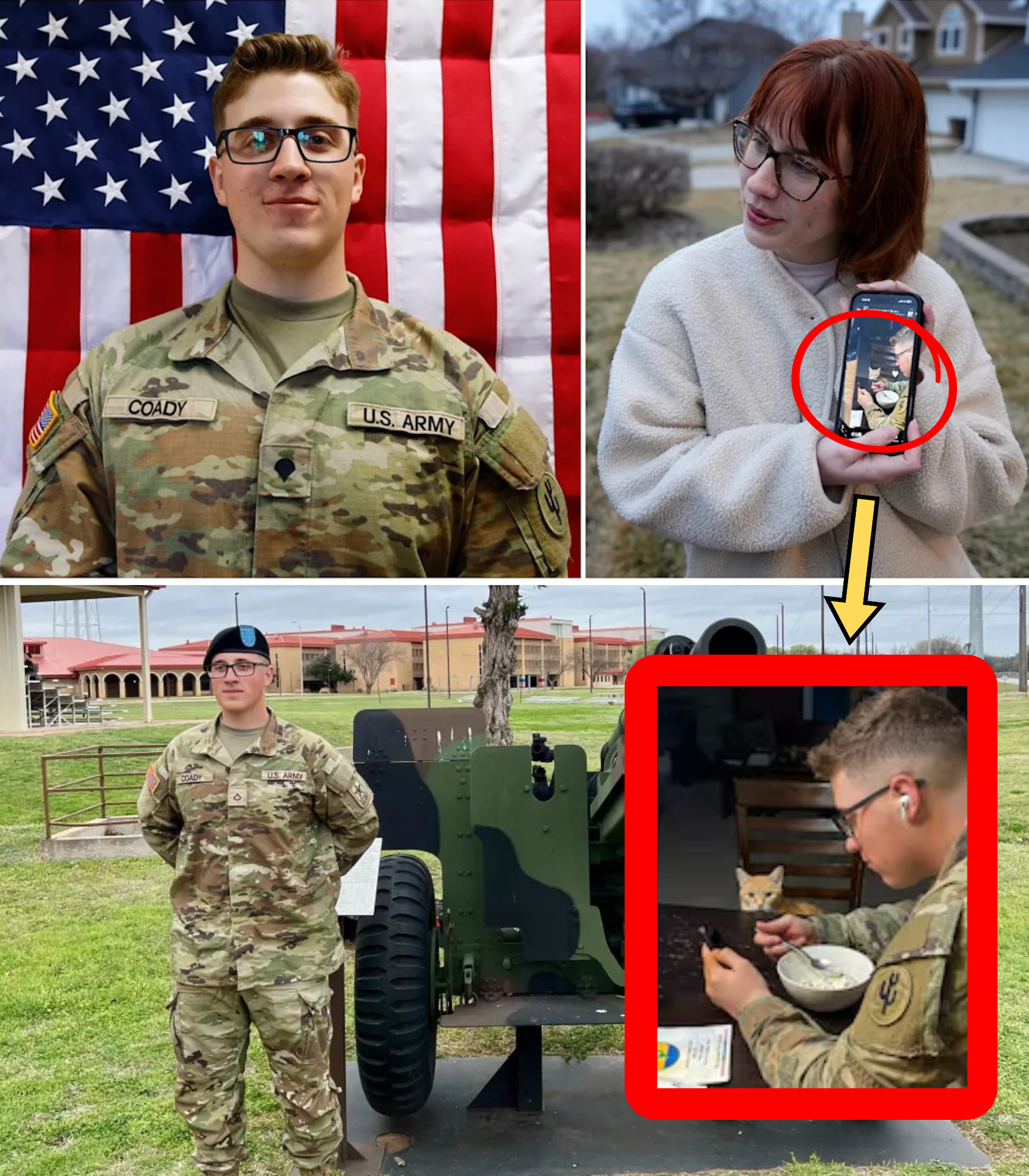
Specialist Declan Coady, a 20-year-old U.S. Army wheeled vehicle mechanic from Massachusetts, sent a short, comforting message to his mother—“I’m good”—moments before an Iranian Shahed-136 drone struck his forward operating base near Camp Arifjan, Kuwait, on the night of February 28, 2026. The blast killed him instantly, wounded four fellow soldiers, and marked the first U.S. combat fatality directly attributed to an Iranian-launched unmanned aerial vehicle on a U.S. installation in the Gulf region.
Coady had been deployed to Kuwait as part of a routine nine-month rotation supporting Combined Joint Task Force–Operation Inherent Resolve. His unit maintained logistics convoys across the theater, ensuring supplies reached forward positions in Iraq and Syria. Friends and family described him as hardworking, soft-spoken, and fiercely proud of his service. He enlisted in 2024 shortly after high school graduation, motivated by a desire to support his parents and younger sister while serving his country.
In the weeks leading up to the attack, the base had been on elevated force protection condition due to credible intelligence of Iranian-backed militia activity. U.S. Central Command had increased patrols, activated additional counter-drone systems, and conducted regular drills. Despite these measures, the Shahed-136—launched from southwestern Iran—managed to penetrate the defensive envelope. The low-flying, slow-moving drone evaded initial radar detection until it was too late for full interception.
The sequence unfolded rapidly. At approximately 9:15 p.m. local time, Coady exchanged texts with his mother during a break. When she asked about the mood on base amid rising tensions, he replied: “I’m good, Mom. Don’t worry. Love you.” Forty-seven minutes later, at 10:02 p.m., air defense radars acquired the incoming threat. Patriot batteries engaged, downing two drones in the salvo, but the third detonated near a barracks tent where Coady and his squad were resting after a 14-hour maintenance shift. The explosion caused catastrophic injuries; Coady was killed instantly by blast and fragmentation effects.
Military officials notified the family at 4:30 a.m. EST through a casualty assistance call officer. His mother collapsed upon hearing the news; his father later told local reporters that the family had repeatedly reread the “I’m good” message in the hours before the knock at the door. “He always downplayed the danger so we wouldn’t worry,” his father said. “Even knowing what was coming, he wanted to protect us one last time.”
Coady’s death has triggered intense scrutiny of force protection measures and the vulnerability of forward bases to inexpensive drone swarms. The Shahed-136, costing roughly $20,000–$50,000 per unit, can be produced in large numbers and launched from mobile platforms, making saturation attacks difficult to counter completely. Defense analysts noted that while U.S. systems successfully neutralized two of the three drones, the third exploited a brief gap in coverage—a gap that proved fatal.
The Pentagon immediately labeled the strike a “deliberate act of aggression” by the Islamic Revolutionary Guard Corps. Secretary of Defense Lloyd Austin stated that the United States would respond “at a time and place of our choosing” and confirmed that retaliatory options were under active consideration. Congressional leaders expressed bipartisan outrage, with calls ranging from targeted strikes against IRGC drone production facilities to broader sanctions on Iran’s oil exports.
In Massachusetts, flags were lowered to half-staff across state buildings. A public memorial service is scheduled for March 15 in Coady’s hometown, where classmates, neighbors, and veterans plan to honor a young man who chose service over safety. A GoFundMe established by his family to support military youth programs and veteran families has already raised over $180,000 in the first 48 hours.
Coady’s final text has become a focal point of national mourning. Shared widely on social media, it captures both the ordinary tenderness of a son reassuring his mother and the brutal reality of war in the modern era. Military chaplains and grief counselors have been dispatched to support his unit and family, while fellow soldiers remember him as the quiet mechanic who always had a joke ready during long nights in the motor pool.
The incident has also renewed debate about U.S. military posture in the Middle East. Some lawmakers argue for a reduced footprint to limit exposure to Iranian retaliation; others insist that withdrawal would embolden Tehran and its proxies. The attack underscores the persistent threat posed by low-cost, asymmetric weapons that can be launched from hundreds of miles away with minimal risk to the attacker.
For the Coady family, these strategic questions feel secondary to the unbearable loss of a son who had just begun to build his future. Photos from his last leave show him smiling beside his sister at a family barbecue—the last time they held him. His mother keeps his final text pinned at the top of her phone, a reminder of a promise he tried to keep even as danger closed in.
Declan Coady’s death at 20 reminds the nation of the human cost behind every headline from the region. He was more than a statistic or a name on a casualty list—he was a son who said “I’m good” so his family could sleep easier, unaware that those would be his last words. As the United States weighs its next steps, his family and comrades carry the weight of a loss that no policy decision can undo.