Ignored Warnings and a Father’s Desperate Fight: How Mila Chatman and Amor Wilson Were Lost to a Failing System.
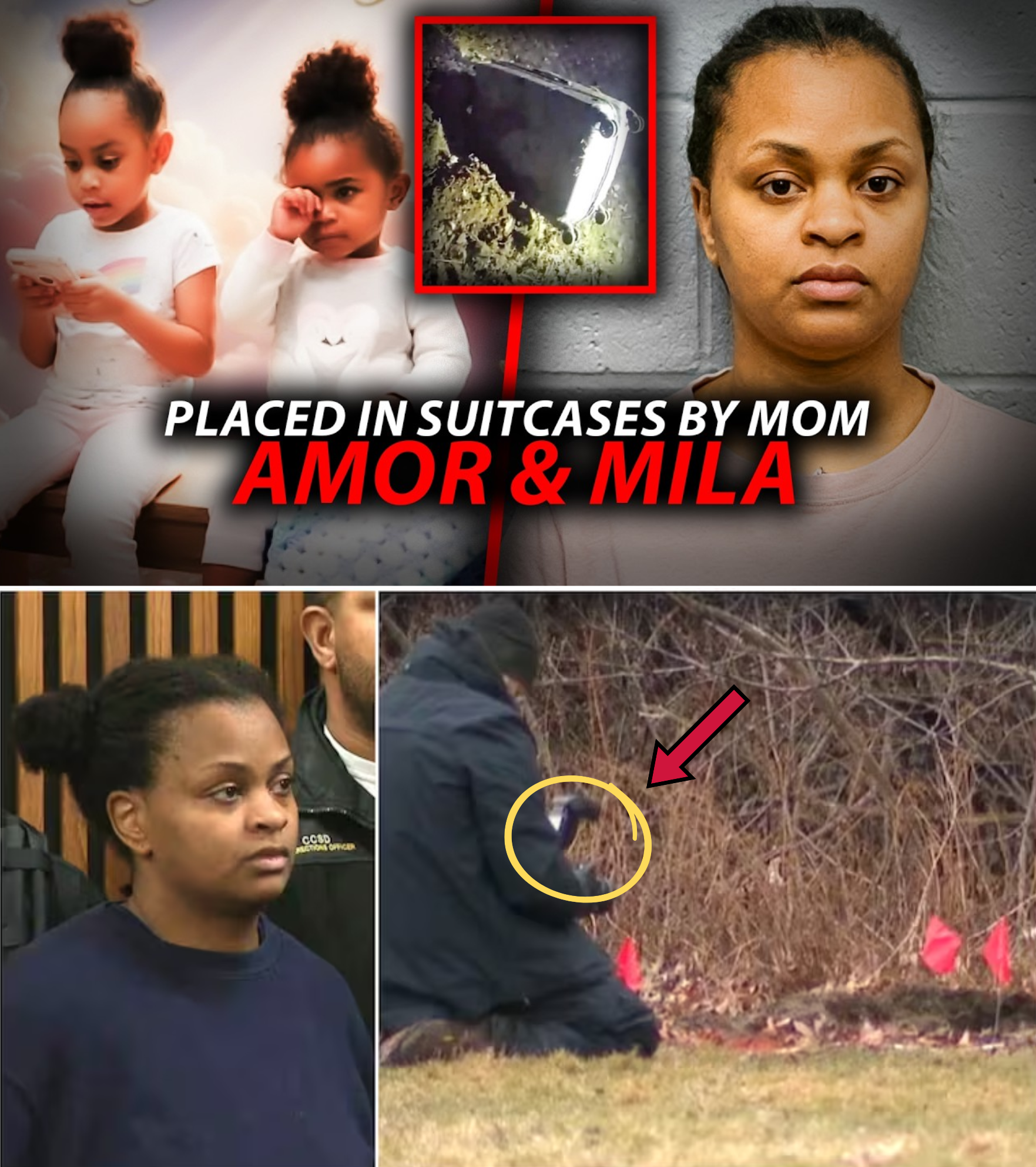
The discovery of two young half-sisters buried in suitcases in a Cleveland field has ignited widespread outrage, exposing deep cracks in child welfare oversight and the heartbreaking reality of a father’s years-long battle to protect his child. On March 2, 2026, a man walking his dog in the South Collinwood neighborhood near Ginn Academy and Sarinac playground noticed his pet reacting to something unusual in the snow-covered ground. Following the dog’s lead, he uncovered one suitcase containing human remains, then spotted a second about 25 feet away. Both held the badly decomposed bodies of 10-year-old Amor Wilson and 8-year-old Mila Chatman.
Cleveland police quickly identified the victims through DNA testing by the Cuyahoga County Medical Examiner’s Office. Their mother, 28-year-old Aliyah Henderson, a lifelong Cleveland resident with no prior violent criminal history, was arrested on March 4 after a search warrant at her home on East 162nd Street. She faces two counts of aggravated murder—a capital offense in Ohio potentially eligible for the death penalty—plus one count of child endangering. During her March 6 arraignment in Cleveland Municipal Court, Judge Jeffrey Johnson set a $2 million bond, citing flight risk and community safety. Henderson showed no emotion, entered no plea, and remains jailed awaiting trial.
A surviving child found alive in the home was immediately placed with the Cuyahoga County Department of Children and Family Services, adding urgency to the endangering charge. Autopsies continue to determine exact causes of death, but the decomposed state suggests the bodies had been hidden for some time, concealed by winter weather until the thaw exposed them.
Mila’s father, DeShaun Chatman, has emerged as a central voice of grief and frustration. Never married to Henderson, he last saw his daughter in 2020 at age three, during a joyful moment building a fort in the living room. After that, Henderson allegedly cut off contact, telling him he was “too family oriented.” For five years, Chatman pursued every avenue: repeated calls to Child Protective Services, requests for welfare checks, emergency custody filings in court. Each time, authorities dismissed his concerns. Case notes reportedly cited the children having “a home and a bed” as evidence of adequate care, closing investigations without deeper inquiry.
Homeschooling further isolated the girls, removing them from daily contact with teachers or counselors who serve as mandatory reporters for abuse or neglect. Neighbors like Deay Crider noted odd patterns—no children playing outside, minimal interaction—but those observations went unheeded. A recent stalking complaint against Henderson by a neighbor added to the picture of erratic behavior, though no charges stemmed from it immediately. Juvenile court records indicate police are now investigating “all relatives,” broadening the probe.
Chatman has spoken publicly about his powerlessness. “I’ve been looking for my daughter for five years,” he told reporters, voice breaking. “I called CPS, went to courts, tried emergency custody, welfare checks—denied all access.” He believes the tragedy “could have been prevented” with proper intervention. In the days following the discovery, he laid flowers at a makeshift memorial near the site, joined by community members in candlelight vigils and a balloon release organized by both fathers. Pastor Kyle Earley, speaking for Chatman at the event, described the outpouring of support as “divine” amid unimaginable pain.
The case has sparked intense debate over child protection protocols. Critics argue that superficial criteria—like basic housing—override genuine risk assessments in custody disputes or welfare concerns. Homeschooling’s lack of mandatory check-ins allows vulnerable children to slip through cracks. Advocates call for reforms: required periodic evaluations for homeschooled kids, lower intervention thresholds when non-custodial parents raise alarms, increased caseworker staffing, and better coordination between courts, CPS, and police.
Public reaction in Cleveland and beyond has been visceral. Vigils drew dozens to the playground area, with teddy bears, signs, and candles honoring the girls. Online, thousands share stories of similar ignored warnings in family court battles. Some demand harsher penalties for Henderson, including life without parole or the death penalty. Others focus on systemic change, pushing for legislation inspired by the tragedy—perhaps a “Mila and Amor Law” mandating action on repeated custody pleas or isolated child reports.
Henderson’s background offers few clues to motive or escalation. She sought employment recently and maintained a low profile, making the alleged crimes all the more shocking to acquaintances. Prosecutors describe the findings as profoundly disturbing, vowing a thorough case. The multi-agency investigation continues, with homicide detectives urging tips at 216-623-5464.
For Amor and Mila, tributes paint pictures of innocent lives cut short—Amor remembered as vibrant and kind, Mila as a smiling child who loved simple joys. Their grandmother Nichelle Wilson stood silently at memorials, grieving alongside friends. Chatman channels his sorrow into advocacy, joining other fathers in calling for fathers’ rights improvements and stronger safeguards against parental alienation.
This heartbreaking story forces a reckoning: child safety demands more than surface-level checks. When a concerned parent cries out for years and is repeatedly silenced, the cost can be unthinkable. As legal proceedings unfold, the legacy of Mila Chatman and Amor Wilson may drive meaningful reforms—ensuring no other child vanishes into a system that failed to listen. Their names now echo in calls for justice, prevention, and the simple promise that every warning deserves attention before it’s too late.