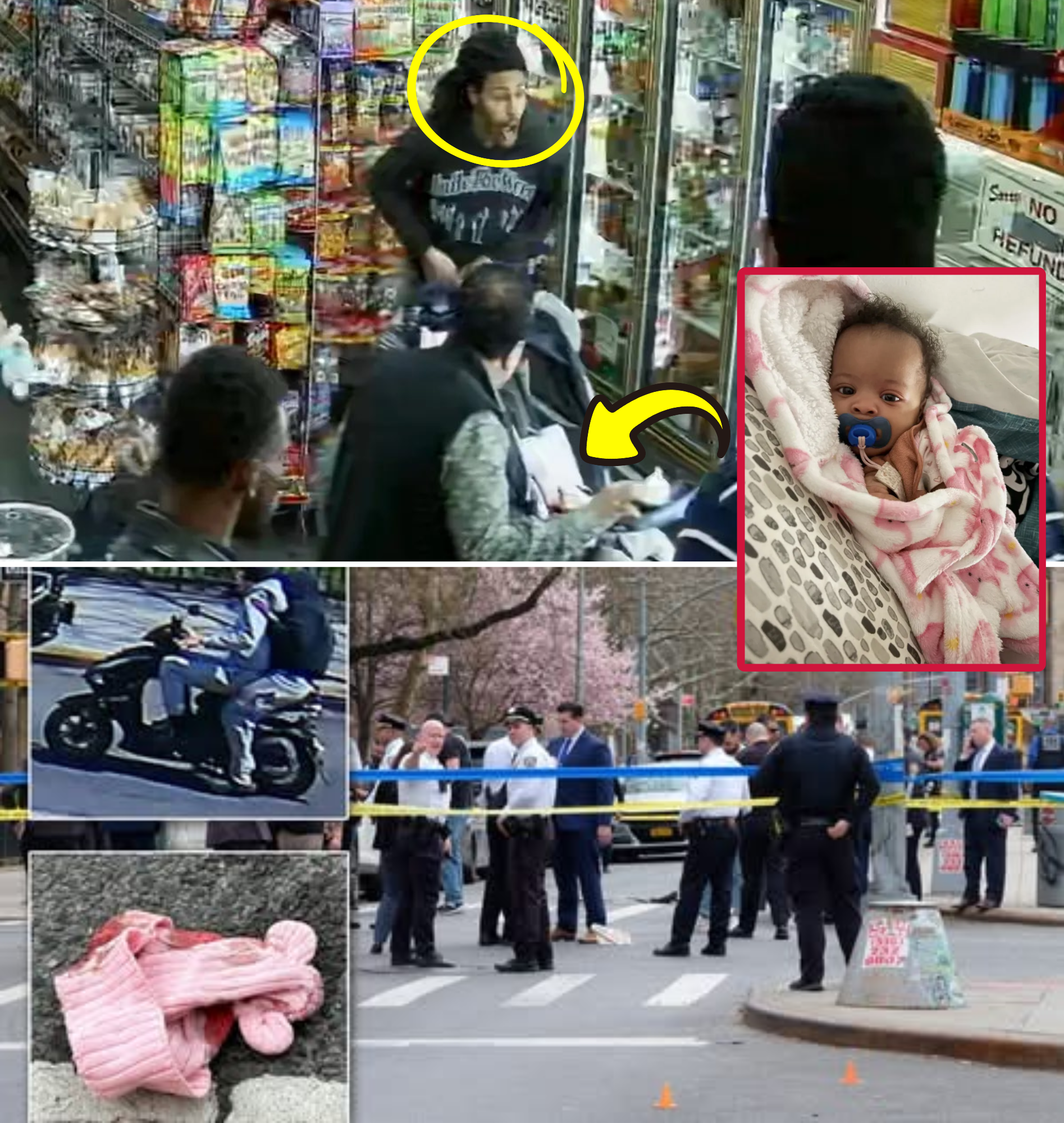
The horror of seven-month-old Kaori Patterson-Moore’s death in a Brooklyn drive-by shooting has taken an even darker turn with the release of new court documents revealing the alleged shooter’s confession. In a recorded statement to detectives, 21-year-old Amuri Greene admitted he was aiming at the baby’s father when he opened fire from the back of a moped — claiming the dad “was the defendant’s intended target.”
Yet the bullet that tore through the afternoon air struck the innocent infant instead, ending a life filled with laughter and early milestones before it had truly begun.
Kaori was sitting in her stroller alongside her two-year-old brother near the intersection of Humboldt and Moore streets in East Williamsburg on April 1 when the gunfire erupted. Surveillance footage captured the moped speeding against traffic, Greene firing multiple rounds toward a group on the corner, and the devastating moment the family was caught in the crossfire. The moped crashed shortly afterward, injuring Greene and allowing his quick arrest at the scene. He suffered a possible broken leg and now faces three counts of murder, attempted murder, multiple weapons charges, and assault. He has pleaded not guilty.
The second suspect, 18-year-old Matthew Rodriguez, who allegedly drove the moped, fled but was tracked down and arrested in Pennsylvania days later. Charges against him are pending as he awaits extradition.
According to the criminal complaint, Greene told investigators he targeted Kaori’s father, Jamari Patterson, during what police believe was a gang-related dispute. Detectives have linked Patterson to the Money Over Everything gang in the Bushwick Houses, suggesting the shooting stemmed from ongoing rivalries. The mother has reportedly pushed back against some of these claims, but the confession has only intensified the family’s anguish and the community’s outrage.
Kaori’s loved ones remember her as a joyful, intelligent baby who was just beginning to walk and say her first words. One grandmother, who asked not to be identified, said through tears: “This doesn’t define her. Everybody loves her. She was just starting to call me mom. She was just starting to take her first steps. She was close with all her family and nephews and uncles.”
Linda Oyinkonyan, Kaori’s maternal grandmother and a pastor with her husband, described the pain in raw terms: “Heartbroken, horrified. It’s bad, it’s sad, it’s sorrowful, it’s hurtful, it’s nothing you can imagine… the deep hurt.” Despite the unimaginable loss, the family has spoken of forgiveness rooted in their faith. “Violence, revenge, that’s not what we do here. We pray,” Oyinkonyan said. “We forgive them. We’re praying that they get saved. And God just have mercy on them.”
The father’s own words reflect a grief too heavy for words. In a public letter, Jamari Patterson wrote simply, “I want my baby back,” adding that he wanted to spend his entire life being her father.
The shooting has shaken Brooklyn, with vigils drawing hundreds who leave flowers, balloons, teddy bears, and candles at the corner where Kaori’s life ended. Local leaders and residents demand an end to the cycle of gang violence that turns public streets into battlegrounds and leaves the most vulnerable as unintended victims. Police Commissioner Jessica Tisch called it a tragedy that “shocks the conscience,” while Mayor Zohran Mamdani echoed calls for accountability and safer communities.
This case highlights a grim reality: stray bullets from gang disputes continue to claim innocent lives in broad daylight. Kaori was described as a “little baby angel” with no connection to the conflicts around her, yet one reckless decision destroyed her future and traumatized her family forever. Her brother, grazed by the same gunfire, faces emotional scars that may last a lifetime.
Advocates are using the moment to push for stronger youth intervention programs, conflict resolution initiatives, and stricter enforcement against illegal firearms in high-risk neighborhoods. Others stress the need for cultural change to stop glorifying street life and retaliation.
As both suspects face the justice system, the focus remains on the family’s healing. Donations and messages of support have poured in from across the city and beyond. Community members continue to gather, sharing stories of Kaori’s bright smile and hoping her short life sparks real conversations about preventing such senseless deaths.
The confession adds a layer of cold calculation to an already heartbreaking story. Greene’s admission that he deliberately targeted Kaori’s father — only for the bullet to find the baby instead — underscores how quickly gang feuds can spiral into irreversible tragedy. It also raises difficult questions about accountability, prevention, and the protection of children caught in the middle of adult conflicts.
Kaori Patterson-Moore lived just seven months, yet she touched countless lives with her giggles and curiosity. Her first steps, her first words, and the endless laughter her family adored were stolen in a single moment of violence. In the days ahead, as the legal proceedings continue, Brooklyn — and those watching from afar — will grapple with how many more families must endure this “deep hurt” before meaningful change takes hold.
For now, the family holds onto faith and memories. Linda Oyinkonyan and others pray not only for justice but for mercy and transformation. Their grace in the face of such loss stands as a powerful counter to the rage that claimed Kaori. Yet nothing can bring back the smiling baby girl whose life ended far too soon — collateral damage in a war she never knew existed.
News
“Just Starting to Walk and Call Me Mom” – Kaori’s Devastated Grandmother Reveals the Pain After Brooklyn Baby Drive-By Killing.
The grief in East Williamsburg runs deeper with every new detail that emerges about the life stolen from seven-month-old Kaori Patterson-Moore. While the city processes the arrests of both suspects…
Second Suspect in Brooklyn Baby Drive-By Finally Caught in Pennsylvania – The Full Story of Kaori’s Tragic Death.
In the heart of Brooklyn’s East Williamsburg neighborhood, a routine afternoon walk turned into an unimaginable nightmare on Wednesday afternoon. Seven-month-old Kaori Patterson-Moore, described by her devastated family as a…
One Innocent Text Message Lured Family Outside — Then Stray Bullet Killed 7-Month-Old Kaori Patterson-Moore in Brooklyn Stroller.
They had no plans to leave the house that day. It was supposed to be a quiet afternoon at home in Brooklyn. But one single text message from her father…
Best Friend Reveals Ryan Jennings’ Chilling Text Sent 16 Hours Before Heroic Death Saving His Children.
Just 16 hours before he gave his life to save his children from a deadly rip current, Ryan Jennings sent a haunting message to his best friend that now feels…
Pregnant Widow Reveals Husband Ryan Jennings’ Heartbreaking Last Words After He Died Saving Their Children from Rip Current.
In the turbulent waters of Juno Beach, Florida, Ryan Jennings fought until his final breath to save his children — and the words he left behind for his pregnant wife…
Hero Father Ryan Jennings’ Last Words to His Son Before Drowning While Saving Children from Rip Current at Juno Beach.
In the churning waters off Juno Beach, Florida, Ryan Jennings fought with everything he had to keep his children alive — and in his final moments, he left his son…
End of content
No more pages to load