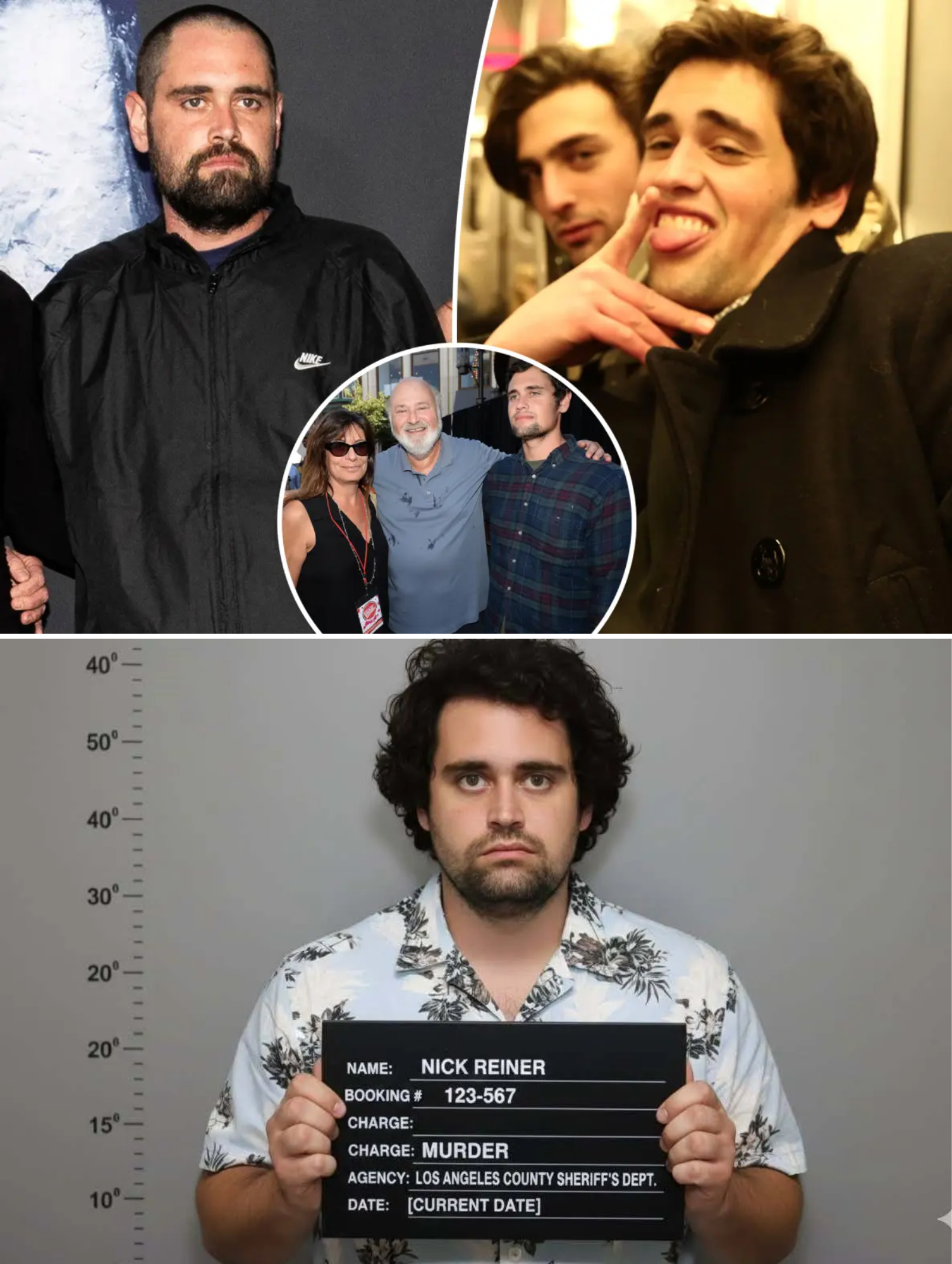
In the glittering world of Hollywood, where fame casts long shadows, the story of Nick Reiner emerges as a chilling tale of privilege turned to peril. Born into a dynasty of entertainment icons, Nick, now 32, is the son of acclaimed director Rob Reiner—known for timeless classics like “When Harry Met Sally” and “The Princess Bride”—and photographer Michele Singer Reiner. His grandfather, the legendary comedian Carl Reiner, further amplified the family’s storied legacy. Yet, beneath this veneer of success lay a childhood marked by indulgence and inner turmoil that foreshadowed a devastating tragedy.
From an early age, Nick grew up in a sheltered environment in upscale Brentwood, surrounded by the perks of Hollywood royalty. Family friends recall how staff were explicitly instructed to avoid upsetting him, granting his every whim to maintain peace. Described as hyperactive and prone to explosive outbursts, he would punch walls, shatter lamps, and even destroy televisions in fits of rage. His parents, ever protective, hired aides and siblings pitched in to keep him entertained and calm, creating a bubble that shielded him from consequences but perhaps exacerbated his struggles.
As a teenager, Nick’s life spiraled into addiction. He battled substance abuse, cycling through at least 18 rehab programs and enduring periods of homelessness despite his family’s wealth. In a bid to channel his experiences, he collaborated with his father in 2014 on the film “Being Charlie,” a semi-autobiographical drama exploring teen drug dependency. The project offered a glimpse of hope, showcasing Nick’s creative potential as a writer. However, relapse followed, and his parents opted for in-home sober coaches rather than institutional care, firing those who couldn’t manage his resistance.
Recent years brought new challenges. Diagnosed with schizophrenia, Nick’s behavior grew erratic under medication, though no prior violence was reported. He resided in the family’s guest house for about five years, oscillating between stability and chaos. Friends noted the immense pressure he felt living in his father’s shadow—Rob’s directorial triumphs and activism in progressive causes set an unattainable bar. Nick aspired to carve his own path in entertainment but faced repeated setbacks, fueling frustration.
The culmination came on December 13, 2025, following a tense holiday gathering at comedian Conan O’Brien’s home. Nick disrupted the event with arguments, interruptions, and outbursts, alarming guests and prompting threats of intervention. Hours later, in a horrifying act, he allegedly slit the throats of Rob and Michele as they slept in their Brentwood mansion. Their bodies were discovered the next morning by daughter Romy, 28, who found the scene and alerted authorities. Nick fled to a nearby hotel, leaving behind a blood-drenched room, and was arrested that night on charges of first-degree murder.
This tragedy has rocked Hollywood, highlighting the unseen burdens of fame. Nick’s story underscores how even in elite circles, mental health crises and familial pressures can erupt into unimaginable violence, leaving a once-celebrated family in ruins. As investigations continue, questions linger about warning signs missed and the true cost of living under the spotlight.