Her Family Said She Had Seemed Stable. Then Something Changed — Days Before the Times Square Attack..
The crossroads of the world ground to a horrific halt on a Monday afternoon when chaos erupted in the heart of New York City. What began as an ordinary day for thousands of commuters and tourists quickly morphed into a nightmare that claimed an innocent life and left a city searching for answers.
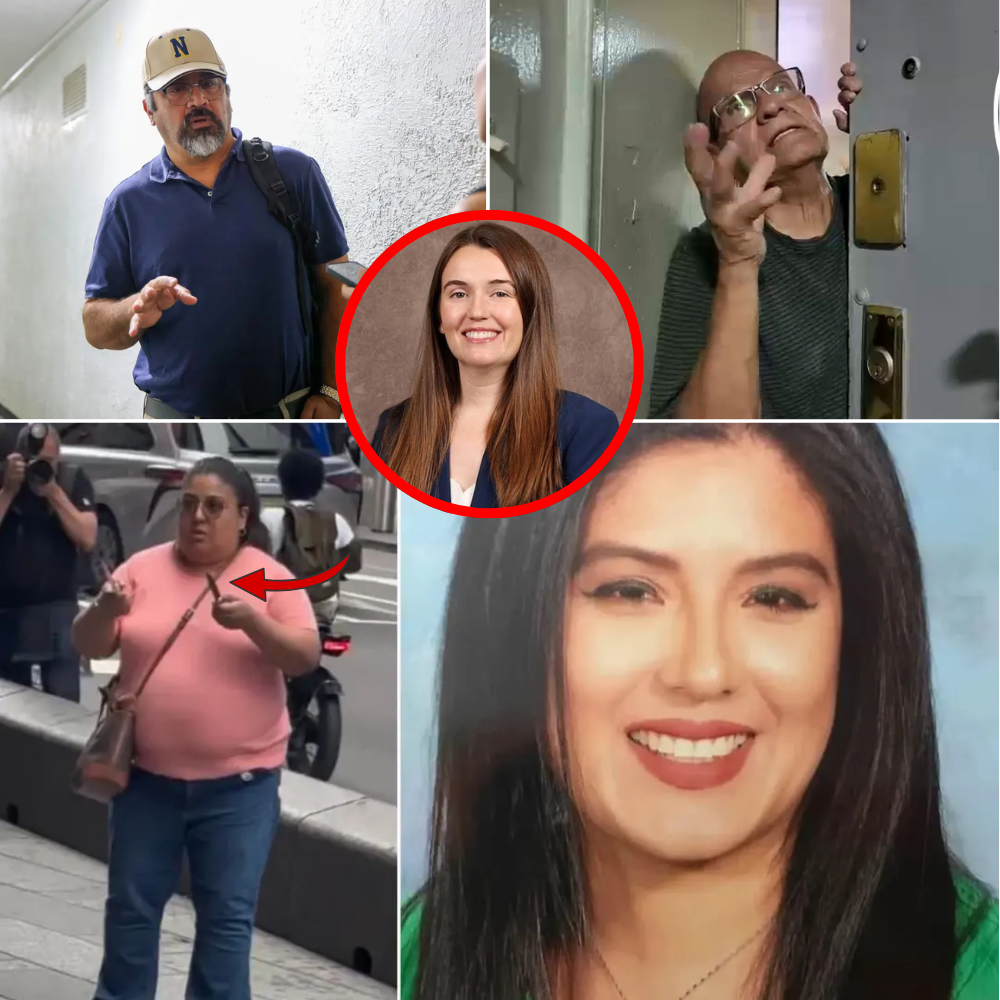
The suspect behind the unprovoked rampage, identified by authorities as 49-year-old Pamela Cisneros of Queens, strode into Times Square carrying a red shopping bag hiding two large kitchen knives. Within a span of seconds, she targeted a 68-year-old tourist and subsequently attacked 32-year-old Erin Piacenti, a Bank of America Vice President and new mother.
As police cornered Cisneros, body cameras and bystander videos captured a tense, fatal standoff. Refusing to drop her weapons and shouting chilling threats at officers, she advanced despite the deployment of stun guns, forcing police to open fire. But as the smoke cleared and the headlines flashed across the globe, a deeper, more unsettling mystery emerged behind closed doors: How did a woman whom loved ones believed was finally stable slip so catastrophically into violence?
A History Hidden in Plain Sight
To understand the tragedy that unfolded near West 42nd Street, investigators and family members are being forced to reexamine years of hidden struggles. Public records and police reports show that Cisneros had previous documented interactions with the NYPD tied to severe mental health crises. These included a harrowing 2018 incident involving aggressive behavior at a Manhattan hotel and a 2019 episode where she jumped onto subway tracks in what appeared to be a suicide attempt.
Despite these frightening episodes, her family maintained that her behavior had shifted in recent years. Her brother, Patrick Peralta, noted that while she had long dealt with psychiatric challenges—including a diagnosis of bipolar disorder—she had never previously exhibited violent tendencies. According to her family, she had been undergoing consistent medical treatment, receiving regular monthly medication injections to manage her condition.
To those closest to her, the sharp edges of her illness seemed blunted. She appeared calm, composed, and functional. But behind that fragile facade, something was quietly unraveling.
The Final Days: Missing Doses and Warning Signs
As investigators piece together the timeline leading up to the attack, troubling details have surfaced regarding Cisneros’s final weeks. Her father, Mario Cisneros, revealed that he had seen his daughter just days before the bloodshed and thought she was doing well. Yet, beneath the surface appearance of stability, loved ones began to wonder if a critical threshold had been crossed.
Behind closed doors, family members grew privately concerned that Cisneros may have quietly stopped taking her prescribed medication or missed her scheduled treatment intervals. Mental health experts frequently warn that unmonitored cessation of psychiatric regimens can trigger rapid psychological decompensation, leading to sudden paranoia, delusions, or catastrophic behavioral shifts.
Chillingly, months prior to the attack, digital footprints left by Cisneros hinted at a dark internal monologue. In a series of erratic social media posts, she rambled about religion, societal collapse, and terrifyingly wrote about “stabbing others for no reason” under the delusion of spiritual warfare. At the time, these posts were easily dismissed as internet noise by outsiders—until reality violently caught up with her words.
Community Outrage and a Shattered Legacy
The fallout from the Times Square attack has sent shockwaves through New York City, sparking fierce community debates over public safety, systemic failures in mental health care, and the limits of law enforcement intervention.
While NYPD Commissioner Jessica Tisch and Mayor Zohran Mamdani defended the responding officers for preventing an even greater loss of life during the four-minute standoff, grieving family members are left grappling with impossible questions. Cisneros’s mother expressed public anguish over why officers had to use lethal force rather than subduing her physically, while the broader public mourns the devastating loss of Erin Piacenti—a brilliant young professional who had just returned from maternity leave to embrace the brightest chapter of her life.
The tragedy leaves behind a haunting reminder of the invisible fractures running through society. When medical oversight fails and warning signs are missed in the shadows, the consequences can ripple outward in seconds, transforming a crowded city street into a permanent monument to a preventable catastrophe.