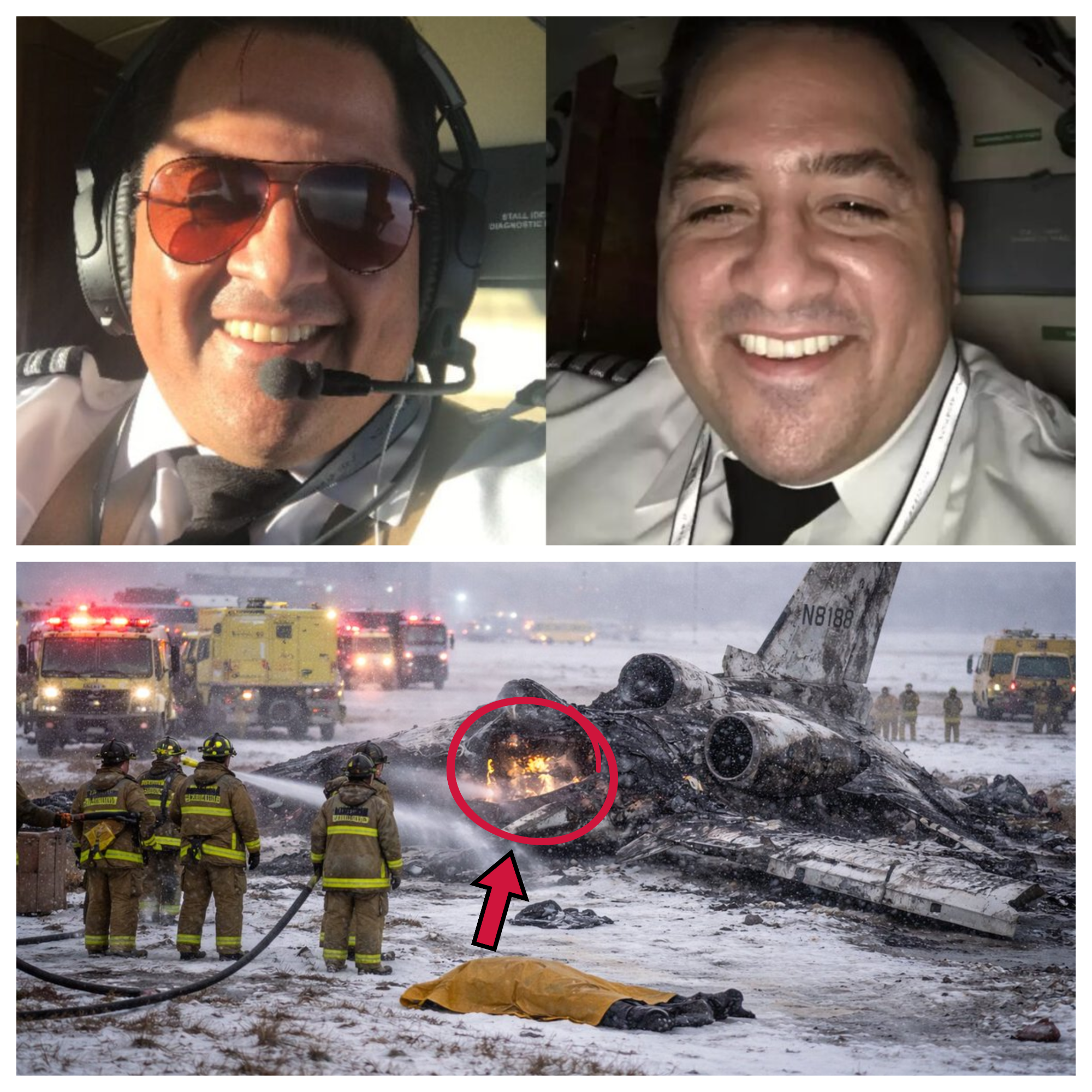
The family of Jacob Hosmer, the 47-year-old pilot who captained the ill-fated Bombardier Challenger 600, has shared their profound grief following the January 25, 2026, crash at Bangor International Airport that killed all six people on board. In statements to local media, Hosmer’s father, Gary, confirmed his son’s death with a mix of sorrow and faith: “He’s in Heaven now with Jesus.” A longtime friend, speaking anonymously after knowing Hosmer for 15 years as his aviation specialist, offered a heartfelt remembrance: “I would describe him as a great pilot, a loving husband, and a phenomenal father. He was always kind. He was always laughing.”
The sentiment captures the essence of a man described by those closest to him as steady, joyful, and deeply committed to family and profession. Hosmer had joined Houston-based personal injury law firm Arnold & Itkin LLP as a pilot in May 2025, bringing years of experience from various private aviation roles. Colleagues and friends portrayed him as meticulous in the cockpit—calm under pressure, thorough in preparation, and someone who prioritized safety above all. His LinkedIn profile reflected a career built on reliability, with no reported incidents or concerns prior to the tragedy.
The flight departed Houston’s Hobby Airport earlier that day, stopping in Bangor for refueling before continuing to Paris. The group aboard included high-profile attorney Tara Arnold, wife of the firm’s co-founder; event planner Shawna Collins; executive chef Nick Mastrascusa; sommelier Shelby Kuyawa; and a second crew member. The trip combined business scouting for a luxury hospitality venture with personal elements, turning what should have been a routine tech stop into catastrophe.
As the jet began its takeoff roll around 7:45 p.m. amid Winter Storm Fern’s heavy snow and gusts, witnesses reported normal acceleration followed by a sudden, violent roll. The aircraft inverted completely, struck the runway upside down, and burst into flames. The intense fire and extreme weather complicated immediate response—fire crews battled the blaze while divers and rescuers contended with sub-freezing temperatures and poor visibility. No survivors were found; the National Transportation Safety Board (NTSB) recovered the flight data and cockpit voice recorders relatively intact despite damage, providing hope for detailed insights into the final moments.
Preliminary investigations point to possible wing contamination from residual snow or ice, runway conditions, or a sudden loss of control during rotation. De-icing had been performed, but experts note that even minor buildup can reduce lift critically in contaminated environments. The inversion suggests a rapid upset—potentially stall-related, control reversal, or asymmetric thrust—though full analysis awaits data review and wreckage examination.
Hosmer’s loss resonates deeply in aviation circles and beyond. Friends recalled his love for family—being a dedicated husband and father who balanced demanding flight schedules with coaching youth sports and attending school events. His laughter, often mentioned in tributes, painted him as someone who brought lightness to high-stakes work. “He was the guy you’d want flying your family,” one associate said, highlighting the trust he inspired.
The crash has amplified grief across connected communities. Tara Arnold was remembered as a powerhouse lawyer and devoted mother planning her daughter’s wedding; Shawna Collins as a beloved Lakewood Church staffer whose organizational skills created memorable events; Nick Mastrascusa as a creative culinary force whose kindness extended from kitchens to community; Shelby Kuyawa as a passionate wine expert full of life. Families have launched fundraisers and shared photos of happier times—beach days, celebrations, professional milestones—contrasting sharply with the sudden void.
The tragedy unfolded during one of the Northeast’s fiercest storms, with snow accumulation, high winds, and freezing conditions challenging operations. Bangor serves as a frequent refueling point for transatlantic private flights due to its infrastructure, but winter weather demands exacting protocols. The incident renews calls for enhanced scrutiny of de-icing effectiveness, performance calculations on contaminated runways, and decision-making in marginal conditions.
Emergency services faced heroic challenges containing the fire and recovering remains amid the blaze and weather. The airport closed temporarily, diverting flights and disrupting regional travel. NTSB investigators, hampered initially by deep snow covering wreckage, continue methodical work, emphasizing no conclusions until evidence is fully evaluated.
Tributes continue to flood in. Colleagues at Arnold & Itkin expressed devastation, noting Hosmer’s professionalism and warmth. Aviation networks shared memories of his steady hand and positive spirit. Community leaders in Houston and Maine acknowledged the loss, with moments of silence at local events.
For Hosmer’s family, the pain is raw and ongoing. His father’s words of faith offer a measure of comfort amid unimaginable sorrow. The phrase “He was always kind” has become a poignant refrain in memorials, encapsulating a life defined by decency, dedication, and joy. As the investigation progresses, those who knew him hold onto the legacy of a man who flew with skill, lived with heart, and left an indelible mark on everyone he touched.
In the aftermath, the crash serves as a somber reminder of aviation’s risks, especially in adverse weather, and the profound human cost when lives intersect with tragedy. The families, bound by shared grief, find solace in remembering not the final moments, but the laughter, kindness, and love that defined Jacob Hosmer and those lost with him.