“He Did the Best Thing He Could”: Passenger Describes Pilot’s Final Brave Act in LaGuardia Runway Horror.
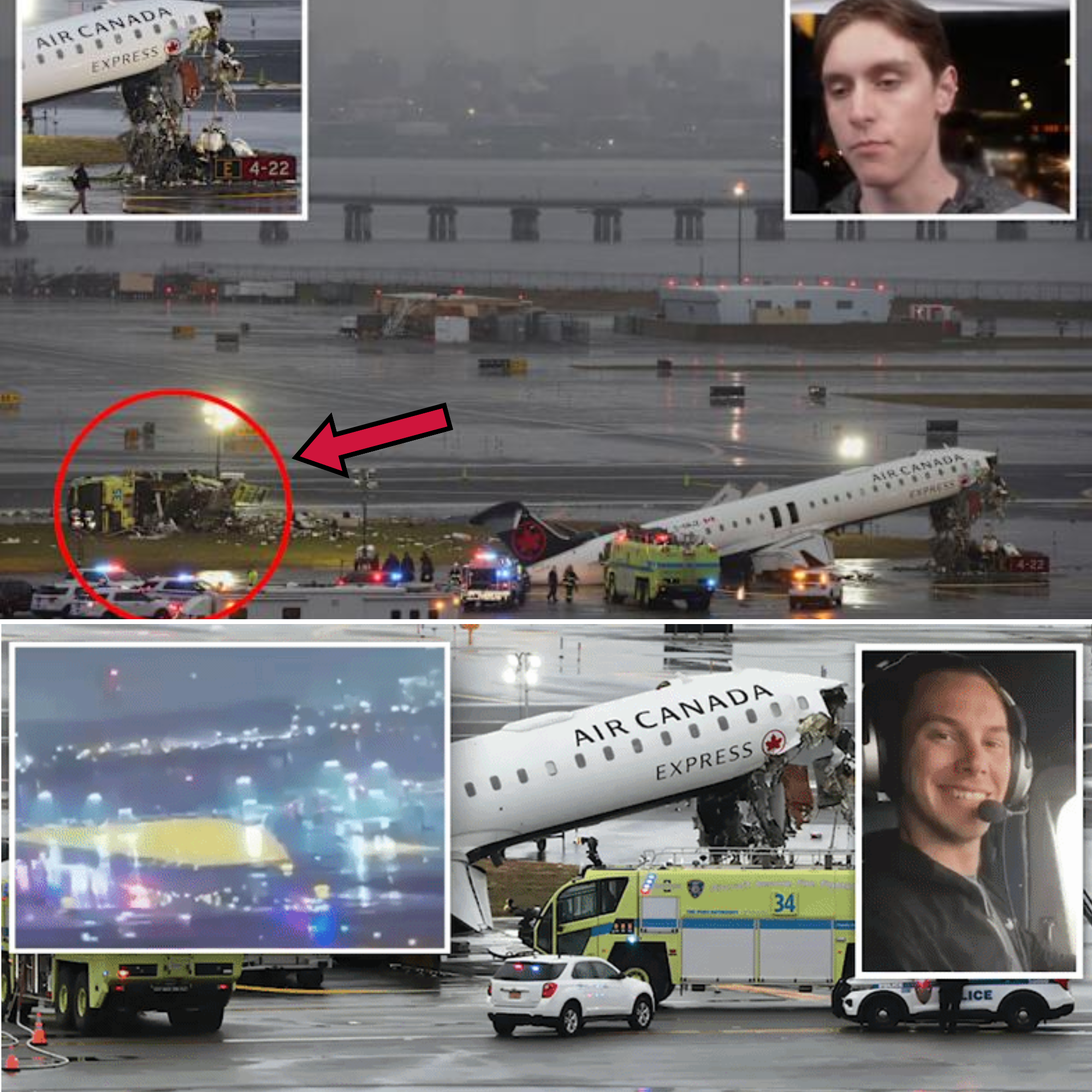
A passenger aboard the doomed Air Canada Express flight has given a raw, first-hand account of the terrifying seconds when the CRJ-900 slammed into a Port Authority fire truck at LaGuardia Airport, praising the pilots for doing everything humanly possible to protect those on board. Jack Cabot, one of the 72 passengers on Flight AC8646 from Montreal, spoke exclusively to Fox News about the moment everything changed on the night of March 22, 2026.
Cabot described the landing as initially normal. “We went down for a regular landing and we came in pretty hard,” he said. “We immediately hit something and it was just chaos from there.” Five seconds after the violent impact, the aircraft shuddered to a stop. In that brief but brutal window, the cabin descended into pandemonium. Passengers were thrown violently forward against their seatbelts, overhead bins burst open, and screams echoed throughout the fuselage. “It didn’t feel like anyone was in control of anything,” Cabot recalled. “Looking back on it, the pilot did the best thing he could. He hit the brakes as hard as he could.”
His words have struck a chord with the aviation community and the public alike, serving as a powerful tribute to Captain Edward Daniel Murphy and First Officer Antoine Forest, who both lost their lives in the forward section of the jet. The collision sheared off much of the cockpit and forward fuselage, killing the two pilots instantly from catastrophic injuries. Yet the rear and mid-cabin remained sufficiently intact, allowing flight attendants to execute a rapid evacuation that saved every other person on board. Forty-one passengers and crew sustained injuries and were hospitalized, though most have since been released.
Cabot’s description matches other survivor reports of a deafening bang followed by the eerie sensation of the plane “skating” down the runway before coming to a halt. Many now believe the pilots’ final braking inputs were critical — preventing the aircraft from veering wildly, cartwheeling, or disintegrating further. That controlled deceleration gave the cabin crew the precious seconds needed to open exits, deploy slides, and guide passengers to safety amid the smoke and confusion.
The crash occurred due to a fatal timing conflict on the ground. A United Airlines flight had reported an onboard odor emergency, prompting the dispatch of the fire truck. Air traffic control audio previously released shows controllers desperately shouting “Stop! Stop! Stop! Truck 1, stop!” as the truck crossed the active Runway 4. Despite the frantic warnings, the jet — still carrying significant landing speed — made contact.
The National Transportation Safety Board, working with the FAA, Transport Canada, and the Canadian Transportation Safety Board, has recovered the flight data recorder and cockpit voice recorder. These will eventually reveal the exact actions and any communications from Murphy and Forest in their final moments. Early lines of inquiry focus on overlapping clearances, tower workload during the busy late-night shift, surface surveillance systems, and emergency vehicle protocols at space-constrained airports like LaGuardia.
Jack Cabot’s reflections have added a deeply human perspective to the tragedy. “It was in nobody’s hands whether we lived or died,” he said, underscoring how quickly a routine arrival can turn into a life-or-death situation. His praise for the pilot’s final effort has resonated widely, with many seeing it as recognition of the quiet heroism that often goes unseen in the cockpit during emergencies.
Air Canada and Jazz Aviation have expressed profound sorrow for the loss of the two pilots and confirmed that comprehensive support is being provided to their families, injured passengers, and crew. Tributes continue to pour in for Murphy and Forest, remembered as dedicated professionals who put passenger safety first even in their final seconds.
LaGuardia Airport was shut down immediately after the crash, causing widespread disruptions. Limited operations have since resumed, but the emotional scars remain fresh. Memorials and messages of solidarity have appeared at airports in Montreal and New York, with pilots across the industry honoring the fallen crew through small but meaningful gestures.
For Cabot and the other survivors, the memory of that violent jolt and the ensuing chaos is still vivid. Yet his willingness to speak out offers a message of gratitude amid the grief: even when control seemed lost, the pilots fought to give everyone behind them the best possible chance. “The pilot did the best thing he could” — those simple words now stand as a fitting tribute to two aviators whose final act helped turn potential catastrophe into a story of survival for 72 people.
As the investigation continues and recommendations for improved ground safety are prepared, Jack Cabot’s account serves as a powerful reminder of the human stakes involved in every flight. In those critical seconds at LaGuardia, professionalism and split-second decisions made the difference between life and death.