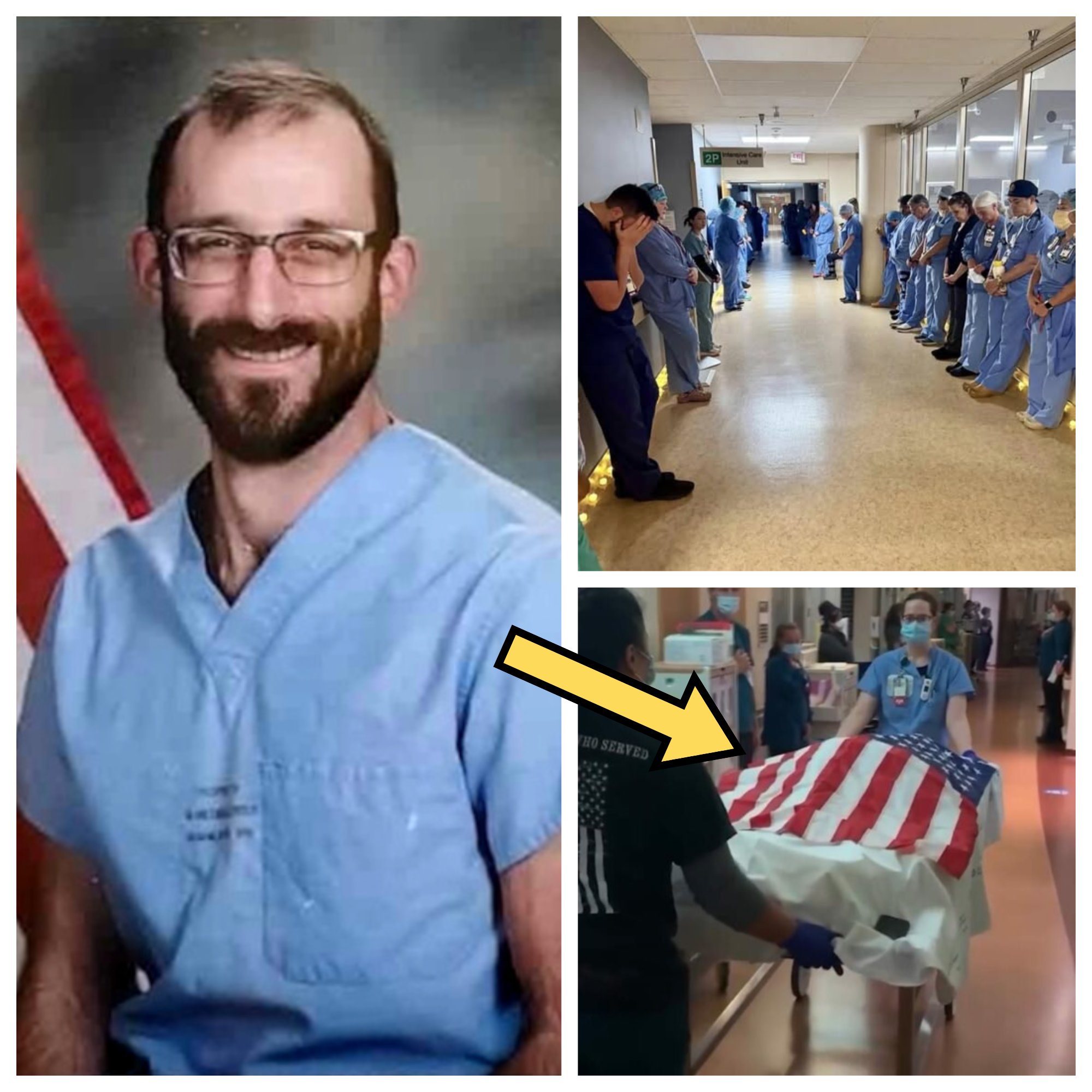
On Monday, January 26, 2026, staff members of the Minneapolis VA Medical Center’s intensive care unit paused in the very hallways where Alex Pretti had spent countless shifts preserving lives. They formed quiet lines, heads bowed, some visibly shaken—one man pressing his face into his palms as emotion overwhelmed him. These images, captured and shared by colleague Garrett Peterson on Facebook, quickly circulated as a powerful symbol of collective mourning for the 37-year-old ICU nurse fatally shot by federal immigration agents two days earlier during protests in Minneapolis. Peterson’s caption was direct: “A moment of silence for Alex Pretti. One of our colleagues!! May he rest in peace.” No further words were needed; the photographs conveyed the depth of loss felt by those who had worked beside him.
Pretti’s presence in the ICU had been a steady anchor. Colleagues remembered a nurse who approached high-acuity patients—often veterans with complex, life-threatening conditions—with technical precision and profound empathy. He excelled at managing arterial and central lines, orchestrating multiple IV infusions of critical medications, and interpreting subtle monitor changes that signaled rapid deterioration. His final preceptee, Jessica Hauser, described four months under his guidance where he taught these skills with patience that transformed overwhelming scenarios into manageable ones. “He carried patience, compassion and calm as a steady light,” she wrote in her tribute. That same composure appeared in bystander footage of his last moments: even as he was pepper-sprayed and tackled while attempting to aid a woman on the ground, Pretti asked, “Are you okay?”—a question that encapsulated the instinct that defined his career.
The tribute came amid national shock over the second fatal shooting of a U.S. citizen by immigration agents in Minneapolis that month, following Renee Good’s death. Video evidence showed Pretti holding his phone to document agents’ actions, not a weapon as some official statements initially suggested. His parents, Michael and Susan Pretti, fiercely rejected those claims, calling them “sickening lies” and describing their son as a “kindhearted soul” dedicated to veterans, family, and justice. They highlighted his belief in constitutional rights, including the Second Amendment, and his commitment to peaceful advocacy through communication rather than confrontation.
Across the VA system, similar gestures emerged. In Spokane, staff pinned Pretti’s photo to identification badges as a mark of solidarity. Unions including the American Federation of Government Employees (AFGE) and National Nurses United issued statements of profound grief, viewing his death as a stark reminder of dangers facing caregivers who step into public crises. Vigils formed at the Nicollet Avenue shooting site, outside VA facilities nationwide, and in communities tied to Pretti’s Wisconsin roots. Participants held candles, displayed signs calling for accountability, and shared stories of his impact—from reading final tributes to dying veterans to mentoring new nurses with quiet encouragement.
Pretti’s journey reflected lifelong service. Raised in Green Bay, Wisconsin, he thrived in academics, athletics, and choir before graduating with a biology degree from the University of Minnesota. He began at the VA as a research assistant, later pursuing nursing to deliver direct care. Licensed in 2021, he chose the ICU’s intensity to serve the most vulnerable—veterans facing end-of-life battles. A resurfaced 2024 video showed him honoring Air Force veteran Terrance Lee Randolph with words about freedom, sacrifice, and remembrance. The veteran’s son, Mac Randolph, reposted it in gratitude, noting how Pretti’s compassion had eased his father’s final days.
The hallway silence carried layered meaning. In a profession where long shifts forge deep bonds, losing a colleague to violence outside the hospital walls felt especially jarring. The images—workers standing motionless in scrubs, some wiping tears—captured shared vulnerability. Peterson’s post, unadorned and sincere, amplified the emotion, drawing thousands of reactions and shares from nurses, veterans, and strangers moved by the scene.
Broader context fueled ongoing outrage. Federal operations had intensified under the current administration, with multiple Minneapolis incidents raising questions about tactics and oversight. Local leaders, including Governor Tim Walz, joined calls for full investigations, transparency in bodycam footage, and de-escalation protocols. Former presidents and civil rights groups echoed demands for change. The NBA postponed a Timberwolves game scheduled near the event site, later holding its own moment of silence.
For Pretti’s team, the tribute was personal. They stood where he once rushed to crashing patients, where he lightened tension with quick humor, where he modeled what it means to care under pressure. Dr. Dmitri Drekonja remembered him as “outstanding”; Dr. Aasma Shaukat as someone whose kindness and civic sense never wavered. His outdoor life—mountain biking trails, walks with his late dog Joule—balanced the intensity of work, grounding him in simple joys.
As debates rage over accountability and policy, the moment of silence endures as a quiet testament. It honored not just a nurse but the values he lived: protect the vulnerable, honor service, extend compassion even in chaos. Pretti intervened for a stranger as he had for patients countless times. The bowed heads in those hallways acknowledged that loss—both of a colleague and of the steady light he brought to every shift. His legacy persists in the care he gave, the lessons he taught, and the grief that now unites those who knew him best.