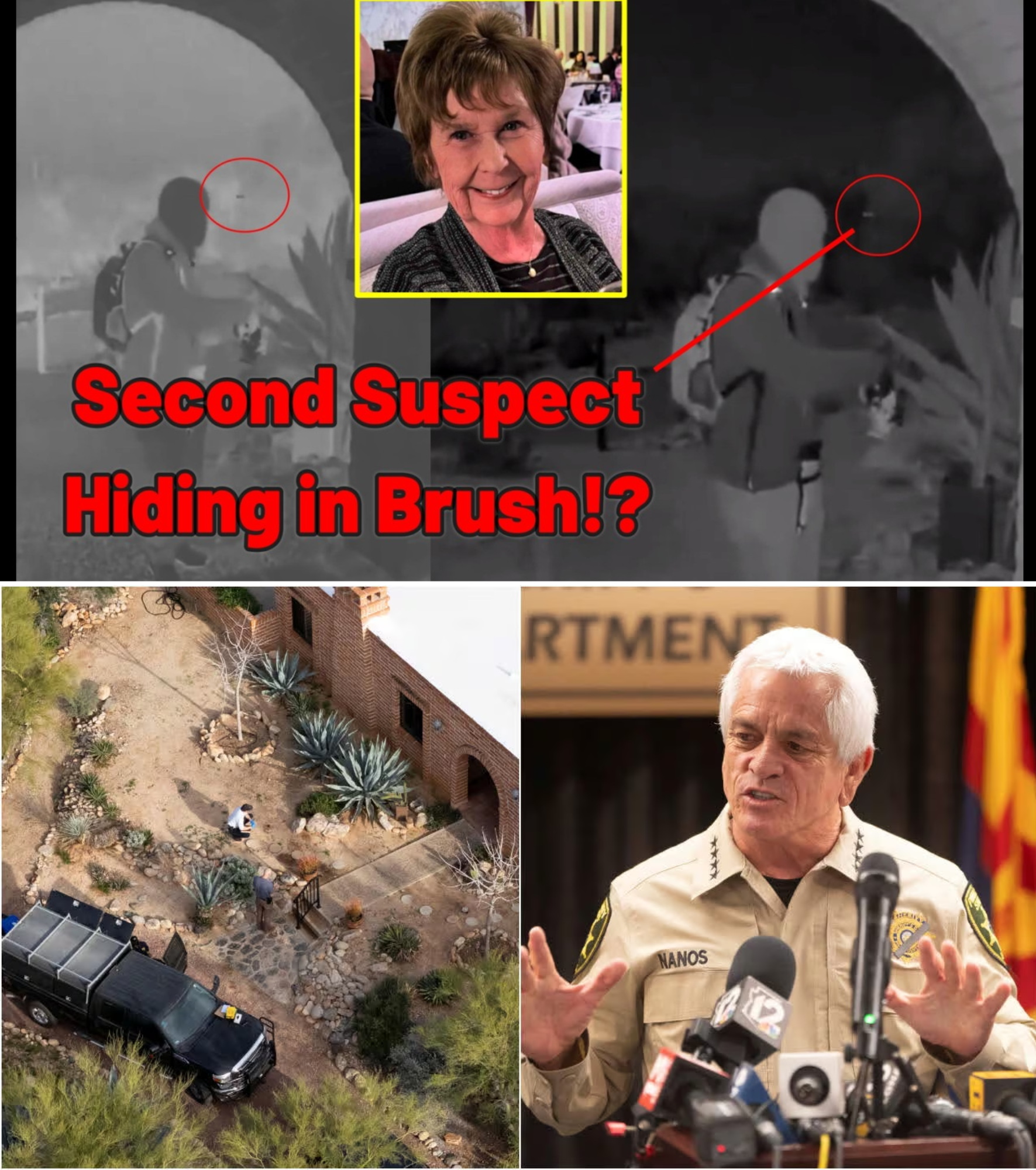
A viral true crime analysis of the doorbell camera footage from the night 84-year-old Nancy Guthrie vanished from her Tucson home has ignited fresh speculation that more than one person may have been involved in her suspected abduction. Uploaded to YouTube by the channel The MOB Crew on February 21, 2026, the video meticulously dissects the Ring camera clip released by the FBI, pointing to an intermittent light source in the background as potential evidence of a second suspect positioned in the brush across the street.
The incident unfolded in the early hours of February 1, 2026. Nancy Guthrie had returned home around 9:48 p.m. the previous evening after dinner with family, her garage door opening and closing shortly after at 9:50 p.m. as she presumably settled in for the night. Security systems went dark at approximately 1:47 a.m. when the Nest doorbell camera was physically disconnected. The released Ring footage, recovered from Google’s servers despite the tampering, captures a masked figure—wearing dark clothing, gloves, a backpack, and holding a small flashlight in their mouth—approaching the door around 2:00 a.m. The individual manipulates the camera before moving out of frame, after which Nancy was taken from the residence.
The MOB Crew video argues that the operation required coordination beyond a lone actor. Key to the theory is a recurring light anomaly visible in the upper right portion of the frame, roughly corresponding to bushes or landscaping across the road from the Guthrie home. The light flickers on and off intermittently during the intruder’s approach and camera disablement. The host notes that the main suspect briefly glances in that direction just after one reappearance of the light, suggesting awareness or communication with someone positioned there.
Several explanations for the light have been debated in true crime communities. Skeptics propose it could be reflections from a neighbor’s porch light, passing headlights, or even infrared reflections from the camera itself catching eyes or foliage movement. However, the analysis counters these by pointing to calm weather conditions—no significant wind to sway branches—and stable neighboring lights visible elsewhere in the frame. Weather reports from that night confirm minimal wind, and brush in the background shows no disturbance. The light’s pattern—disappearing for seconds then reappearing—aligns more closely with a handheld source, such as a phone screen or small flashlight used by a lookout monitoring the scene.
If a second individual was present, their role could have been surveillance, providing signals, or assisting with logistics. The primary intruder’s actions appear deliberate and practiced: precise disconnection of the camera (requiring knowledge of its wiring), use of a compact flashlight clenched in the teeth for hands-free operation, and quick entry without triggering additional alarms. A solo perpetrator would face challenges in simultaneously watching for witnesses, managing tools, and handling an elderly victim—especially if resistance occurred, as suggested by the blood drops on the porch later confirmed as Nancy’s.
The theory gains traction when considering the broader evidence. Software detected motion on the camera at 2:12 a.m. after disconnection, though no video was recorded due to subscription limitations or tampering. Nancy’s pacemaker app synced for the last time around that window, and her phone disconnected shortly after, indicating she was likely removed from the home by 2:28 a.m. The 911 call came much later at 12:03 p.m. on February 1 when family realized she missed a virtual church service and failed to respond.
Pima County Sheriff’s Department and FBI investigators have not publicly confirmed or denied a second suspect, maintaining that the case remains active with a focus on the primary figure seen in the footage. Sheriff Chris Nanos has described leads as “heating up” in recent statements, but emphasized methodical vetting over speculation. The $1 million reward offered by the Guthrie family for information leading to Nancy’s safe return or the perpetrator’s arrest continues to generate tips, though none have resulted in breakthroughs as of early March.
Private investigator Tommaso Cioni, hired by the family, has advocated for deeper examination of peripheral connections, including delivery personnel and acquaintances who might have scouted the property. Online sleuths in true crime forums have zoomed in on other details from the footage: a possible tattoo visible on the intruder’s right wrist through the glove, a ring outline, and the backpack’s common make (Ozark Trail from Walmart), which complicates tracing but suggests planning rather than impulse.
Savannah Guthrie’s public appeals have kept the case in the spotlight. In interviews, she addressed whoever may hold her mother: “It’s never too late” to come forward, her voice heavy with two weeks of anguish at the time. The family has described the uncertainty as unbearable, with yellow flowers and notes accumulating at a memorial outside the home.
Forensic efforts persist, including genetic genealogy on porch DNA (no CODIS match), review of neighborhood surveillance for vehicles, and analysis of the signal jammer likely used to disrupt nearby devices. The second-suspect theory, while unverified officially, resonates because it addresses logistical questions: how one person subdued, removed, and transported an 84-year-old without immediate detection in a quiet residential area.
Whether the light proves to be a critical clue or an artifact of lighting conditions, the analysis has reinvigorated public interest. True crime enthusiasts continue enhancing frames, debating shadows, and mapping sightlines. As the search enters its fifth week, the possibility of multiple perpetrators adds urgency—suggesting a planned operation with accomplices who may still hold knowledge of Nancy’s whereabouts.
Investigators urge the public to forward verifiable tips rather than unconfirmed theories, warning that misinformation can hinder progress. For the Guthrie family, every new angle—official or crowdsourced—represents another thread of hope in a mystery that has gripped the nation. The flickering light in the darkness may ultimately illuminate the path to answers, or it may fade into another unanswered question in this heartbreaking case.