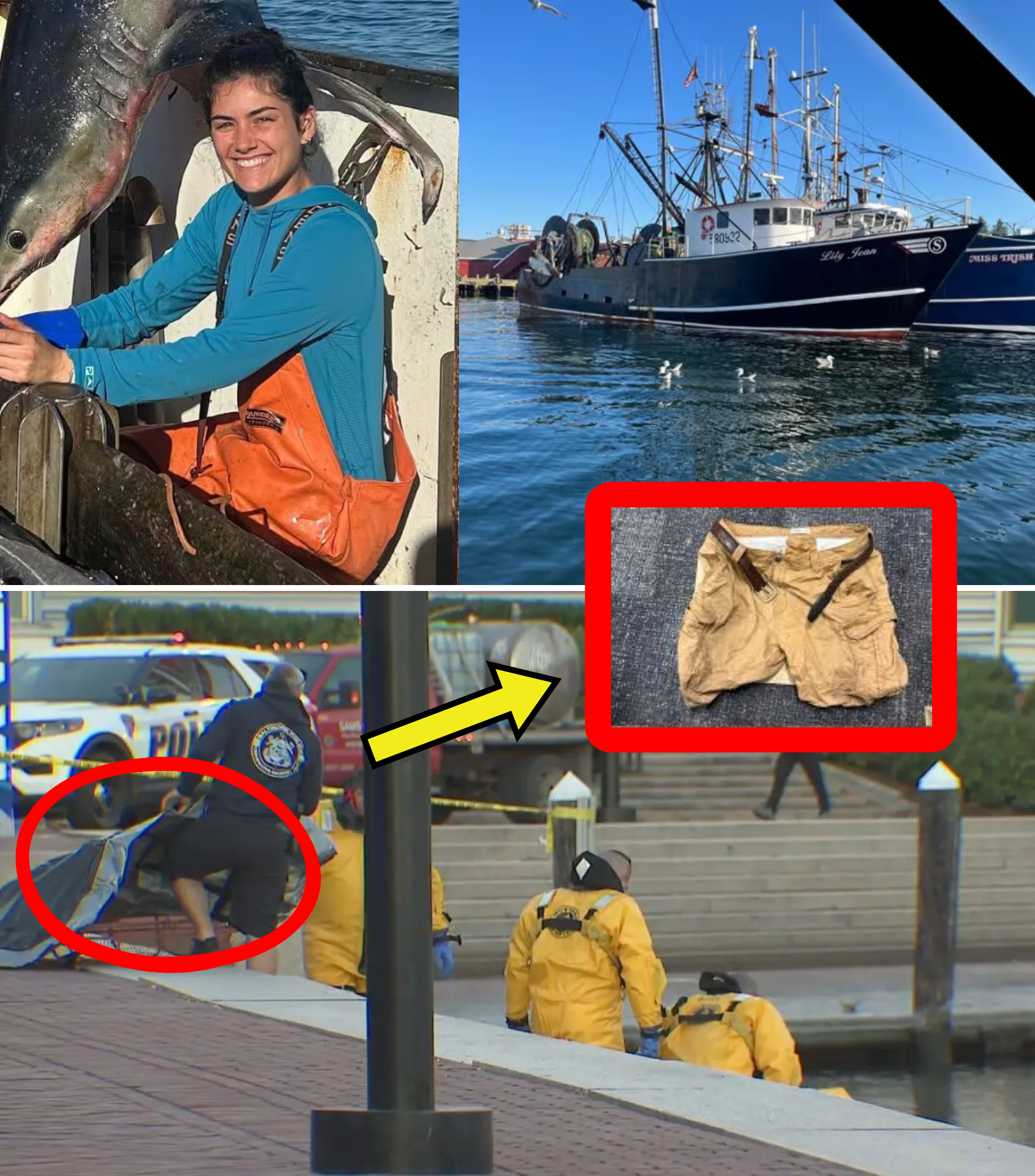
The Massachusetts Office of the Chief Medical Examiner delivered a devastating update on February 4, 2026, confirming via DNA analysis that the single body recovered following the sinking of the fishing vessel Lily Jean belongs to Jada Samitt, the 22-year-old NOAA fisheries observer from Virginia. This identification provides a measure of closure to one family amid the presumption that the remaining six crew members perished in the rapid, unexplained capsizing off Cape Ann on January 30.
Samitt, a 2025 graduate of the University of Vermont’s Rubenstein School of Environment and Natural Resources, embodied youthful dedication to marine science and sustainability. Assigned to the Lily Jean to monitor catch composition, bycatch, and compliance with federal regulations, she viewed her role expansively—not merely as a data collector but as an integral crew member protecting fragile ocean ecosystems. Her family’s statement captured the depth of their loss: “It is with profound sadness and shattered hearts that we share the loss of our beloved Jada. She was vibrant and compassionate with an infectious smile and spirit. And, above all, she was brave and determined. She fiercely loved her friends and family. Today we are lost without her. Jada was on the Lily Jean that day because of her strong belief in her work, not only as an observer, but as someone who knew her important role as a crew member. She proved herself to be so on every trip, and conveyed to us how critical it was to protect the seas and fisheries. We could not be more proud of and grateful to her for it.”
The Lily Jean, a 72-foot groundfish trawler owned and captained by Accursio “Gus” Sanfilippo, sank without warning around 25 miles offshore in brutally cold conditions—air temperatures near 6°F (-14°C) and water around 40°F (4°C). The U.S. Coast Guard received an automated EPIRB distress signal shortly before 7 a.m. but no verbal mayday or further communication. Search-and-rescue operations swiftly located scattered debris, an empty life raft that had deployed, and one body floating nearby. Despite exhaustive efforts spanning over 1,000 square miles with helicopters, cutters, and small boats, no additional survivors or remains were found, leading to the suspension of active search on January 31.
Early confusion surrounded the recovered body’s identity; some initial social media and community posts linked it to Sanfilippo given his stature in Gloucester’s fishing community, while others referenced Samitt based on emerging details. Forensic DNA testing—routine for positive identification in such recoveries—resolved the matter definitively in Samitt’s favor. The six unrecovered crew members are: Sanfilippo, 55; Paul Beal Sr. and his son Paul Beal Jr.; John Paul Rousanidis, 33; Freeman Short, 31; and Sean Therrien. The father-son loss compounded the tragedy, leaving families to grieve intertwined generations swept away together.
Sanfilippo, a fifth-generation fisherman, gained wider recognition through a 2012 History Channel episode of “Nor’Easter Men,” which portrayed the grueling realities of winter groundfishing: battling massive swells, hauling heavy gear, and enduring relentless cold for haddock, cod, and other species. Colleagues remembered him as generous, knowledgeable, and unflappable—a mentor who “taught me everything I know about fishing” and always prioritized crew safety. He named the Lily Jean after his daughter, adding a deeply personal layer to the sorrow enveloping Gloucester.
The sinking revives Gloucester’s centuries-long ledger of maritime fatalities, where memorials bear thousands of names lost to the Atlantic’s indifference. Unlike legendary storms, this incident unfolded in seemingly routine conditions during a return to port for gear repairs, suggesting factors like rapid ice accumulation, stability loss, or a freak wave. Rear Adm. Michael Platt of the Coast Guard’s Northeast District launched a formal investigation, expected to span months and examine vessel records, weather logs, maintenance, and potential contributing elements common to New England trawlers.
Samitt’s death has cast renewed attention on the hazards confronting fisheries observers—often young, early-career scientists placed aboard commercial vessels for extended periods. NOAA expressed profound grief, praising her commitment to data-driven ocean stewardship and pausing observer deployments amid the tragedy and forecast severe weather. Advocates now push for reinforced protections: superior immersion suits, comprehensive emergency drills, real-time tracking enhancements, and better mental health resources for those facing isolation and danger at sea.
Gloucester rallied in grief and solidarity. Vigils filled St. Ann’s Church and the Fisherman’s Memorial, where flowers piled at the feet of the bronze skipper statue facing the harbor. Fundraising surged through Fishing Partnership Support Services, the Gloucester Fishing Community Preservation Fund, and family-specific GoFundMes. These efforts aim to ease financial burdens—no sick pay, no safety net—in a profession where risk is constant.
State Senator Bruce Tarr, who grew up alongside Sanfilippo, called him a “personal friend” and harbor mainstay, voicing the collective disbelief at losing such a capable skipper so close to shore. Governor Maura Healey and local leaders echoed demands for actionable change: upgraded de-icing equipment, mandatory advanced safety gear, and systemic support to mitigate the profession’s toll.
The DNA match identifying Jada Samitt stands as a bittersweet thread of resolution in profound tragedy. Her infectious spirit, bravery, and unwavering belief in safeguarding the seas she loved contrast sharply with the merciless cold that claimed her. In Gloucester—a city forged by the ocean’s bounty and brutality—her name joins the others on memorials and in stories passed down. The sea took seven, but their legacy of resilience, mentorship, and quiet heroism endures, urging safer tomorrows for those who still answer its call.
News
The Black Bag in the Ravine: Chilling Discovery in the Death of American Airlines Flight Attendant Eric Gutierrez.
The tragic case of 32-year-old American Airlines flight attendant Eric Fernando Gutierrez Molina took an even darker turn as investigators in Colombia recovered a black bag linked to the missing…
The Secret Weekend Pattern: How the FBI’s Latest Breakthrough May Finally Trap Nancy Guthrie’s Abductor.
As March 2026 draws to a close, the disappearance of 84-year-old Nancy Guthrie from her home in Tucson’s Catalina Foothills has entered its 55th day with no arrest and no…
The Insider Who May Have Opened the Door: FBI Hunts for the Person Who Knew Nancy Guthrie’s Home Too Well.
In the affluent Catalina Foothills neighborhood of Tucson, Arizona, where residents often leave garage doors open and security feels routine, the abduction of 84-year-old Nancy Guthrie on the night of…
The Vacant House Perch: SWAT Commander Reveals How the Kidnapper Likely Staged Nancy Guthrie’s Abduction.
In the upscale Catalina Foothills of Tucson, Arizona, where million-dollar homes boast layered security and residents pride themselves on knowing every face and vehicle, the disappearance of 84-year-old Nancy Guthrie…
The Empty House Next Door: Chilling Clues FBI Uncovered in Nancy Guthrie’s Kidnapping.
In the exclusive Catalina Foothills neighborhood of Tucson, Arizona, where seven-figure mansions sit behind layered security gates and vigilant residents know every vehicle and routine, an unthinkable crime shattered the…
The Hidden Daughter Who Inherited the Entire Guthrie Ranch – The Will No One Saw Coming.
In the rugged hills near Billings, Montana, the Guthrie family ranch stood as a symbol of American grit for decades. What began as a modest 30-acre lease in the 1940s…
End of content
No more pages to load