Final Act of Courage: Meet the Two Air Canada Pilots Who Died Saving Lives at LaGuardia.
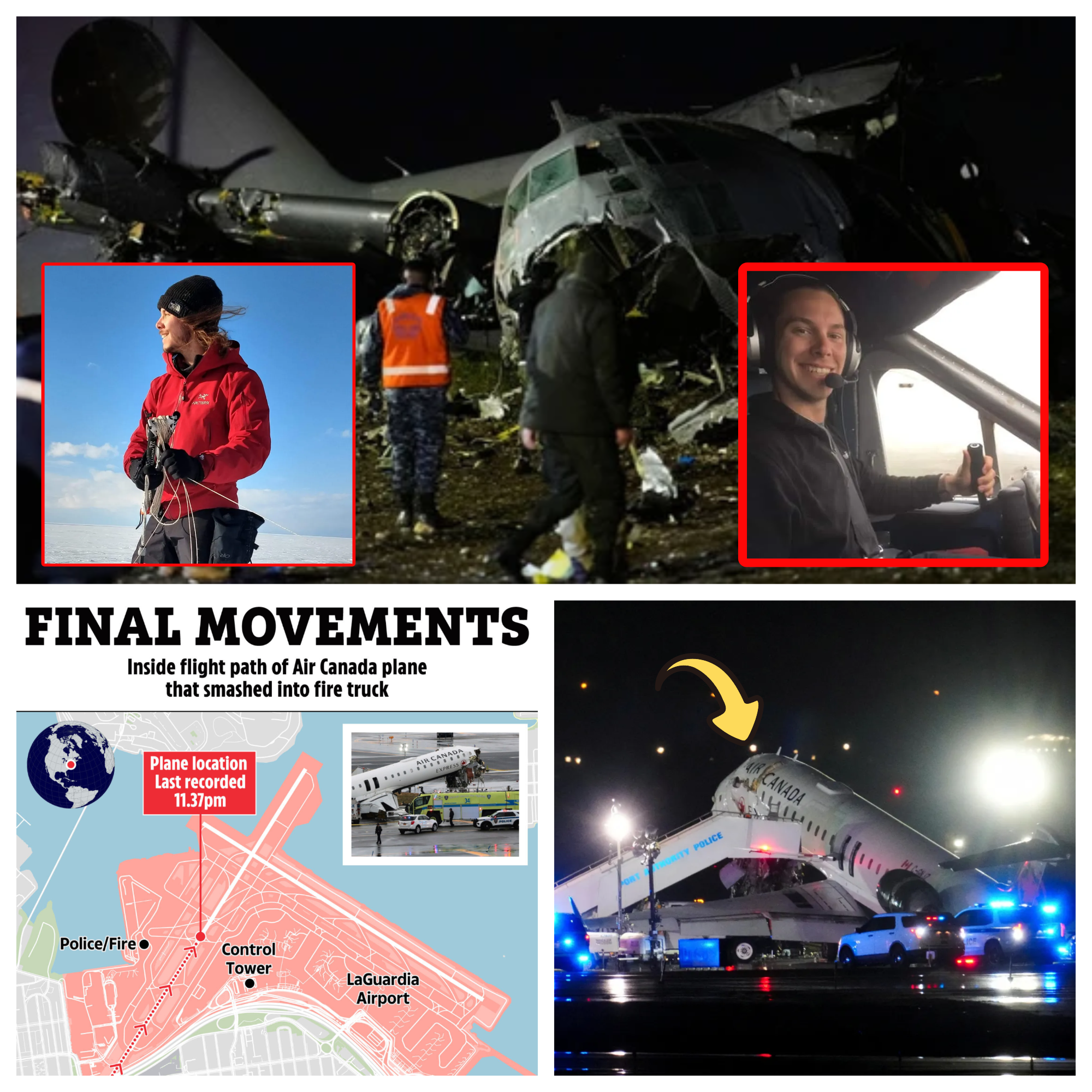
The identities of the two pilots killed in the horrific runway collision at LaGuardia Airport have now been officially released, revealing two dedicated aviators whose final actions likely prevented an even greater tragedy on the night of March 22, 2026.
Captain Edward Daniel Murphy, 50, from Oakland Park, Florida, and First Officer Antoine Forest, 30, from Coteau-du-Lac, Quebec, perished instantly when their Bombardier CRJ-900 struck a Port Authority fire truck crossing Runway 4 seconds after a normal landing. While the forward fuselage was destroyed, the rest of the aircraft stayed structurally sound enough for a swift evacuation that allowed all 72 passengers and the surviving crew members to escape with their lives.
Both men were highly experienced and respected within the Jazz Aviation and Air Canada family. Captain Murphy brought decades of expertise to the flight deck, known among colleagues for his steady hand, calm leadership under pressure, and commitment to mentoring younger pilots. First Officer Forest, though early in his career with Jazz, had already built a strong reputation as a talented, enthusiastic aviator who had progressed from flying smaller regional aircraft in Quebec to the CRJ-900 fleet.
A statement shared by someone close to the crew has touched hearts across North America: “They did everything possible to save the passengers but they could not save themselves.” Those words have become the emotional centerpiece of tributes pouring in from fellow pilots, flight attendants, and passengers. Preliminary evidence and cockpit voice recorder data suggest that once the conflict with the fire truck became apparent, Murphy and Forest had only seconds to react. They maintained control of the aircraft through the violent impact, keeping it from cartwheeling or breaking apart completely. Their inputs allowed the plane to “skate” down the runway in a relatively controlled manner, buying precious time for the cabin crew to direct a rapid and orderly evacuation.
Air traffic control audio captured the tower’s desperate repeated calls of “Stop, stop, stop, Truck 1, stop,” but the timing proved fatal for the forward section of the jet. The fire truck had been cleared to cross the active runway to stage for a separate United Airlines odor emergency. Despite the destruction to the cockpit, the rear and mid-cabin remained intact, enabling flight attendants to deploy slides and guide everyone to safety within moments.
The aviation community has responded with an outpouring of grief and respect. Air Line Pilots Association International President Capt. Jason Ambrosi said the pilots “dedicated their careers to the safe transport of passengers,” and that the entire pilot community is thinking of their families during this devastating time. Jazz Aviation and Air Canada both issued statements expressing profound sorrow, confirming that dedicated care teams are supporting the pilots’ loved ones as well as injured passengers and crew.
Friends and family of Antoine Forest in Quebec described the 30-year-old as a kind, adventurous young man who lived his dream every time he put on his uniform. Photos shared online show a smiling pilot proud of his journey from small Quebec carriers to flying for one of Canada’s flagship airlines. Colleagues of Captain Murphy in Florida remembered him as a family man and a rock-solid captain whose love for flying never dimmed.
The National Transportation Safety Board, alongside the FAA, Transport Canada, and the Canadian Transportation Safety Board, continues its thorough investigation. Key areas of focus include the exact sequence of radio clearances, tower workload during the busy late-night period, the performance of surface detection systems, and protocols for emergency vehicles crossing active runways. The tragedy has reignited urgent conversations about preventing runway incursions at congested airports like LaGuardia, where geography limits physical separation between aircraft and ground vehicles.
For the passengers and surviving crew, the pilots’ final sacrifice now feels intensely personal. Many have spoken of the sudden violent jolt followed by the controlled slide, crediting the crew in the cockpit with giving them the critical seconds needed to evacuate safely. One survivor summed up the sentiment: “We walked off that plane because of what those two pilots did in their last moments.”
In the days following the crash, memorials have appeared at airports in Montreal and New York. Pilots across the continent have honored Murphy and Forest by attaching black ribbons to their uniforms or sharing messages of solidarity in crew rooms and online forums. LaGuardia has slowly resumed limited operations, but the emotional weight of the loss lingers heavily.
This tragedy serves as a sobering reminder of the immense responsibility shouldered by every pilot. Every safe flight depends on men and women who accept split-second decisions and enormous pressure as part of their daily routine. Captain Murphy and First Officer Forest embodied the highest standards of their profession — putting the lives of others ahead of their own when it mattered most.
As the investigation moves forward and safety recommendations are developed, the aviation world continues to mourn two true heroes. Their final flight ended in heartbreak for their families, but their professionalism ensured it did not end in even greater loss for the 72 passengers who survived.
“They did everything possible to save the passengers but they could not save themselves.” Those simple, powerful words now stand as a lasting tribute to Captain Edward Daniel Murphy and First Officer Antoine Forest — two pilots who flew their last mission with courage, skill, and selflessness.