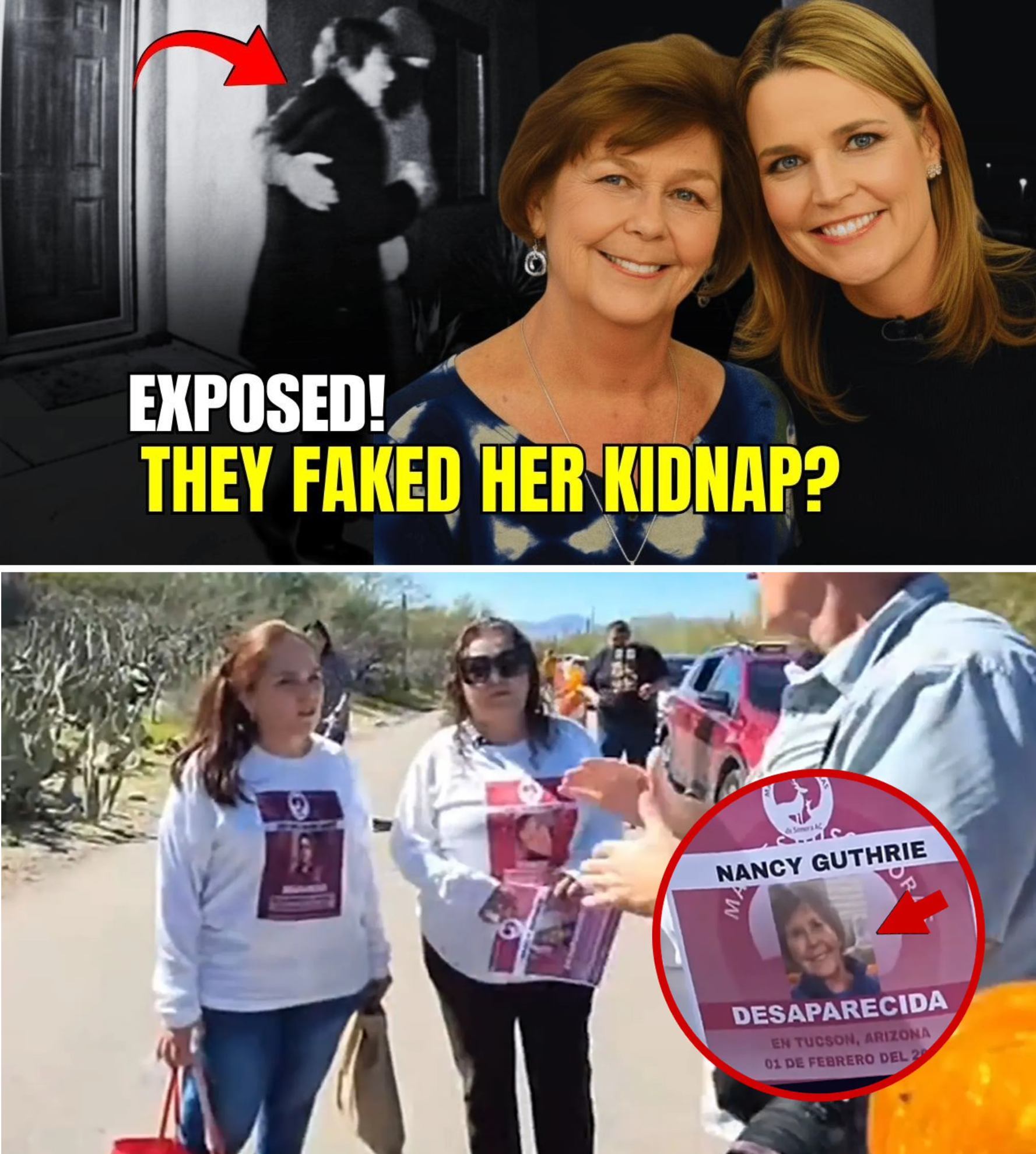
The disappearance of 84-year-old Nancy Guthrie from her home in Tucson’s Catalina Foothills on the night of January 31, 2026, initially appeared as a textbook targeted abduction. Dropped off by family around 9:50 p.m. after dinner, she entered her garage, closed it, and seemingly went to bed. By early morning, however, her absence triggered alarm when she missed her routine Sunday church livestream. Friends contacted her children, leading to a missing persons report that swiftly escalated into a major operation involving the Pima County Sheriff’s Office, Arizona Department of Public Safety, and the FBI.
Security footage from her Nest doorbell camera provided the first chilling glimpse. Reconstructed after tampering, it showed a masked male suspect—approximately 5’9″ to 5’10”, average build, dark clothing, gloves—arriving shortly after 1:47 a.m. on February 1. He carried an Ozark Trail backpack and a mismatched holster containing a semi-automatic pistol. Calmly, he used a gloved hand and a yard plant to obscure the lens before entering. Additional released images depicted the same figure at the doorstep on a prior date without the backpack, hinting at surveillance or familiarity. No timestamps appeared on the photos, and authorities urged caution against over-interpretation.
Physical evidence complicated the narrative. Blood confirmed as Nancy’s via DNA was found on the porch, yet no signs of forced entry or major struggle existed inside. Her pacemaker app recorded a disconnection at 2:28 a.m., aligning with the intruder’s timeline. Her phone, medications, and belongings remained untouched, unusual for someone taken against their will. Nancy’s health—pacemaker-dependent, chronic pain, limited mobility, daily heart medication—made prolonged survival without care improbable beyond days, raising questions about her fate in the initial hours.
Ransom demands emerged days later, sent publicly to outlets like TMZ and local stations rather than the family directly. Notes demanded millions in cryptocurrency with tight deadlines that expired without follow-up or proof of life—no photos, videos, voice recordings, or biological samples ever surfaced to verify Nancy lived beyond the abduction night. Fake text messages, later traced to an individual who was arrested, further muddied negotiations. The family, including daughter Savannah Guthrie (NBC “Today” co-anchor), son-in-law Tommaso Chion, and others, publicly offered to pay and were cleared as suspects early through DNA and alibi verification.
Expert analysis fueled growing skepticism. Retired Chicago homicide investigator Paul Chelino highlighted four investigative threads pointing away from a conventional kidnapping: lack of proof of life, dysfunctional ransom delivery, no family contact, and health constraints. Former FBI assistant director Chris Swecker expressed strong doubt: “I’m very skeptical… is this really a kidnapping? Her proof of life has not been credibly authenticated.” Retired FBI agent Jennifer Coffindaffer described the notes as “designed to torture the family rather than negotiate,” citing incorrect timing and media routing. Retired profiler Jim Clemente suggested darker motives if ransom was not genuine.
The massive response—over 400 personnel, $200,000+ rewards (including family additions up to $1 million), presidential involvement—contrasted sharply with the absence of breakthroughs. Unknown male DNA appeared on the recovered glove two miles away and inside the home, but the samples did not match each other or any CODIS entries, suggesting either multiple non-criminal contributors or staging. No vehicle footage captured Nancy’s removal, and subsequent cameras were disabled. Sheriff Chris Nanos maintained it was targeted but kept options open, including accomplices or alternative scenarios.
Investigative genetic genealogy progressed alongside cell tower mapping, retail forensics (tracking Ozark Trail backpack and holster purchases), and financial anomalies (cash withdrawals, prepaid phones, rural fuel buys). A midnight raid towed a Range Rover linked to a relative of a person of interest, though brief detentions yielded no charges. A sealed arrest warrant was prepared but not executed publicly as of late February.
The case exposed vulnerabilities: advanced home security can be neutralized quietly, and public familiarity creates opportunity. Speculation ranged from personal disputes to burglary escalating fatally, with some experts positing harm occurred inside before staging. No motive has been officially confirmed, but the ransom’s peculiarities—public channels, no direct negotiation, absent verification—suggested psychological torment over financial gain.
For the Guthrie family, the ordeal compounded grief with uncertainty. Savannah’s emotional appeals emphasized hope for return while acknowledging the pain of silence. Community vigils and overwhelming tips underscored public investment, yet the investigation’s direction shifted toward reevaluating the kidnapping premise.
Nancy’s story highlights how initial assumptions can obscure truth when evidence diverges. The calm intruder, the blood, the pacemaker cutoff, the fruitless ransoms—all point to a tragedy possibly concluded far earlier than the public narrative allowed. As genetic leads and digital trails narrow, the focus remains on closure for a woman described as warm, independent, and beloved. Whether abduction, internal incident, or something unforeseen, the convergence of facts demands answers beyond the surface story. The quiet neighborhood still waits, hoping science and persistence reveal what really happened that February night.