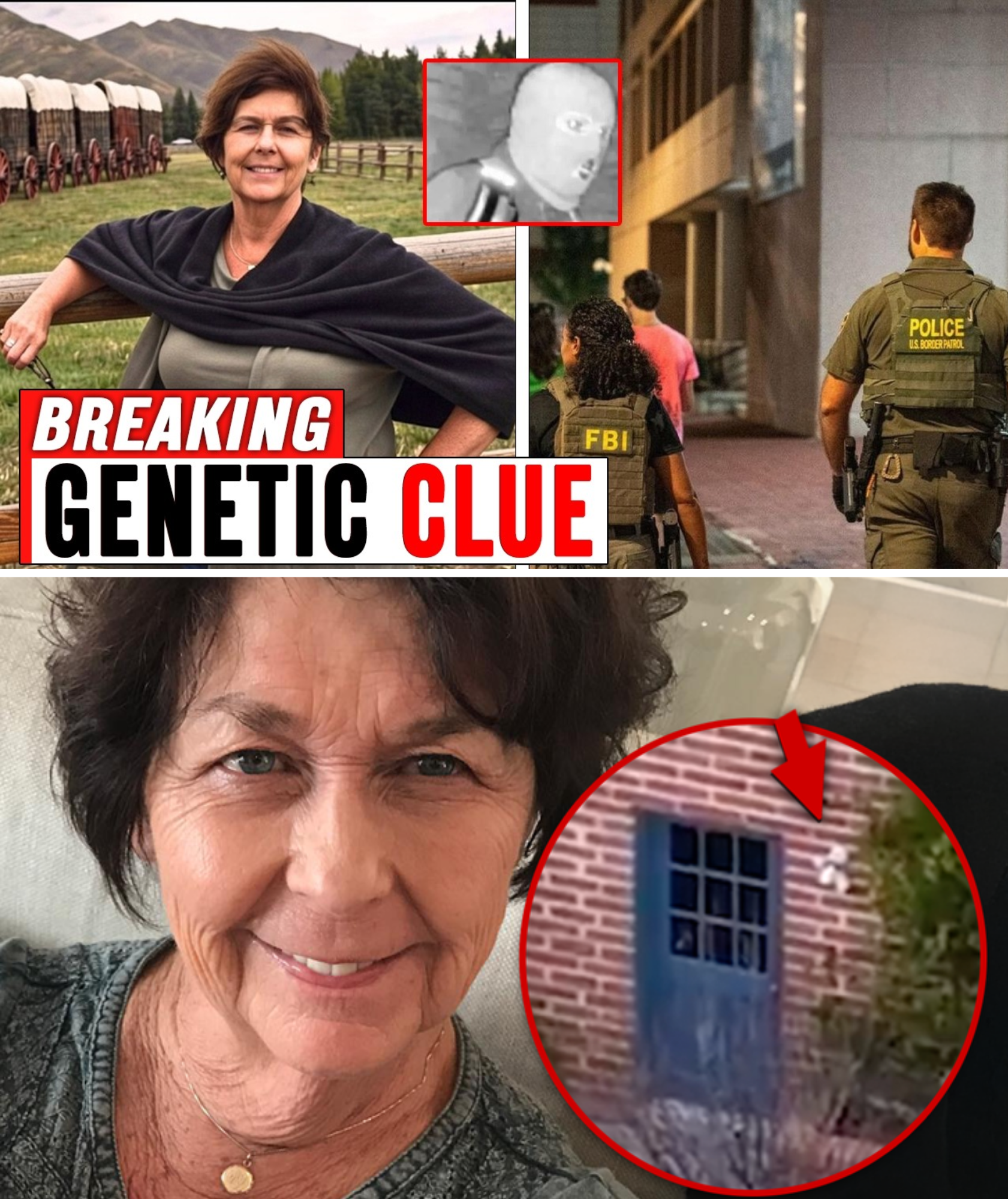
The search for 84-year-old Nancy Guthrie has entered a high-tech phase as the FBI deploys investigative genetic genealogy in hopes of unmasking the masked intruder captured on her doorbell camera.
Nancy, mother of Today show co-host Savannah Guthrie, disappeared from her Catalina Foothills home near Tucson, Arizona, in the early morning hours of February 1, 2026. She had returned from dinner at her daughter Annie’s house around 9:45 p.m. the previous evening. Her Ring doorbell camera was deliberately disabled at 1:47 a.m., motion was detected at 2:12 a.m., and her pacemaker signal stopped transmitting at 2:28 a.m. — the moment authorities believe she was taken by force.
Forensic teams recovered blood on the porch confirmed to be Nancy’s, along with additional biological material scattered throughout the house that did not match Nancy or any immediate family members. A glove discovered two miles away, consistent with the intruder’s attire in surveillance footage, yielded another unknown DNA profile. Neither sample matched entries in the national Combined DNA Index System (CODIS), which holds profiles primarily from convicted offenders and crime scenes.
Pima County Sheriff Chris Nanos publicly confirmed that investigators likely recovered the perpetrator’s genetic material and outlined plans to first exhaust traditional database searches before pivoting to advanced ancestry tracing. With no hits in CODIS, the FBI has now activated genetic genealogy — a technique that builds family trees from crime scene DNA and matches it against public genealogy databases to identify distant relatives.
This method gained fame in the Golden State Killer case, where DNA uploaded to GEDmatch helped map relatives and ultimately led to the arrest of Joseph James DeAngelo. Similar techniques were used in the Brian Kohberger investigation. Experts like CeCe Moore of Parabon NanoLabs and David Mittelman of Othram Inc. have weighed in, noting that the process involves creating a detailed genetic profile from even tiny samples, uploading it to open platforms, and constructing lineage charts using public records such as birth certificates and family trees.
The approach can identify suspects without prior criminal records by tracing third- or fourth-cousin matches and narrowing down through traditional investigative work, including surveillance and voluntary or court-ordered DNA samples from relatives. Moore has stated that the perpetrator “should be terrified,” emphasizing that modern tools leave little room for escape if the individual has U.S.-based family connections.
Challenges remain significant. The house samples appear mixed, with multiple contributors, which can complicate analysis unless the perpetrator’s DNA is the dominant profile. Privacy restrictions further limit access; major companies like Ancestry and 23andMe generally prohibit law enforcement searches without consent or subpoenas, pushing investigators toward smaller, more open platforms like GEDmatch and FamilyTreeDNA. These databases contain far fewer profiles, potentially shrinking the suspect pool dramatically.
Compounding the issue, Pima County sent evidence to a private lab in Florida that destroys physical samples during standard testing — a decision criticized by forensic experts who recommend sending materials to the FBI’s Quantico lab for non-destructive advanced processing. Despite these hurdles, technological advances now allow profiles from microscopic amounts of DNA, such as the 9 nanograms used to solve a decades-old case.
Additional evidence includes footage of the masked intruder wearing gloves, a black Ozark Trail backpack, and concealing a firearm. A separate photo, distinct from the main Ring camera video, suggests the suspect may have conducted reconnaissance on prior occasions, increasing the likelihood of additional genetic traces being left behind.
As of early April 2026, more than 65 days have passed since Nancy’s disappearance. She suffers from mobility issues, chronic back pain, and requires daily heart medication that was left behind, raising grave concerns for her survival. The family has offered a substantial reward and continues public appeals, with Savannah Guthrie balancing her on-air duties with private anguish.
The FBI has assigned around 200 specialized agents to the genetic genealogy effort while continuing ground searches in the surrounding desert terrain, digital forensics, and analysis of thousands of tips. Sheriff Nanos has urged patience, noting the complexity of the evidence and the vast search area.
This development shifts focus from earlier speculation about family involvement or ransom notes to a methodical scientific hunt for the perpetrator’s identity. Behavioral analysts point out that the intruder’s careful use of gloves and disguise suggests awareness of forensic techniques, yet the reliance on distant family DNA in public databases may prove to be the overlooked vulnerability.
For the Guthrie family and the broader public, the case has become a stark reminder of both the vulnerabilities of the elderly and the power of modern forensics. Neighbors maintain a memorial with flowers and signs in the once-quiet Catalina Foothills community, symbolizing hope amid uncertainty.
Whether genetic genealogy delivers a breakthrough in weeks or months depends on the quality of the samples, database participation, and the perpetrator’s family connections. Experts remain optimistic, citing the growing success rate of the technique in cold cases. Public calls continue for anyone with information to contact the FBI, and some experts urge individuals to upload their DNA to open genealogy platforms to help close similar cases faster.
Nancy Guthrie, remembered as a warm grandmother who loved family time, church, and handwritten notes, deserves answers. As the FBI builds family trees from crime scene DNA, the masked figure who disrupted her life may soon find his own family tree leading straight back to him.
The desert may hide physical evidence, but genetic trails are far harder to erase. With every relative match analyzed, the path to justice — and hopefully Nancy’s recovery — grows clearer.
News
Disturbing Phone Records Reveal Son-in-Law’s Searches for Kidnapping Methods, Bitcoin Ransom & Desert Body Disposal in Nancy Guthrie Case.
The investigation into the disappearance of 84-year-old Nancy Guthrie has uncovered deeply disturbing digital evidence from her son-in-law’s devices that appears to point directly to premeditated planning and a clear…
Explosive New Witness Testimony Directly Implicates Son-in-Law in Nancy Guthrie Abduction Planning and Hidden Camera.
The investigation into the disappearance of 84-year-old Nancy Guthrie has taken a significant turn with the arrival of a new witness whose detailed testimony directly points to her son-in-law, Tommaso…
Son-in-Law Admits Presence During Nancy Guthrie’s Final 21-Minute Struggle as Pacemaker Data Reveals Horror.
The agonizing search for 84-year-old Nancy Guthrie has been rocked by a stunning admission from her son-in-law. After weeks of near-total silence, Tommaso Cioni, husband of Nancy’s daughter Annie, finally…
Masked Intruder in Nancy Guthrie Abduction Finally Identified? Band Member with Criminal Past Matches FBI Footage.
The disappearance of 84-year-old Nancy Guthrie from her Catalina Foothills home near Tucson, Arizona, has taken a dramatic new turn. What began as a baffling missing person case with ransom…
Elderly Woman Abducted from Home – Family Found Scene First, FBI Says Evidence Was Already Compromised.
The disappearance of 84-year-old Nancy Guthrie from her quiet home in Catalina Foothills, near Tucson, Arizona, has become one of the most disturbing unsolved cases of 2026. On the night…
“It’s All Because She Changed Her Will”: Savannah Guthrie’s Emotional Confession Shakes Up the Nancy Guthrie Disappearance Case.
The disappearance of Nancy Guthrie has gripped the public since January 31, 2026, when the 68-year-old retired public affairs worker from the University of Arizona vanished from her home in…
End of content
No more pages to load