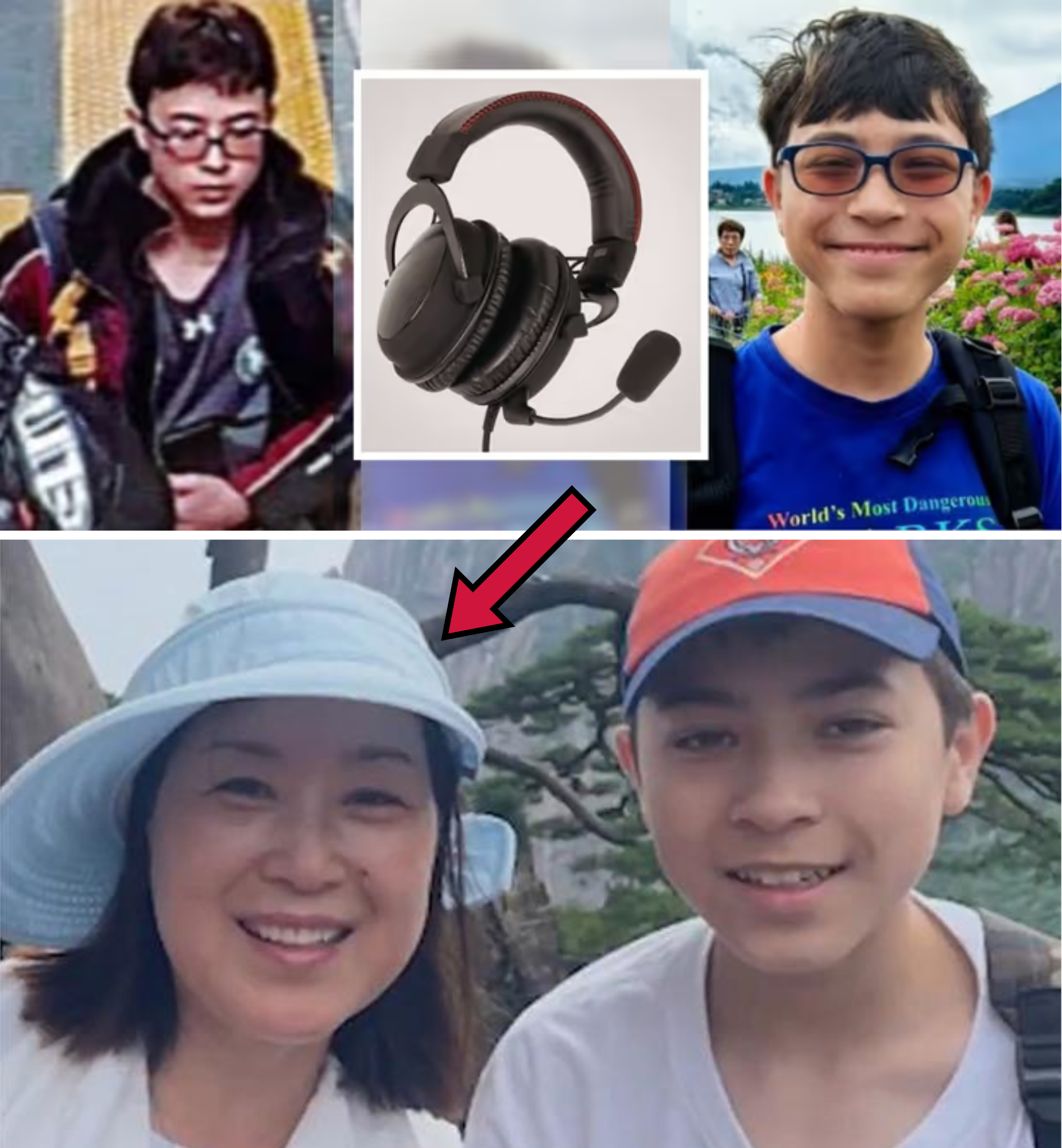
Suffolk County Police have officially closed one of the most persistent threads in the disappearance of 15-year-old Thomas Medlin: the idea that he traveled alone to New York City on January 9 to meet someone he met through Roblox. After exhaustive digital forensics—including subpoenas to platforms, analysis of multiple devices, examination of gaming profiles, and cross-referencing social media activity—investigators concluded there is zero evidence linking any online gaming interaction to his journey or disappearance. The revelation strongly suggests Thomas deliberately fabricated the “Roblox friend” explanation, possibly as a cover story to conceal his true purpose for leaving school early and heading into Manhattan without telling anyone his real plan.
Thomas left The Stony Brook School in Saint James around 3:30 p.m. that Friday afternoon. He walked to the nearby Long Island Rail Road station, boarded a train to the city, and was captured on surveillance cameras at Grand Central Terminal around 5:30 p.m. Cellphone pings later placed him in Lower Manhattan near Cherry and Rutgers streets before his route took him to the pedestrian walkway of the Manhattan Bridge. At 7:06 p.m., footage showed him stopping near the railing for 36 seconds—an extended pause that has become the emotional and investigative focal point—before continuing out of frame. No monitored pedestrian exit recorded him leaving the structure on foot. His phone registered its final activity at 7:09 p.m., and one minute later a nearby camera captured a distinct splash in the East River below. Authorities maintain there is currently no indication of foul play, but the absence of an exit sighting, combined with the timing of the phone blackout and water disturbance, keeps the river at the center of the ongoing search.
The Roblox angle first surfaced from family members, especially Thomas’s mother, Eva Yan. In early interviews she explained that her son had mentioned meeting a friend from the game, prompting the family to check his accounts. She later discovered he had secretly created a second Roblox profile using a different email address, bypassing the parental controls tied to her account. This detail fueled initial speculation that an online connection—perhaps someone he chatted with in-game—had lured him to the city. When a friend suggested looking deeper into Roblox, the theory gained traction in media reports and public discussion, leading many to assume an internet stranger was involved.
Roblox responded promptly to law enforcement requests, conducting its own internal review. The company confirmed it followed protocol and found no evidence of personal information exchange—such as phone numbers, addresses, or off-platform contact details—between Thomas and any other user. Suffolk County Police’s parallel forensic work reached the same conclusion: no relevant communications, no arranged meet-up, no indication that Roblox played any role in his decision to travel. The department’s January 28 statement was unequivocal: “Online gaming platforms are not connected to his disappearance.” With that door closed, investigators now view the “friend” story as intentional misinformation Thomas provided to his mother, likely to avoid scrutiny or gain tacit approval for leaving.
Why a teen who was described as quiet, kind, and generally compliant would invent such a specific cover remains one of the most troubling unanswered questions. Police have not speculated publicly on motive, but the fabrication implies premeditation: he planned the trip in advance, chose a believable excuse rooted in his known interest in gaming, and executed it alone. The careful construction of the lie—complete with a secondary account to lend plausibility—suggests he anticipated questions and wanted to deflect them. What he was actually seeking in New York City that day—whether escape, exploration, a personal errand, or something more distressing—is now the core puzzle.
The Manhattan Bridge sequence continues to dominate the investigation. The 36-second pause near the railing, the lack of any recorded departure, the precise timing of the phone going dark, and the immediate splash in the river form a tight, disturbing chain of events. A secondary 14-second sighting near Sands and Jay streets on the Brooklyn side places him almost at the end of the crossing before he disappears from all surveillance. Divers, marine units, and aerial teams maintain focused searches in the splash area beneath the bridge, but the East River’s powerful currents, winter cold, and poor visibility have made recovery efforts extraordinarily challenging. Operations extend along adjacent shorelines and waterways, yet no new physical evidence has surfaced.
Eva Yan’s emotional appeals have not wavered. In repeated television and local media appearances, she has promised her son faces “no trouble” if he returns—only love and acceptance. She has reiterated that there will be no punishment, no lectures, just a family desperate to know he is safe. The discovery that the Roblox story was invented adds another layer of pain for her: the realization that her son felt the need to deceive her before vanishing. Despite this, she continues to speak publicly, sharing photos of Thomas in his signature black jacket with red stripes, dark sweatpants, glasses, and backpack, hoping visibility will prompt someone to come forward.
Community support remains visible and vocal. Long Island vigils continue with candles, signs, and collective prayers. The Suffolk County tip line stays active, though many reported sightings in Manhattan and Brooklyn have been ruled out. Online, #FindThomasMedlin and #BringThomasHome keep the case circulating, with users reposting police updates, Eva Yan’s pleas, and the latest timeline clarifications. Conversations increasingly turn to adolescent mental health, the pressures teens face in silence, and the limits of parental oversight in a digital world.
The debunked Roblox narrative does not resolve the case—it deepens it. It removes the external threat of an online predator but replaces it with the heavier question of internal struggle: what burden was Thomas carrying that made him lie, leave without explanation, and walk onto that bridge alone? Police continue urging anyone who may have seen him in Lower Manhattan, on the Manhattan Bridge walkway, or in Brooklyn between 6:00 p.m. and 9:00 p.m. on January 9 to submit dashcam footage, memories, or any detail—no matter how small.
Tips can be directed to the Fourth Squad Detectives at 631-854-8452 or anonymously to Crime Stoppers at 800-220-TIPS. As the third week passes, the East River continues its relentless flow beneath the bridge, silent witness to whatever transpired in those final minutes. The hope endures that Thomas—wherever he is—will encounter his mother’s unwavering message of love and safety, and that one day he will reach out. Until then, the invented story of a “Roblox friend” lingers as a quiet, aching clue: sometimes the most dangerous secrets are the ones we keep from the people who love us most.
News
The Unexpected Man Eloise Bridgerton Might Marry in Season 5 – And Why It’s Dividing Fans.
In the glittering world of Regency-era London, few characters have captured hearts quite like Eloise Bridgerton. Fiercely independent, sharp-tongued, and unapologetically uninterested in the marriage mart, Eloise has stood out…
Fake Bump to Real Tragedy: Laken Snelling’s Eerie Halloween Pregnant Costume Resurfaces Just Months Before Newborn’s Body Was Found in Her Closet.
In a haunting coincidence that has stunned observers, former University of Kentucky competitive STUNT athlete Laken Snelling dressed as a pregnant woman for Halloween 2024 — complete with a fake…
Paternity Twist: Laken Snelling’s Ex-Boyfriend Izaiah Hall Provides DNA Sample in Newborn Death Investigation.
In a significant new development in the high-profile case surrounding former University of Kentucky STUNT team member Laken Snelling, her ex-boyfriend Izaiah Hall has voluntarily provided a DNA sample to…
“She Tried to Run Me Over”: Laken Snelling Faces Manslaughter in Newborn Death as Former Classmates Allege Jeep Attack and Years of Brutal Bullying.
Laken Snelling, the 22-year-old former University of Kentucky competitive STUNT athlete, now stands accused of first-degree manslaughter in the death of her newborn son after a grand jury handed down…
From Cheerleader to Accused: Laken Snelling Indicted in Newborn’s Death as Former Classmates Allege She Was a “Serial Bully” Who Once Tried to Run Someone Over.
Former University of Kentucky student-athlete Laken Snelling, 22, faces a first-degree manslaughter charge after a grand jury indicted her in March 2026 in connection with the death of her newborn…
End of content
No more pages to load