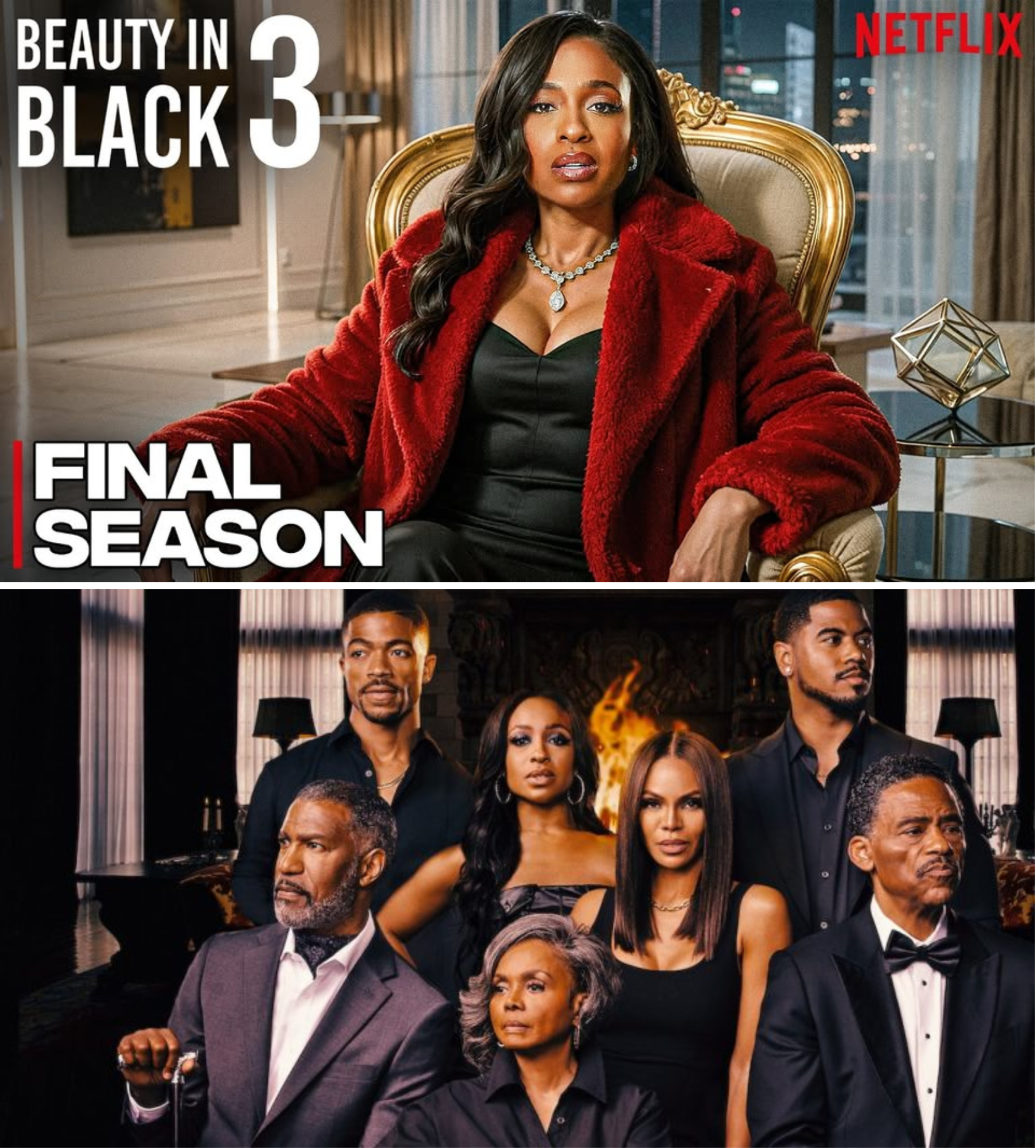
Netflix’s gripping drama “Beauty in Black,” created by Tyler Perry, has built a dedicated following with its intense mix of family intrigue, ambition, and redemption. The series tracks the intersecting paths of two women from contrasting worlds: Kimmie, a determined young woman fighting to escape difficult circumstances, and Mallory, the driven executive at the helm of a prominent hair-care brand. Taylor Polidore Williams delivers a compelling performance as Kimmie, while Crystle Stewart embodies Mallory’s commanding presence.
The ensemble cast enriches the narrative. Ricco Ross plays Horace Bellarie, the family patriarch whose decisions reshape dynamics. Julian Horton portrays Roy, one of Horace’s sons navigating entitlement and rivalries. Steven G. Norfleet appears as Charles, another heir facing personal and professional pressures. Debbi Morgan plays Olivia, Horace’s ex-wife with lingering influence. Richard Lawson features as Norman, Horace’s brother entangled in suspicions. Charles Malik Whitfield is Jules, a controlling figure from Kimmie’s past. Amber Reign Smith plays Rain, Kimmie’s close friend offering support amid turmoil. Additional roles include Xavier Smalls, Shannon Wallace, and others contributing to subplots.
Season 1 introduces Kimmie’s challenging life after leaving home, working in a club environment under strict oversight. She crosses paths with the affluent Bellarie family, owners of the Beauty in Black empire, which hides complex operations. Mallory manages daily affairs with precision, but underlying tensions emerge. Kimmie applies for a company scholarship, seeking change, while dealing with friendships, threats, and opportunities. Horace takes interest in her resilience, leading to alliances. Episodes explore themes of survival, trust, and aspiration, building to Kimmie gaining unexpected leverage through marriage to Horace, positioning her as a key player.
Season 2 escalates conflicts. Part 1 follows Kimmie’s adjustment to authority as chief operating officer, asserting ideas for the business while facing resistance from Roy, Charles, Mallory, and others. Power shifts dilute family shares, sparking confrontations. Kimmie prioritizes loyalty to friends and family, including efforts to protect loved ones. Subplots involve personal revelations, alliances fracturing, and external pressures. The season highlights ambition’s costs, with Kimmie evolving into a decisive leader. Part 2, set for March 2026, promises reckoning as Kimmie consolidates control, addressing betrayals and threats head-on.
The renewal for a third and final season, announced in December 2025, sets the stage for culmination. Speculation around the trailer suggests Kimmie’s dominance peaks, with her overseeing boardroom decisions and reshaping the legacy. Scenes imply intense rivalries, as Mallory seeks influence and others challenge her position. Emerging claimants and plots add layers, testing Kimmie’s resolve. Her assertive stance reflects growth from vulnerability to strength, balancing reclamation with potential isolation.
The series draws strength from Perry’s storytelling, blending emotional depth with fast-paced developments. Williams’ Kimmie resonates as an underdog turned force, inspiring discussions on perseverance. Stewart’s Mallory provides a formidable counterpart, exploring leadership nuances. Supporting performances ground the high-stakes world, from club scenes to corporate settings.
Production values shine in lavish offices, urban backdrops, and detailed costumes symbolizing status shifts. Atlanta and Chicago locations enhance authenticity. The soundtrack complements tension and triumphs with fitting selections.
Viewership success propelled renewals, with seasons topping charts internationally. Fans engage deeply with character journeys, debating outcomes and motivations.
Themes of empowerment persist, portraying ascent amid obstacles. Kimmie’s path questions sacrifices for security and integrity in competitive environments.
If the final season aligns with teases, confrontations intensify, resolving inheritances, loyalties, and vendettas. Old adversaries regroup, while revelations challenge foundations. Kimmie’s vision for the brand could innovate or disrupt traditions.
Subplots deepen connections: friendships enduring strains, family ties reevaluated, personal growth amid chaos. Jules’ influence lingers, tying past to present.
Critics note the addictive pacing and bold arcs, appealing to audiences seeking dramatic escapes.
As the conclusion approaches, anticipation focuses on whether Kimmie secures lasting change or faces unforeseen fallout.
Marketing builds excitement with glimpses of decisive moments and ensemble clashes.
Global reach amplifies impact, sparking conversations on resilience and reinvention.
The narrative underscores transformation’s complexities, from rebuilding to redefining success.
Potential developments maintain momentum, blending confrontation with reflection.
Enthusiasm reflects investment in the evolving saga.
Ultimately, “Beauty in Black” captivates with its exploration of power’s allure and consequences.