Ex-Wife’s Final Call from Synagogue Attacker Exposed – Grief Over Lebanon Losses Sparked Deadly Rampage.
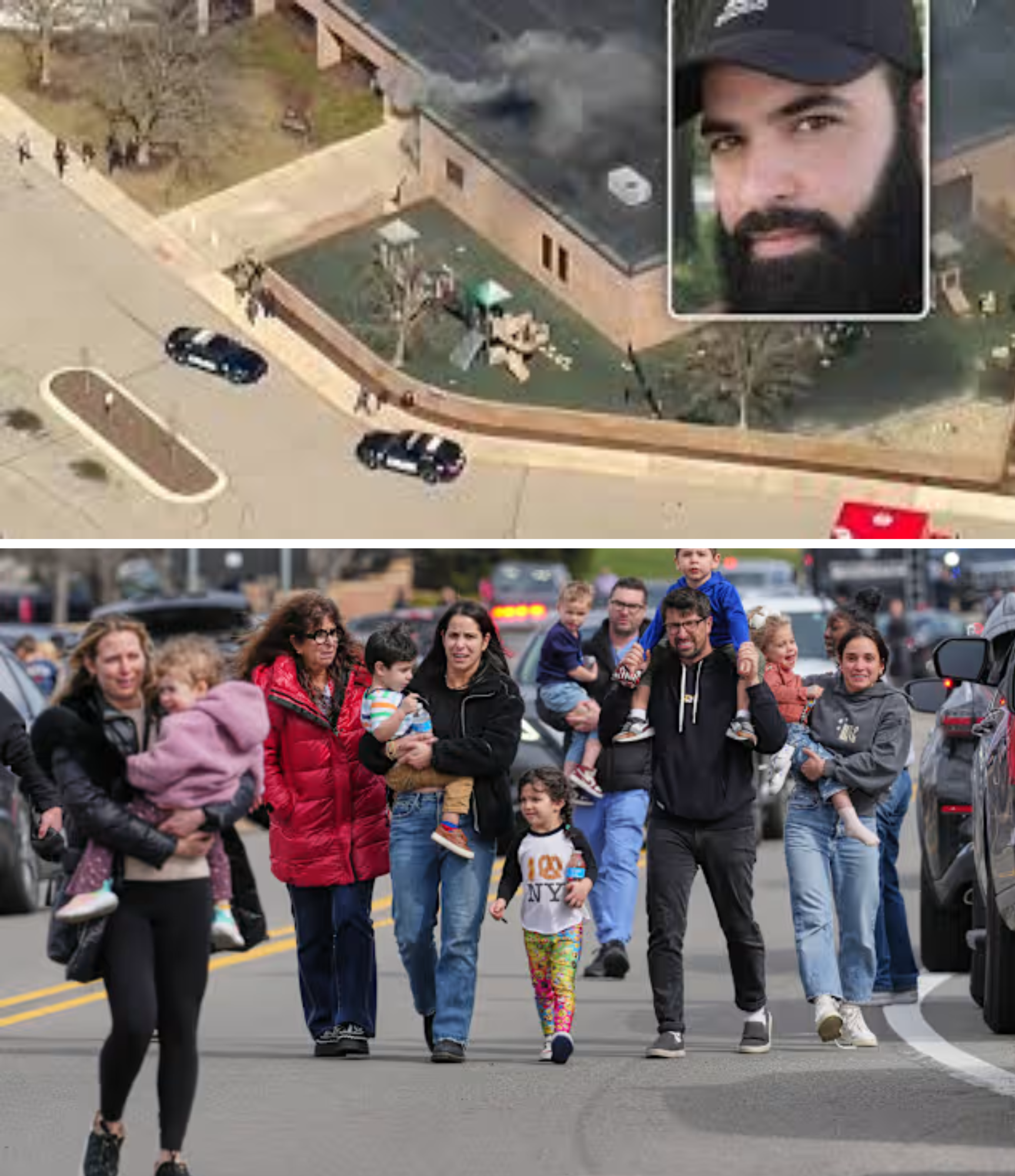
The March 12, 2026, vehicle ramming and shooting at Temple Israel in West Bloomfield Township, Michigan, unfolded as a targeted act of terror that narrowly avoided claiming dozens of young lives. Ayman Mohamad Ghazali, 41, a Lebanese-born U.S. citizen, deliberately drove his truck through the main entrance of the synagogue around 12:19 p.m., crashing into the building that housed an active early childhood center with roughly 140 preschool children inside. Federal authorities, including the FBI, have classified the incident as an act of violence directed at the Jewish community, amid a surge in antisemitic threats across the country.
Moments before the assault, Ghazali placed what would be his final phone call to his ex-wife. In a brief, haunting conversation, he told her to look after their children, a statement that left her deeply unsettled. The couple had married in Lebanon in 2006 and divorced in March 2025 following her filing in Wayne County Circuit Court the previous August. Their children live with their mother in the United States, while Ghazali resided alone in Dearborn Heights leading up to the attack. That single call has since been described by investigators and media as profoundly disturbing, serving as an eerie prelude to the violence that followed.
Surveillance footage and witness accounts show Ghazali accelerating his truck directly into the synagogue’s front doors, propelling it down an interior hallway. The vehicle quickly ignited—likely from incendiary devices or explosives carried inside—as confirmed by bomb-sniffing dogs that detected hazardous materials at the scene. Armed security personnel stationed at the synagogue responded within seconds, engaging the suspect in a firefight. Ghazali was fatally shot during the exchange; the FBI later determined the wound was self-inflicted to the head, though initial confusion existed over whether security guards delivered the fatal shot.
Miraculously, no children, staff members, or congregants lost their lives. One security guard suffered non-life-threatening injuries from the vehicle collision, while more than 30 first responders and law enforcement officers received treatment for smoke inhalation, most of whom were released after medical checks. The rapid intervention by the armed guards has been widely praised as the decisive factor in preventing a massacre, especially given the presence of so many young children during the midday attack.
Investigators traced the truck’s registration to Ghazali and confirmed his identity through multiple sources. Born in Lebanon, he arrived in the United States in May 2011 on a visa sponsored by his then-wife, who was a U.S. citizen. He naturalized in 2016 and worked at a restaurant in Dearborn Heights, with no prior criminal history publicly documented. The Department of Homeland Security and FBI have been piecing together his background, including travel records, online activity, and communications.
A critical piece of the motive puzzle emerged quickly. According to sources close to the investigation, including a Lebanese official and Dearborn Heights Mayor Mo Baydoun, Ghazali suffered a devastating personal loss about ten days before the attack. Several family members—brothers, a niece, and a nephew—were killed when an Israeli airstrike destroyed their home in Lebanon. The strike was part of the ongoing regional conflict that has claimed hundreds of lives in Lebanon over recent months. Those who knew Ghazali described him as profoundly affected; he reportedly ceased working, became reclusive, and exhibited clear signs of trauma and despair following the tragedy.
This immense grief, layered atop escalating geopolitical tensions in the Middle East—including Iran’s role and repeated cross-border strikes—is believed to have driven his radicalization. While the FBI has not officially tied the attack to a specific terrorist organization or ideology, the selection of a prominent synagogue as the target points to antisemitic motivation intertwined with personal anguish over events abroad. The attack fits into a broader pattern of heightened threats against Jewish institutions in the United States, with national security officials repeatedly warning of elevated risks stemming from international conflicts.
In the hours following the incident, federal agents executed a search warrant at Ghazali’s Dearborn Heights residence, seeking evidence of planning, additional materials, digital communications, or radicalization indicators. The investigation remains active, with authorities examining his internet history, potential contacts, and any preparatory steps he may have taken.
President Donald Trump addressed the nation shortly after, calling the event a “terrible thing” and committing full federal resources to understanding the circumstances and preventing future incidents. Temple Israel’s leadership expressed immense gratitude for the security team’s bravery, noting that without their swift action, the outcome could have been catastrophic. Community organizations and Jewish advocacy groups have called for stronger safeguards at places of worship and renewed focus on combating antisemitism in all forms.
The near-tragedy has reignited national conversations about several intersecting issues: the mental health toll of distant wars on immigrant and diaspora communities, the rise in hate-motivated violence, and the necessity of armed protection at vulnerable sites. Experts point out that personal trauma can become a catalyst for extremism when combined with ideological narratives or unresolved anger toward perceived perpetrators of harm.
As more forensic details and witness statements emerge, the focus remains on how such a devastating chain of events—from family loss in Lebanon to a suicidal attack in Michigan—could converge in a single, terrifying moment. The final phone call to his ex-wife stands out as a poignant and unsettling detail, encapsulating the intersection of profound personal sorrow and targeted rage that nearly claimed innocent lives. The heroism of the security guards ensured the story ended with survival rather than slaughter, but the scars—emotional, communal, and national—will linger long after the smoke cleared from Temple Israel.