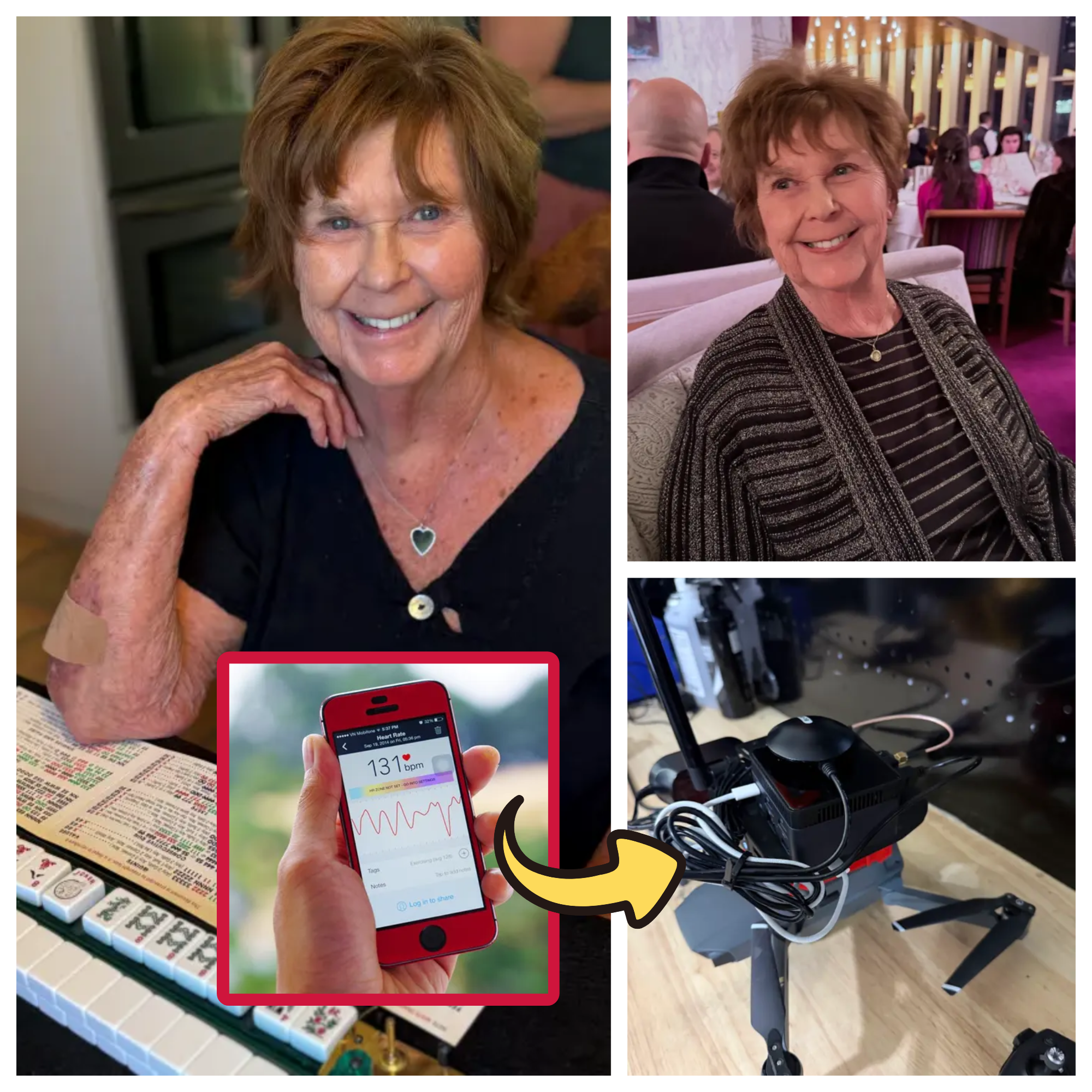
A former Marine veteran and renowned ethical hacker has developed a specialized Bluetooth signal sniffer tailored specifically for the search of Nancy Guthrie, the 84-year-old mother of NBC “Today” show co-anchor Savannah Guthrie. The device, now deployed on a Pima County Sheriff’s Department helicopter circling Tucson, Arizona, aims to detect faint signals from Guthrie’s Bluetooth-enabled pacemaker—a critical lead in a disappearance that has gripped the nation since February 1, 2026.
Nancy Guthrie was last seen at her Catalina Foothills home on January 31, 2026. Her Nest doorbell camera went offline around 1:47 a.m., followed by footage of a masked figure approaching at 2:12 a.m. At 2:28 a.m., her pacemaker disconnected from the companion app on her phone, suggesting she was removed from range or the device was interfered with. Authorities believe the abduction was targeted, possibly evolving from a burglary, with no evidence of cross-border movement to Mexico despite outreach to authorities there.
David Kennedy, CEO of TrustedSec and a former Marine who conducted cyber missions for the National Security Agency, recognized the opportunity after learning of the pacemaker’s Bluetooth Low Energy (BLE) capability. Pacemakers like Nancy’s pair with phones for monitoring, emitting signals every few minutes—especially when out of range—as the device attempts reconnection. Kennedy, who previously tested pacemaker vulnerabilities for manufacturers to prevent hacking risks like battery drain or induced failures, quickly wrote custom software to isolate the device’s unique physical MAC address amid millions of nearby Bluetooth signals.
The sniffer uses signal amplifiers, high-gain antennas, and software-defined radios to create an extended “bubble” of detection energy. Standard BLE range is only 30-35 feet due to low 10-milliwatt transmit power, but Kennedy’s enhancements push effective detection to 800 feet in tests, with potential up to 5,000 feet in ideal line-of-sight conditions. It filters noise by targeting Nancy’s specific MAC address, overriding randomization protections via identity-resolving keys if needed. If close enough, it can actively scan for responses, leveraging the device’s persistent reconnection attempts.
Kennedy tested the prototype by concealing a Bluetooth device in his armpit to simulate body interference, confirming viability despite the pacemaker’s implantation reducing signal strength. A colleague traveled to Arizona to assist deployment, with the tool mounted on a low-flying helicopter for aerial grid searches over rugged terrain.
Kennedy envisions scaling: He’s developing iPhone and Android apps to crowdsource detection. Users could download, select “Find Nancy,” and scan locally—the app would report hits to law enforcement for triangulation. “I could literally publish an app tomorrow that every single person could download… and it will scan… for that specific address and then tell the FBI, ‘Hey, there’s a hit here,’” he explained. This community-powered approach could transform the search into a massive, real-time network.
The investigation remains intensive. Over 40,000-50,000 tips have poured in, with 400 investigators involved. Family members, including Savannah and siblings, were cleared of suspicion by Pima County Sheriff Chris Nanos, who called them “victims plain and simple.” A glove found two miles away matched the suspect’s in doorbell footage, yielding unknown male DNA sent to CODIS—no matches yet, but analysis continues. New biological evidence from the home is under review.
Savannah Guthrie has posted emotional appeals, including a solo video: “It is never too late to do the right thing. You’re not lost or alone.” Ransom notes surfaced but proved fruitless. The sheriff holds hope, stating no proof of death and that the case stays active with every lead pursued.
Challenges persist: Pacemaker signals weaken through body tissue and walls; kidnappers could disable the device; triangulation requires precise timing and proximity. Success depends on luck—being overhead during transmission—and conditions.
Kennedy’s innovation highlights technology’s role in modern searches, blending military-grade expertise with ethical hacking for humanitarian ends. As the third week ends, the sniffer represents renewed hope in a case of prolonged anguish. Authorities urge tips via 1-800-CALL-FBI or local channels. With the app in development and aerial scans ongoing, the nation watches for a signal that could bring Nancy home.