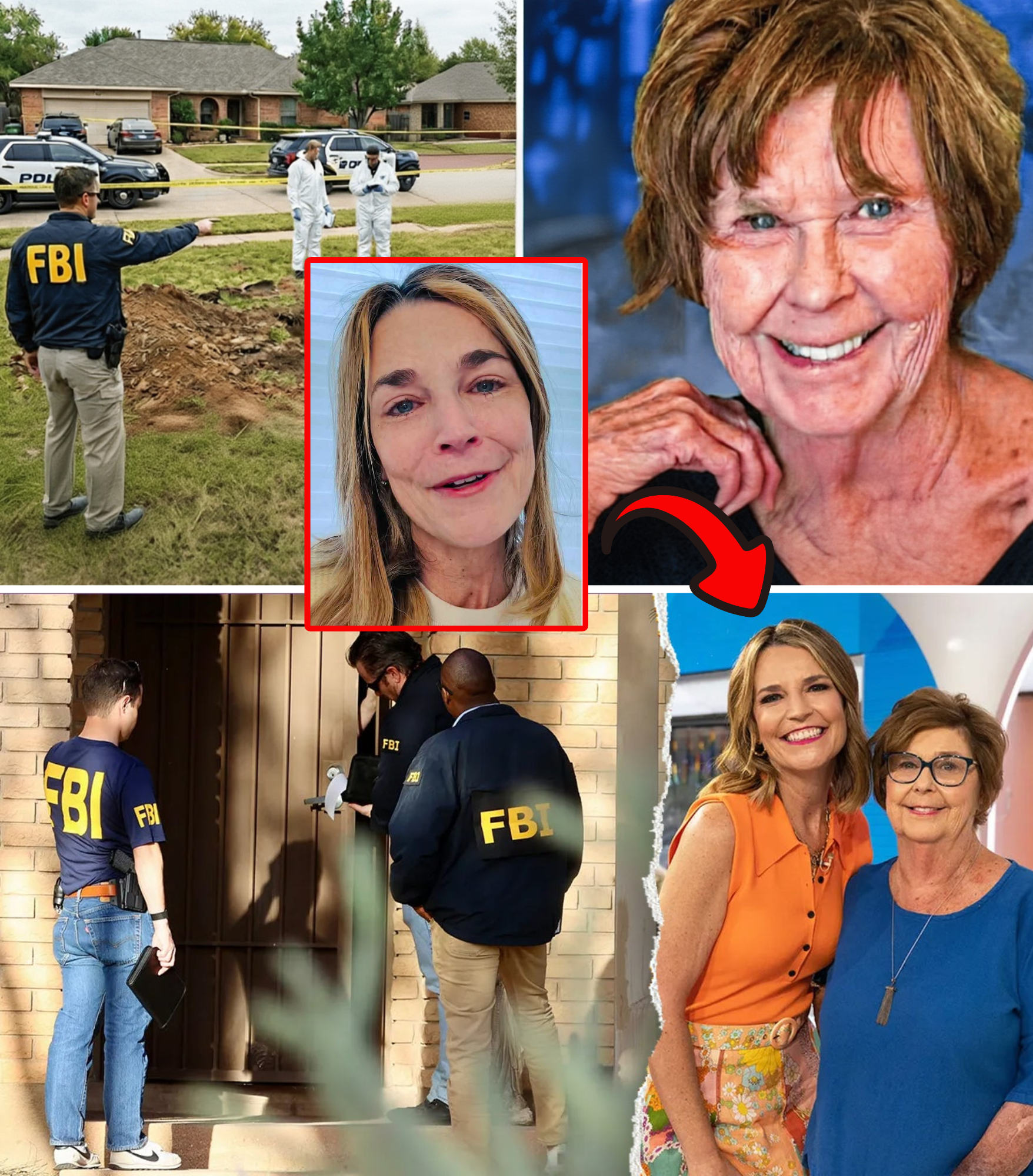
After more than three weeks of intensive effort, FBI agents completed what multiple sources describe as the final major on-site search of Nancy Guthrie’s Catalina Foothills residence on February 25, 2026. The team spent several hours methodically moving through the home, documenting every room, re-photographing key areas, and collecting any remaining potential trace evidence before loading equipment into vans and departing without fanfare or public statement. The quiet withdrawal marks a significant pivot in the investigation into the 84-year-old’s disappearance—shifting emphasis away from the physical crime scene toward digital forensics, tip validation, ransom tracking, and broader regional searches.
Nancy Guthrie was last confirmed safe inside her home on the evening of January 31 after returning from a family dinner. She missed a scheduled online church service the following morning, triggering a welfare check that uncovered disturbing signs: confirmed blood belonging to Nancy, evidence of forced entry and removal, and a doorbell camera that had been deliberately tampered with and disconnected. Surveillance footage released days later captured a masked figure—estimated 5-foot-9 to 5-11, dressed in dark clothing, ski mask, backpack, gloves, and possibly carrying a holstered item—on the porch around 1:47 a.m. on February 1, appearing to strike or disable the camera. Additional stills suggested the same or a similar individual had been near the property earlier, prompting questions about pre-abduction reconnaissance.
Ransom demands for cryptocurrency payments began arriving soon after, though authorities have publicly identified several as hoaxes designed to exploit the high-profile case. One such scheme led to the arrest of a California man who sent fabricated messages claiming knowledge of Nancy’s whereabouts. The family, led by Savannah Guthrie and her siblings, responded by increasing the reward to up to $1 million for credible information leading to Nancy’s safe return, following FBI protocols for handling such offers.
The February 25 search represented the most extensive return to the property since initial processing. Agents focused on secondary locations within the home—closets, attics, crawl spaces, and outdoor perimeter areas—while forensic technicians re-examined surfaces for latent prints, fibers, or biological material that earlier sweeps might have missed. No dramatic discoveries were announced, and the lack of visible breakthroughs has led law enforcement sources to indicate that the scene has likely yielded all viable physical evidence available at this stage. The Pima County Sheriff’s Department, which maintains lead investigative responsibility in partnership with the FBI, has reduced the frequency of on-site presence and daily briefings, signaling a transition to less visible, longer-term investigative phases.
Amid this procedural turning point, Savannah Guthrie’s public expression of emotion became the focal point for many observers. In a February 24 Instagram video that has since been viewed millions of times, she spoke with measured candor about the family’s daily reality. “We are blowing on the embers of hope every single day, praying for that miracle,” she said, her voice steady but strained. Yet she did not shy away from the darker possibility: “We also know that she may be lost. We know that she may already be gone.” The admission—unusually direct for a family member in the early stages of a missing-persons case—reflected both profound grief and a deliberate choice to prepare the public and themselves for outcomes beyond a happy reunion.
Savannah reiterated the $1 million reward structure, stressed the importance of anonymous tips through 1-800-CALL-FBI, and asked for continued prayers while emphasizing that “someone knows how to find our mom and bring her home.” The video’s raw vulnerability resonated deeply, with commenters describing it as “heart-shattering” and “brutally honest.” Many praised her for refusing to offer false optimism, viewing the statement as a mature acknowledgment that prolonged uncertainty can be as damaging as false hope.
The case has faced typical investigative hurdles: more than 40,000 tips received, the vast majority ruled out or low-priority; a black glove recovered several miles away yielding no CODIS hits and no match to samples from the residence; ransom communications that have so far failed to produce verifiable contact with a legitimate kidnapper. Earlier speculation about accomplices or family involvement has been publicly dismissed after family members, including Savannah’s sister Annie and brother-in-law Tommaso Cioni, were cleared. Collateral damage from online misinformation has included harassment of unrelated individuals falsely accused based on distant connections.
The FBI’s departure from the home carries symbolic weight. Releasing the property back to the family signals that investigators no longer require daily access for active evidence collection, though forensic analysis of previously gathered items—DNA, fibers, digital metadata from the doorbell system—will continue. The investigation remains active and multi-agency, with resources still dedicated to cross-border coordination, cryptocurrency transaction tracing, and follow-up on credible leads.
For Savannah and her siblings, the final sweep brought no closure—only the continuation of a vigil marked by alternating waves of hope and dread. Her willingness to voice the possibility of permanent loss, even while maintaining the reward and tip line, appears designed to sustain public engagement without creating unrealistic expectations. The family’s broader actions—Savannah’s personal $500,000 donation to the National Center for Missing & Exploited Children—demonstrate a commitment to systemic change in how missing-persons cases are handled, even as their own search enters a more uncertain phase.
As the calendar turns toward March, the question looms whether new digital forensics, a verified ransom breakthrough, or a single credible tip can reverse the current trajectory. The empty house on the quiet Catalina Foothills street stands as both a crime scene and a memorial, its silence echoing the family’s enduring wait. Savannah Guthrie’s words—equal parts fragile hope and unflinching reality—serve as the clearest voice in a case shrouded in shadows, reminding the world that even when leads grow cold, love and determination refuse to fade.