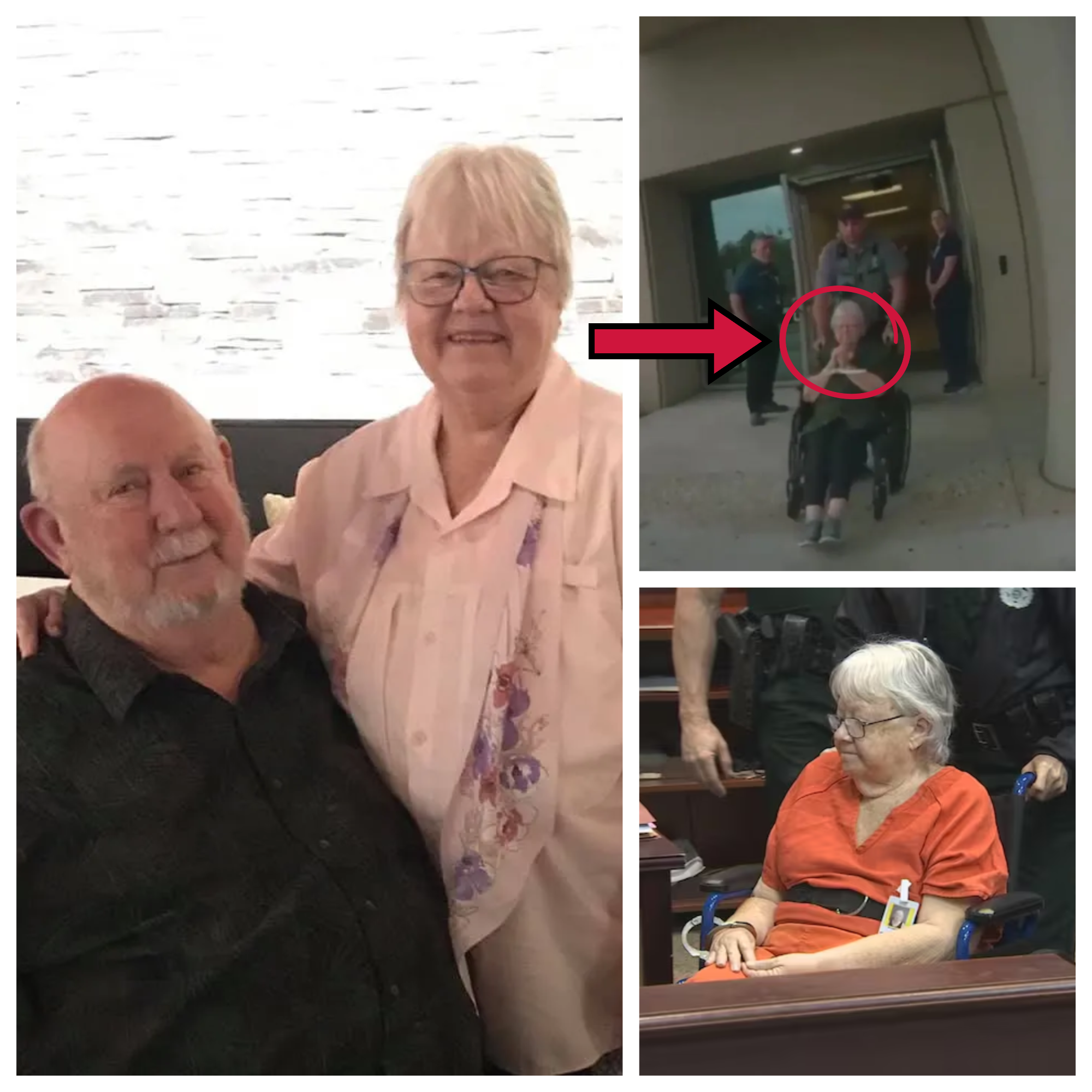
Ellen Gilland’s voice remains steady as she recounts the morning of January 21, 2023, when she ended her husband Jerry’s life inside his hospital room at AdventHealth Daytona Beach. Now 79 and living under probation after serving a reduced sentence, the retired Florida woman has given her most detailed public account yet in a recent FOX 35 Orlando interview. Without hesitation or visible remorse, she described pulling the trigger on a handgun she had smuggled into the facility, fulfilling what she insists was Jerry’s repeated, desperate plea to escape the agony of his terminal illness.
Jerry Gilland, 77 at the time, had been battling a rapidly deteriorating condition that left him in constant, excruciating pain. Medical records presented in court showed severe ulcers, complete dependence on a feeding tube, and a grim prognosis with no realistic path to improvement. In the days leading up to the shooting, Jerry—once an active, independent man—begged his wife of over five decades to help him die. According to Ellen, he explicitly directed her to bring the firearm from their New Smyrna Beach home. Together they agreed on a double-suicide plan: she would first assist him, then end her own life so neither would face the aftermath alone.
Ellen concealed the gun in her belongings and entered the hospital room as she had on previous visits. Jerry, weak but lucid, reportedly reminded her of their pact. She positioned the weapon behind his ear to ensure a quick, painless death. “There was a loud bang,” she told the interviewer, “and he was gone.” Jerry died instantly. Ellen then turned the gun on herself but the attempt failed, leaving her alive and triggering an immediate lockdown. For several hours she barricaded herself in the room, firing additional shots—including one into the ceiling—and issuing threats to responding officers before finally surrendering after prolonged negotiation.
The initial response from authorities was swift and severe. Ellen faced first-degree murder charges, a capital felony in Florida, where assisted suicide and euthanasia remain strictly illegal. The case quickly became a flashpoint in the national conversation about end-of-life autonomy. Prosecutors eventually reduced the charges after grand jury review, and in late 2024 Ellen entered a no-contest plea to manslaughter with a firearm, three counts of aggravated assault with a deadly weapon (one involving law enforcement), and related firearm offenses. In February 2025 she was sentenced to 366 days in state prison—credited with time already served—and 12 years of probation. She was released in late 2025 and now lives under supervision, completing community service requirements.
During the sentencing hearing, Ellen took the stand to explain her actions. She described weeks of watching Jerry suffer, his repeated pleas after bleak medical updates, and their exhaustive discussions of every possible alternative. Defense attorney Matthew Ferry portrayed the act as one of profound mercy rather than malice, citing Jerry’s unbearable pain, the consensual nature of the pact, Ellen’s advanced age, spotless prior record, and genuine remorse for the trauma inflicted on hospital staff and police. The judge acknowledged the tragic context but emphasized the gravity of discharging a firearm in a medical facility and endangering first responders, imposing the prison term as a necessary consequence.
In her recent interview, Ellen reiterated that she stands by her decision. “I really had no other choice,” she said, explaining that Florida’s lack of legal assisted-dying options left the couple with no dignified path forward. She described their marriage as one built on unwavering support and mutual promises to never let the other suffer needlessly. Jerry, she insisted, had made his wishes unmistakable and unwavering. While she expressed sorrow for the fear and disruption caused to others in the hospital that day, she made clear she does not regret sparing Jerry further torment. “I would do it again if it meant he didn’t have to endure that pain,” she stated plainly.
The case has reignited fierce debate over euthanasia and physician-assisted suicide. Florida remains among the states without any form of legal aid-in-dying, in contrast to jurisdictions like Oregon, Washington, California, Vermont, and others that allow terminally ill adults meeting strict criteria to obtain and self-administer life-ending medication. Supporters of reform argue that cases like the Gillands’ demonstrate the desperation created by prohibition—ordinary people driven to extreme, illegal acts when palliative care falls short or when suffering becomes intolerable. Opponents, including many medical ethicists, religious organizations, and right-to-life advocates, warn that legalizing such practices opens the door to abuse, coercion, and a slippery slope toward devaluing vulnerable lives.
Hospital staff and law enforcement provided emotional testimony during proceedings. Nurses and doctors recounted the terror of hearing gunshots in a place meant for healing. One officer described Ellen’s explicit threat during the standoff, heightening the sense of danger. Yet the defense countered with details of Jerry’s condition—chronic, unrelenting pain from ulcers and other complications—and Ellen’s role as his primary caregiver, pushed beyond endurance by a system that offered no legal exit.
Outside the courtroom, advocates gathered with signs supporting Florida End-of-Life Options legislation. Many viewed Ellen’s relatively lenient sentence as recognition of the unique circumstances, though others argued even manslaughter charges were too harsh for what amounted to a mercy killing. The incident also spotlighted shortcomings in palliative and hospice care, with some experts noting that better pain management and psychological support might have eased the couple’s despair.
Three years later, Ellen Gilland continues to live with the legal and emotional aftermath—ongoing probation, public judgment, and the permanent loss of her lifelong partner. Yet her position remains unchanged: she helped the man she loved escape suffering when no other help was available. Her story forces society to confront uncomfortable questions: How much suffering must a person endure before intervention becomes compassion rather than crime? When laws lag behind human reality, what choices are left for those at the end? And who gets to decide where the line between love and law is drawn?
As debates over dignified death continue across the United States, Ellen’s unflinching account serves as both a cautionary tale and a human plea. Behind the legal labels and courtroom drama lies a couple whose final act was shaped by decades of devotion—and a system that offered them no gentle way out.
News
Driver Breaks Silence on Deep River Crash — Claims “Short Argument” with Rico Montes Caused the Truck to Flip.
The driver of the black pickup truck involved in the fatal Deep River crash has finally spoken publicly for the first time since the March 2026 incident that claimed the…
Phone Recovered from Deep River Still Trying to Send Final Location — The Last Desperate Act of Rodrigo “Rico” Montes.
In the early hours of March 23, 2026, 18-year-old high school senior Rodrigo “Rico” Montes made one final, heartbreaking attempt to reach his family. As police divers searched the murky…
“Mom, I’m Riding Home With a Friend, See You Soon” — The Final Text Before Rodrigo “Rico” Montes Was Found in the Overturned Truck in Deep River.
On a quiet Sunday night in March 2026, 18-year-old Rodrigo “Rico” Montes sent his mother a simple, reassuring text that would become the last words she ever received from her…
The Black Bag in the Ravine: Chilling Discovery in the Death of American Airlines Flight Attendant Eric Gutierrez.
The tragic case of 32-year-old American Airlines flight attendant Eric Fernando Gutierrez Molina took an even darker turn as investigators in Colombia recovered a black bag linked to the missing…
The Secret Weekend Pattern: How the FBI’s Latest Breakthrough May Finally Trap Nancy Guthrie’s Abductor.
As March 2026 draws to a close, the disappearance of 84-year-old Nancy Guthrie from her home in Tucson’s Catalina Foothills has entered its 55th day with no arrest and no…
The Insider Who May Have Opened the Door: FBI Hunts for the Person Who Knew Nancy Guthrie’s Home Too Well.
In the affluent Catalina Foothills neighborhood of Tucson, Arizona, where residents often leave garage doors open and security feels routine, the abduction of 84-year-old Nancy Guthrie on the night of…
End of content
No more pages to load