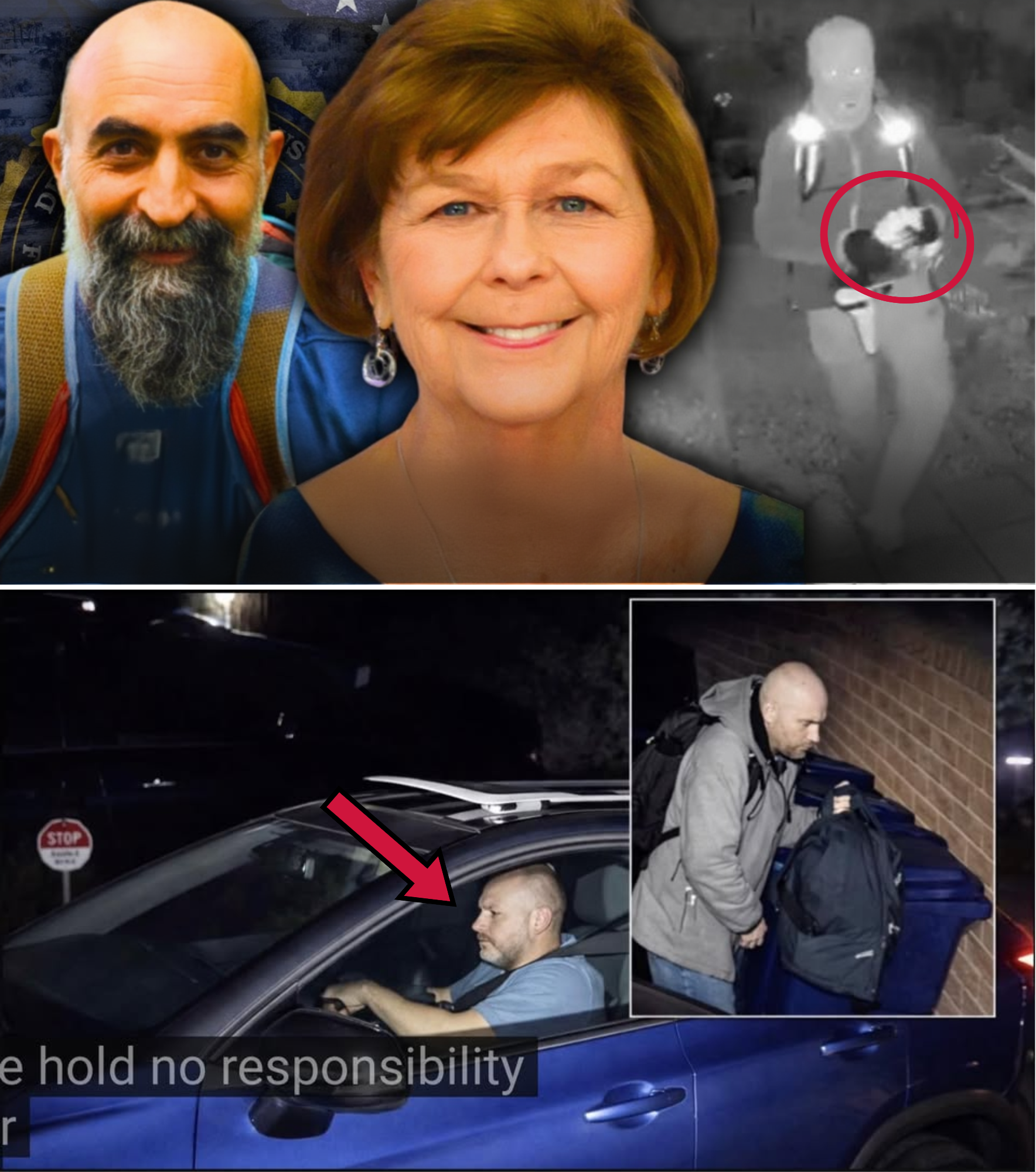
The disappearance of 84-year-old Nancy Guthrie from her quiet home in Catalina Foothills, near Tucson, Arizona, has become one of the most disturbing unsolved cases of 2026. On the night of January 31, the vulnerable widow left for dinner at her daughter’s house and returned around 9:48 p.m. What happened in the early hours of February 1 has left investigators, the public, and even former high-ranking officials stunned.
At 1:47 a.m., Nancy’s Ring doorbell camera suddenly went offline. Motion was detected at 2:12 a.m., and her pacemaker signal dropped at 2:28 a.m. – the moment many believe she was taken. Surveillance footage later recovered by the FBI showed a masked man in gloves, carrying a black Ozark Trail backpack and a firearm, deliberately tampering with the camera. Another unidentified vehicle was captured nearby at 2:36 a.m. No arrest has been made 58 days later.
The next morning, Nancy’s daughter Annie and her husband Tommaso Chion arrived at the house. They discovered the back doors propped open, blood on the doorstep, and the Ring camera yanked from the wall. According to reports, the couple searched the property for nearly an hour before calling 911 at 12:03 p.m. Deputies arrived at 12:15 p.m. By then, the family had already been inside the home.
Online investigator Chris McDunnana and several experts, including former U.S. Surgeon General Dr. Richard Carmona, have publicly raised alarms. Dr. Carmona, who previously led the Pima County Sheriff’s Department, stated bluntly that the crime scene “cannot be reconstituted” because family members were the first on scene. He criticized the handling of evidence, noting that contamination at this stage could destroy any chance of a clean prosecution.
FBI agents who later examined the scene reportedly expressed frustration over the compromised condition. DNA from a glove found nearby was tested but matched an unrelated local employee. Other DNA samples from the scene remain unidentified. Ransom notes began arriving on February 3 and February 6. The notes contained oddly specific details, including references to Nancy’s Apple Watch location. The family publicly stated that some notes appeared legitimate, yet the FBI has expressed skepticism, pointing out the unusual method of delivery and lack of direct communication with the kidnappers.
Despite these red flags, Pima County Sheriff Chris Nanos publicly cleared Nancy’s family as suspects on February 16, citing DNA results that did not match them or their close contacts. However, the sheriff himself faces mounting criticism. Deputies within the department passed a no-confidence vote against him. Questions swirl around his decision to send evidence to a private lab in Florida instead of using the FBI’s free laboratory services. Some analysts suggest an early “tunnel vision” focus on the ransom theory may have delayed other investigative avenues.
Nancy Guthrie was not in perfect health. She had mobility issues, took heart medication, and suffered from back pain. Her purse, phone, and medication were left behind in the home – unusual for a voluntary departure. The family, including prominent television journalist Savannah Guthrie, has made emotional public appeals for her safe return. In one widely shared Instagram video, they begged for information while expressing hope that Nancy is still alive.
Yet the case has darker undertones. Experts like retired NYPD detective Michael Alkazar and former FBI agent Jennifer Coffund Daffer have analyzed the evidence and suggested the propped-open doors and coordinated camera tampering point to more than one perpetrator who may have conducted reconnaissance days earlier. Footage indicates possible surveillance of the home as far back as January 11.
The institutional fallout is significant. Sheriff Nanos personally appeared on television to announce the reopening of the scene – a move some call a serious breach of protocol. A county board has even compelled certain officials to testify under oath. The combination of a contaminated crime scene, shifting narratives around the ransom notes, and public distrust in local law enforcement has turned this case into a lightning rod for debate about police competence and family involvement in investigations.
As of early April 2026, the investigation continues through digital records, expanded DNA databases, and enhanced footage analysis. No suspect has been named. The masked man in the Ozark Trail backpack remains at large, and Nancy Guthrie is still missing.
This case forces uncomfortable questions: How much damage does early family access really cause to a crime scene? Can a high-profile ransom narrative unintentionally steer investigators away from other leads? And in an era of doorbell cameras and instant public appeals, do we sometimes sacrifice evidence integrity for emotional storytelling?
Nancy’s pacemaker gave investigators a precise timestamp of the likely abduction. The blood on the doorstep and the yanked camera tell a story of sudden violence. Yet without pristine evidence, those clues may never lead to justice.
The public is watching closely. With each passing day, the pressure grows on authorities to explain why, 58 days later, an 84-year-old grandmother’s disappearance remains unsolved while serious questions about the crime scene linger unanswered.
News
“It’s All Because She Changed Her Will”: Savannah Guthrie’s Emotional Confession Shakes Up the Nancy Guthrie Disappearance Case.
The disappearance of Nancy Guthrie has gripped the public since January 31, 2026, when the 68-year-old retired public affairs worker from the University of Arizona vanished from her home in…
Ordinary Dad Turns Hero: One Father’s Instinct Saved Lives After Deadly Tennessee School Bus Crash.
On a Friday afternoon that started with excitement and laughter, a routine field trip for Kenwood Middle School students in Clarksville, Tennessee, turned into a scene of devastation that no…
Two Empty Seats at Kenwood Middle School as Students Return After Fatal Bus Crash – Sisters Hold Solidarity Sign.
Two empty seats will greet students and staff at Kenwood Middle School in Clarksville, Tennessee, when classes resume on Monday morning following the devastating school bus crash on Friday, March…
Kenwood Bus Dashcam Footage Raises Unanswered Question: Why the Slow Drift Across Highway 70 With No Braking?
A quiet morning field trip turned into tragedy on March 27, 2026, when a Montgomery County Schools bus from Kenwood Middle School in Clarksville, Tennessee, collided head-on with a Tennessee…
Possible Shoe Print in Blood? 3 Shocking Expert Theories on Nancy Guthrie Porch Evidence – Day 62 Update.
The disappearance of 84-year-old Nancy Guthrie has gripped the nation for 62 days, with her daughter, NBC News anchor Savannah Guthrie, publicly pleading for answers while the investigation continues to…
Outlander Season 8 Episode 4 Sneak Peek: Claire’s Resurrection Power Changes Everything as War Looms.
Outlander Season 8 continues to deliver the high-stakes drama, time-travel romance, and historical intensity that has defined the series since its beginning. With Episode 3 still fresh in fans’ minds,…
End of content
No more pages to load