Dumpster on Christmas Night: CCTV Captures Moment Mother Allegedly Disposed of 2-Year-Old Genesis Reid’s Body.
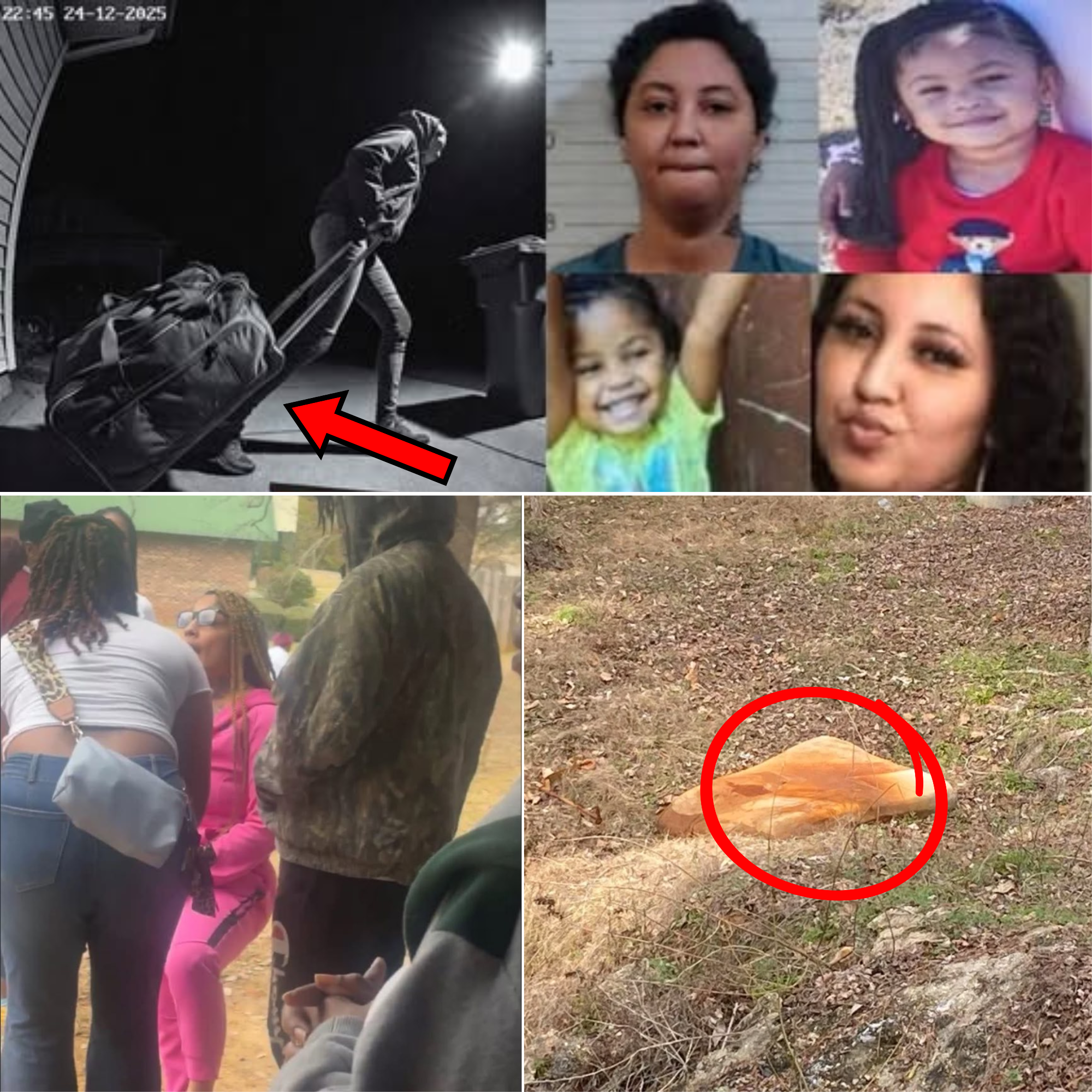
Grainy but unmistakable security footage from a neighbor’s camera in the Apache Drive apartment complex in Enterprise, Alabama, has become the most haunting piece of evidence in the Genesis Nova Reid case. The video, timestamped late on Christmas night 2025, shows Adrienne Reid, 33, wheeling a large rolling duffel bag across the parking lot toward the communal dumpster. According to the Enterprise Police Department and Coffee County prosecutors, that bag contained the body of her 2-year-old daughter Genesis, whom Reid is now accused of murdering and discarding like refuse.
The footage, first referenced by police in early March 2026 and later described in detail during charging documents, captures Reid maneuvering the heavy bag with visible effort. The bag appears bulky and rigid in places, consistent with investigators’ theory that it held Genesis’s small body wrapped or positioned inside. No other person is visible in the frame. Reid reaches the dumpster, lifts or pushes the bag over the edge, and walks away without looking back. Days later, additional video from the same camera shows her returning to the same dumpster and retrieving or adding items—believed to include Genesis’s toys, clothing, and other belongings—further supporting the prosecution’s narrative of an attempt to erase evidence.
Police Chief Michael Moore described the discovery of this footage as a turning point. “This video, combined with the timeline we’ve established, led us to the heartbreaking conclusion that Genesis was murdered on or around Christmas Day and her body placed in that dumpster on December 26,” he said during a March 9, 2026, press conference marking what would have been the child’s third birthday. The delay in reporting Genesis missing—until February 16, 2026, more than 50 days later—intensified scrutiny. Adrienne initially told officers her daughter had wandered out through an open door around 3 a.m. that morning, prompting an immediate community search. But the Christmas-night footage directly contradicted that story.
Investigators allege the murder occurred sometime between Christmas Eve and Christmas Day. Adrienne has been charged with capital murder and abuse of a corpse. Coffee County District Attorney James Tarbox confirmed the state will seek the death penalty, emphasizing the premeditated disposal and the profound breach of parental duty. Alabama law allows capital murder convictions based on strong circumstantial evidence even without a recovered body, provided the fact of death can be reasonably inferred. Prosecutors point to the video, the delayed report, inconsistencies in Adrienne’s statements, and her alleged efforts to destroy evidence as forming an overwhelming case.
The landfill search at Coffee County Landfill remains ongoing. Contents from the dumpster were compacted multiple times, transferred, and buried under layers of waste, turning the effort into a massive, slow-moving operation involving heavy equipment, cadaver dogs, forensic anthropologists, and support from the National Center for Missing and Exploited Children. Authorities estimate the search could take 8–12 weeks or longer. No confirmed remains have been located as of mid-March 2026, yet prosecutors maintain the circumstantial chain is sufficient.
Neighbors, including Vanessa Murana who described Adrienne as a “close friend,” have come forward with additional context. Murana and others noted Genesis had not been seen in the complex since around Christmas—routine daily walks with her mother had completely stopped. The sudden invisibility of the toddler, once a cheerful fixture in the hallways and parking lot, now feels like a silent alarm no one fully recognized at the time.
The footage has reignited comparisons to the Caylee Anthony case, where a mother’s inconsistent story and delayed report led to national outrage, though Caylee’s remains were eventually found. Here, the absence of a body has not weakened the prosecution’s resolve; instead, the video of the duffel bag being wheeled to the dumpster has become the visual centerpiece of the case—cold, deliberate, and devastating.
Community reaction in Enterprise remains raw. Pink vigil lights continue to burn in windows, billboards still display Genesis’s smiling face, and fundraisers for the family persist amid widespread grief. Yet anger has grown alongside sorrow. Many residents express fury at the idea of a child being treated as disposable, and the Christmas timing adds an extra layer of horror to an already unbearable story.
Forensic experts note that even without remains, the combination of video evidence, behavioral changes (the abrupt end of walks and social isolation), timeline discrepancies, and Adrienne’s statements provide a compelling circumstantial narrative. Defense attorneys may argue the footage is open to interpretation—perhaps the bag contained trash, clothing, or other items—but prosecutors counter that the context, including the later retrieval of Genesis’s belongings from the same dumpster, eliminates reasonable doubt.
As the trial approaches, the image of Adrienne Reid wheeling that duffel bag under the dim glow of apartment complex lights has become seared into public consciousness. It is not just evidence; it is a symbol—of betrayal, of silence where a child’s voice should have been heard, and of a community left searching for answers long after the dumpster lid closed.
Genesis Nova Reid would have turned three on March 9, 2026. Instead, her name is now tied to one of the most disturbing cases in recent Alabama history: a toddler allegedly murdered by her mother, placed in a bag, and discarded on the night the world celebrated peace and family. The footage may not show the act of killing, but it shows what came after—and for many, that image is devastating enough.