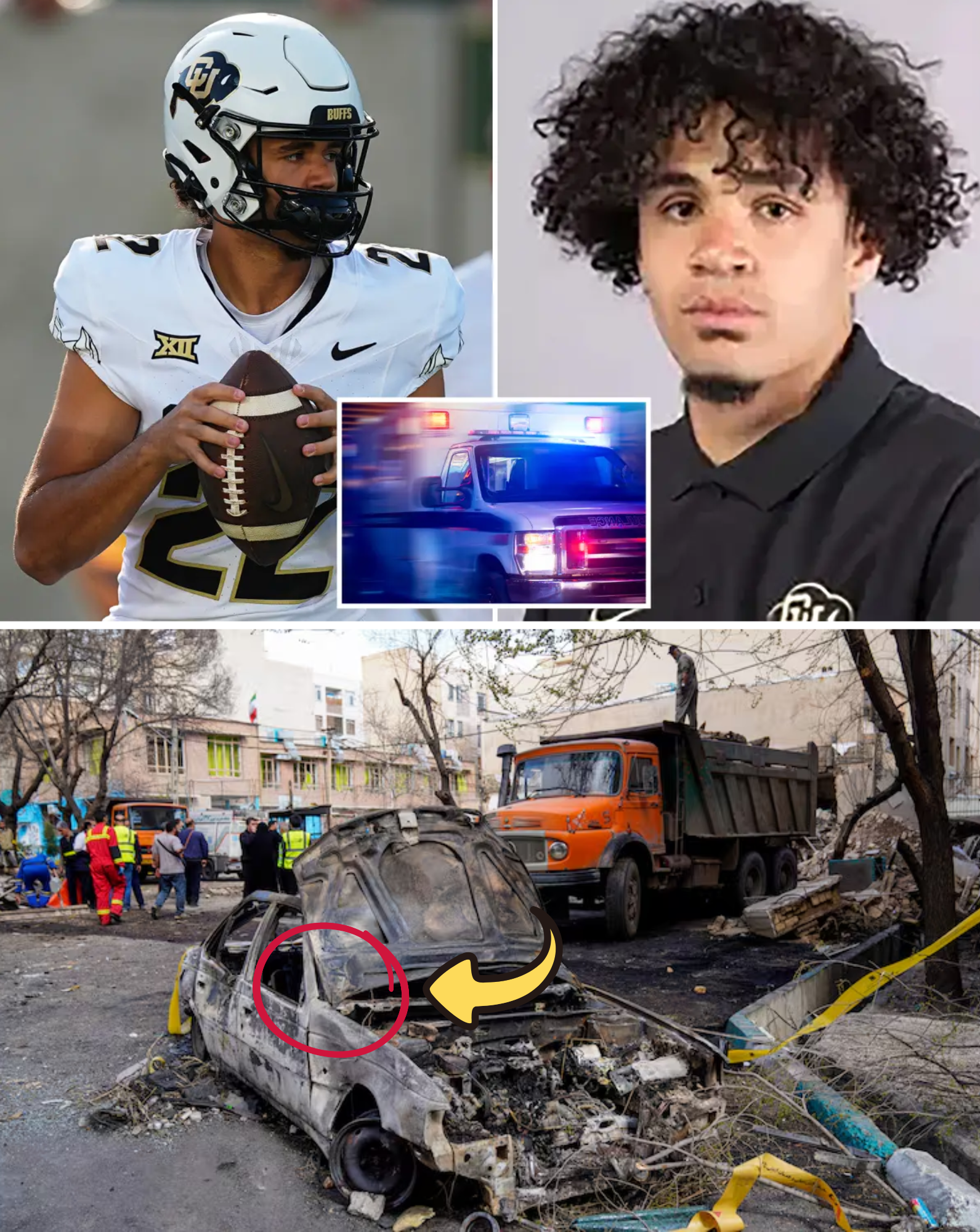
Emergency dispatch audio released on March 2, 2026, provides a harrowing glimpse into the final moments surrounding the death of University of Colorado Buffaloes quarterback Dominiq Ponder. The 23-year-old sophomore perished in a single-vehicle crash early Sunday morning in Boulder County, Colorado, when his 2023 Tesla Model 3 veered out of control, struck infrastructure, and erupted in flames. The recordings, sourced from public Broadcastify feeds and obtained by outlets including TMZ Sports and the New York Post, capture the escalating confusion and urgency as first responders arrived at the scene near Baseline Road.
The incident unfolded around 3 a.m. on March 1. Ponder, driving westbound, lost control while navigating a right-hand curve. The vehicle crossed into the eastbound lanes, smashed through a guardrail, collided with an electrical line pole, rolled down an embankment, and caught fire. Preliminary findings from the Colorado State Patrol indicate speed as a suspected contributing factor, though a full investigation by the vehicular crimes unit continues. No other vehicles were involved, and Ponder was pronounced dead at the scene.
The audio begins with reports of a roadside fire, initially mistaken for a transformer explosion—a common occurrence in the area. Dispatchers relay updates as units approach: “We now have an update saying that the car itself is on fire.” Responders quickly correct the assumption, identifying the blaze as originating from a crashed vehicle. One officer describes the intensity: heavy flames engulfing the Tesla, structural damage severe enough to require specialized extraction tools. “We’re going to need the jaws,” a voice notes, signaling the extrication equipment needed to access the driver trapped inside the mangled wreckage.
The recordings convey rising tension. Dispatch coordinates multiple agencies—fire, EMS, and patrol—while relaying real-time observations. Responders express concern over the vehicle’s electric nature, noting potential hazards from the Tesla’s battery pack, which can complicate firefighting and increase risks of re-ignition. The audio fades into procedural exchanges as the scene stabilizes, but the initial shock remains palpable: what started as a routine fire call transformed into a fatal motor vehicle accident involving a promising young athlete.
Ponder, a third-year sophomore from Opa-locka, Florida, had transferred to Colorado from Bethune-Cookman University. Though primarily a backup, he earned respect within the program for his work ethic, leadership, and positive presence. Head coach Deion Sanders confirmed the loss in a heartfelt statement: “Dom was one of my favorites. He was loved, respected and a born leader.” Teammates echoed the sentiment during practice the following day, with players visibly emotional as they processed the news. One teammate described being “speechless” upon speaking to Ponder’s father, highlighting the personal devastation rippling through the team.
The University of Colorado community rallied in grief. Tributes poured in across social media, with former teammates, coaches, and fans sharing memories of Ponder’s infectious energy and dedication. The Buffaloes held a moment of silence and reflection during practice, underscoring the familial bond within the program. Sanders emphasized Ponder’s impact beyond the field, noting his role in uplifting others and his potential for greater contributions.
The crash has reignited discussions about road safety, particularly among young drivers and in high-performance vehicles like Teslas. While electric cars offer advanced safety features—such as automatic emergency braking and stability control—high speeds can still lead to catastrophic outcomes on curved roads. Authorities have not released toxicology results or confirmed if distractions played a role, but the emphasis on speed as a suspected factor serves as a sobering reminder.
Ponder’s death adds to a tragic pattern in college athletics, where promising careers end abruptly due to off-field incidents. The football world has seen similar losses in recent years, prompting renewed calls for awareness campaigns targeting student-athletes. Colorado’s program, under Sanders’ leadership, has prioritized mental health and support systems, and resources were made available to players and staff in the wake of this loss.
As the investigation proceeds, questions linger about the exact sequence of events and potential contributing factors beyond speed. The Tesla’s black-box data, if recoverable, could provide insights into velocity, braking, and system performance prior to impact. Electrical pole damage also raises infrastructure concerns, though no public updates have addressed utility company involvement.
For the Buffaloes, the season ahead will carry an added layer of emotion. Ponder’s absence will be felt in the locker room and on the depth chart, but his memory will serve as motivation. Teammates have vowed to honor him through their play, channeling grief into determination.
The dispatch audio, while disturbing, humanizes the tragedy—transforming abstract news into the raw reality first responders face. It underscores the fragility of life and the suddenness with which it can end. In the quiet aftermath, Colorado football mourns not just a quarterback, but a teammate, son, and friend whose light burned bright but far too briefly.