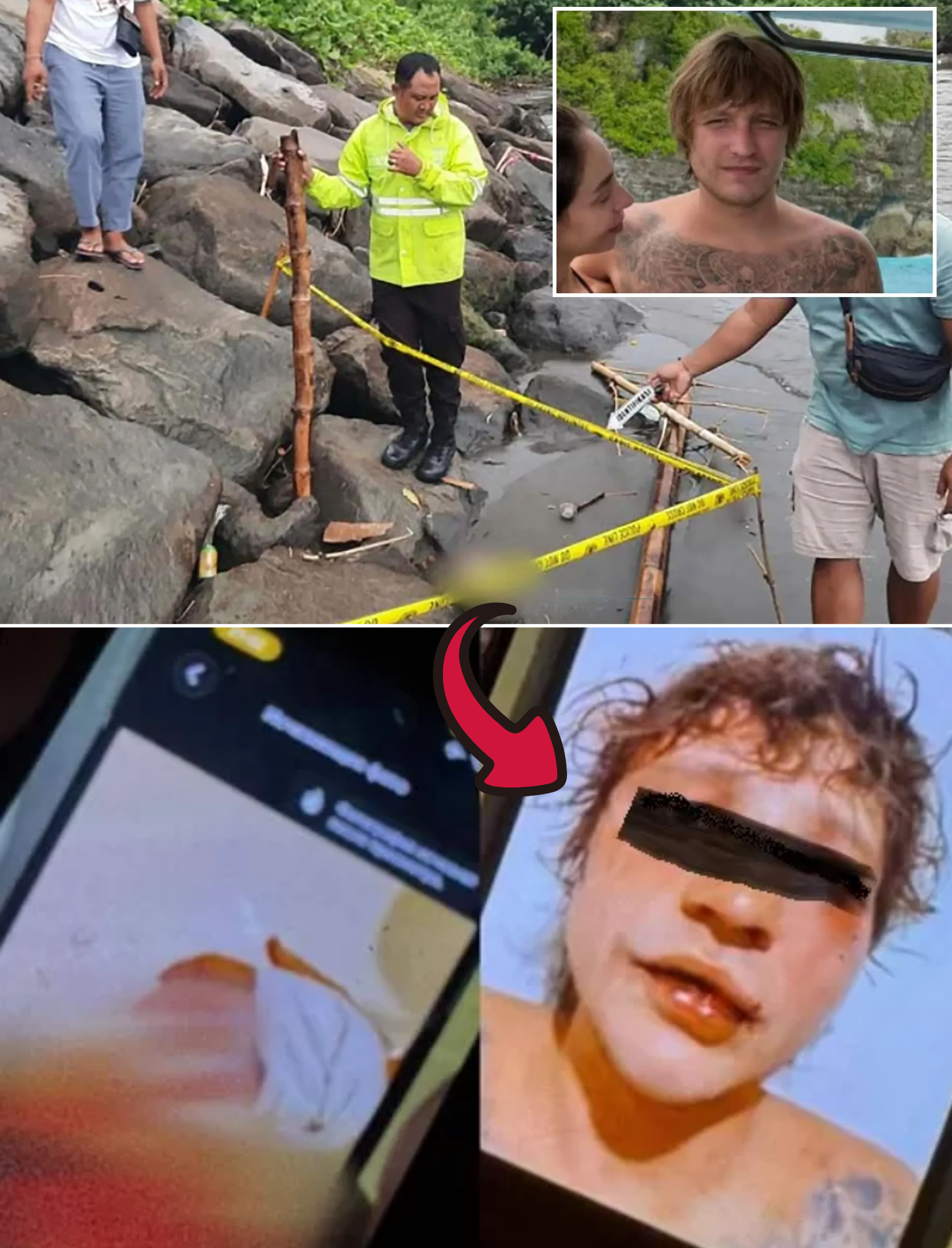
The idyllic turquoise lagoon off Pandawa Beach in southern Bali became the stage for one of the island’s most disturbing discoveries on March 5, 2026. Local fishermen snagged a heavy black plastic bag in their nets. Inside, wrapped in multiple layers of plastic and weighed down with stones, were several dismembered human limbs—arms and legs severed cleanly at the joints with what appeared to be a heavy blade. The remains showed early decomposition consistent with submersion for roughly 7–10 days. No head or torso was recovered, triggering an immediate large-scale search of the surrounding waters.
Bali Police, supported by Indonesia’s national forensic team, moved quickly to preserve evidence and begin identification. The precision of the dismemberment—straight cuts through bone and cartilage without hesitation—suggested either medical knowledge or practiced butchery. No defensive wounds were visible on the recovered limbs, raising the possibility that the victim was already deceased or incapacitated before the severing occurred.
The breakthrough came through expedited DNA testing. On March 8, 32-year-old Ukrainian tourist Igor Komarov had been reported missing by his travel companion after he failed to return from a solo sunrise photography expedition along the rugged cliffs near Uluwatu Temple. Komarov, an experienced solo traveler, fitness enthusiast, and amateur photographer, had been documenting his three-week Bali holiday on social media. His final Instagram post—a dramatic shot of the temple silhouetted against the rising sun—was timestamped February 26 at 5:47 a.m. His phone went dark shortly afterward and never reconnected.
Ukrainian authorities promptly supplied reference DNA samples from Komarov’s mother and sister, who flew to Denpasar to assist investigators. On March 9, Bali Police announced that both mitochondrial and nuclear DNA profiles extracted from the limbs matched the reference samples with virtual certainty (99.9999%). The mutilated remains were those of Igor Komarov.
The confirmation has transformed the case from a missing-persons inquiry into a full-scale homicide investigation. Investigators now believe Komarov was attacked during his early-morning hike. The absence of defensive wounds on the limbs suggests he may have been rendered unconscious or killed before dismemberment—possibly by blunt force, strangulation, or chemical means. Toxicology results are pending but are considered critical.
Komarov’s companion, a 34-year-old Ukrainian woman sharing the same villa in Pecatu, told police they had planned to watch the sunrise together, but she felt unwell and stayed behind. She reported him missing after 24 hours without contact. Cell records show his phone last pinged a tower near Uluwatu at 6:12 a.m. on February 26. The device was later recovered powered off and factory-reset in a roadside bin two kilometers from the temple—strong evidence of deliberate disposal.
Bali authorities have upgraded the classification to premeditated murder and formed a joint task force with Australia’s AFP (due to frequent Ukrainian-Australian travel patterns in Bali) and Interpol. CCTV footage from the temple area, nearby resorts, and major roads is under intensive review, though remote cliff paths have minimal coverage. Investigators are focusing on local motorcycle-taxi drivers and unofficial guides who operate around popular sunrise spots; several individuals have been questioned, though no arrests have been made as of March 10.
The method of disposal—dismemberment followed by weighted submersion—points to a calculated attempt to prevent identification and delay discovery. Pandawa Beach, while scenic and popular with tourists, is less crowded than Kuta or Seminyak, offering relative seclusion. Marine experts note that prevailing currents could have carried additional remains farther offshore or into deeper waters, explaining why only limbs have surfaced so far.
Komarov’s family arrived in Bali on March 9 and held an emotional press conference outside police headquarters. His mother, Halyna Komarova, struggled through tears as she addressed the media: “He was full of life, loved adventure, loved people. He would never hurt anyone. Please, if you know anything—help us bring him home, even just to say goodbye.” The family has offered a reward equivalent to IDR 500 million (approximately USD 32,000) for information leading to arrest and conviction.
The case has reignited urgent concerns about safety for solo travelers in Bali, particularly in remote areas. While violent crime against tourists remains statistically rare, high-profile incidents—including the 2023 murder of a Canadian woman in Ubud and multiple sexual assaults reported in 2025—have intensified calls for better infrastructure: improved lighting on hiking trails, increased police patrols at isolated viewpoints, mandatory registration for solo trekkers at major sites, and clearer emergency signage.
Ukrainian consular officials in Jakarta are working closely with Bali authorities and supporting the family with repatriation arrangements once any remaining remains are recovered. Ukraine’s Foreign Ministry has issued a travel advisory urging citizens to avoid isolated areas, travel in groups when possible, and share detailed itineraries with trusted contacts.
At present, the turquoise lagoon that once drew Igor Komarov to Bali holds only silence and unanswered questions. The cliffs he climbed for a perfect sunrise became the last place he was seen alive. Somewhere in the depths—or concealed in the surrounding jungle—vital evidence may still remain, waiting to reveal who took his life and attempted to erase every trace of him forever.
News
Virgin River Season 8 Confirmed — Four-Month Time Jump, Baby Heart Surgery Drama, and Major Cast Changes Revealed.
Netflix’s hit romantic drama “Virgin River” is officially returning for an eighth season, and new details about the upcoming chapter have fans both excited and anxious as the story prepares…
My Life with the Walter Boys Season 3 Trailer Unleashes Chaos — Jackie’s Final Choice, New Twists, and the Walter Family Drama Intensifies.
Netflix’s beloved teen drama “My Life with the Walter Boys” is officially returning for Season 3, and the newly released official trailer has sent fans into a whirlwind of excitement,…
Old Money Season 2 Trailer Sparks Massive Fan Frenzy — Release Date, Plot Twists, and Returning Romances Revealed.
Netflix’s hit Turkish romantic drama “Old Money” is officially heading for a second season, and the newly released trailer announcement has sent fans into a frenzy of excitement and speculation….
Nancy Guthrie Family Issues Emotional Plea to Tucson Community — “Someone Knows Something” as FBI Shifts Focus to Local Leads and Weekend Patterns.
As the search for 84-year-old Nancy Guthrie stretches into its 50th day, her family has released a heartfelt, six-paragraph statement approved by the FBI, directly addressing the people of Tucson…
Nancy Guthrie Recognized Her Masked Attacker at the Door, FBI Profilers Confirm — Botched Personal Revenge Plot and Amateur Mistakes Exposed in Tucson Disappearance.
In the early hours of February 1, 2026, 84-year-old Nancy Guthrie vanished from her home in Tucson, Arizona, in a case that has left investigators, behavioral experts, and the public…
Jilted Husband Jesse Ellis Accused of Executing Wife Stacie Mason and Her Lover Danny Ooley in Library Parking Lot Before Walking Fully Clothed Into the Ocean as Manhunt Enters Multiple Days.
Early on the morning of March 24, 2026, the quiet parking lot of the Indian River County Main Library in Vero Beach, Florida, became the scene of a targeted and…
End of content
No more pages to load