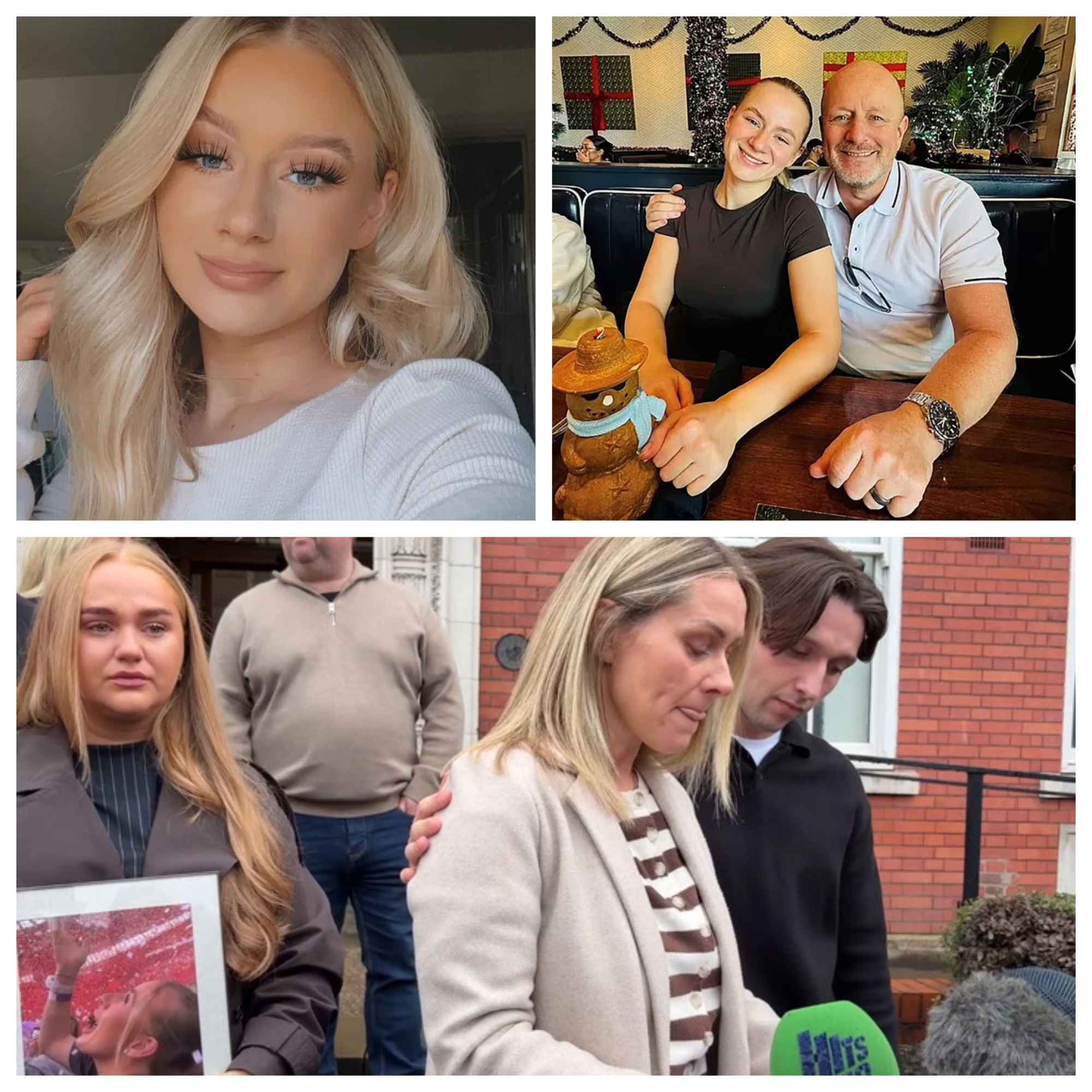
A British coroner has delivered a devastating verdict in the death of 23-year-old Lucy Harrison, ruling that her father, Kris Harrison, unlawfully killed her through gross negligence manslaughter after pointing a loaded Glock handgun at her chest and pulling the trigger without verifying if it was loaded. The incident occurred on January 10, 2025, at Kris’s home in Prosper, Texas, just 30 minutes before Lucy and her boyfriend, Sam Littler, were set to depart for the airport following a holiday visit.
Lucy, a vibrant fashion buyer for Boohoo living in Warrington, Cheshire, had traveled to the US to spend time with her father, his wife Heather, and her younger half-sisters. The day began with family interactions that escalated into tension. Testimony revealed a heated argument between Lucy and Kris about Donald Trump, who was preparing for inauguration around that time. Lucy, who disliked firearms and often became upset when her father discussed owning one—especially given the presence of young children in the home—expressed discomfort with guns as a potential danger to the family.
As the couple prepared to leave, Kris reportedly grabbed Lucy by the hand in a “mysterious” manner and led her from the kitchen to his ground-floor bedroom. There, he retrieved a Glock semi-automatic handgun from its box in a bedside cabinet. Earlier, while watching a TV news segment on gun crime, Kris had asked if Lucy wanted to see his Glock. According to his statement, she agreed, and as he lifted the weapon to show her, it discharged with a loud bang. Lucy collapsed immediately, shot through the chest with a bullet piercing her heart.
Sam Littler rushed into the room to find Lucy on the floor near the bathroom entrance and Kris screaming incoherently. Kris did not immediately inform Sam—who called 911—that he had shot her. Police arrived, noted the smell of alcohol on Kris’s breath but did not administer a sobriety test. They treated the scene as a potential criminally negligent homicide, identifying Kris as a suspect. However, a Collin County grand jury issued a “no-bill” in June 2025, declining to indict him, meaning no criminal charges were pursued in Texas.
The case proceeded to an inquest at Cheshire Coroner’s Court in the UK, where sudden deaths abroad involving British citizens are investigated. Over two days of hearings, senior coroner Jacqueline Devonish examined evidence, including testimony from Sam Littler. Kris did not attend but provided a statement claiming the gun “just went off” accidentally as he picked it up, describing it as a “teaser” moment. He maintained he had no intention to harm and did not realize the chamber was loaded.
Devonish rejected the pure accident narrative. She concluded that to shoot Lucy standing at chest height required deliberately pointing the gun at her without checking for bullets and pulling the trigger—actions deemed reckless. The coroner accepted Kris likely did not know the gun was loaded but believed he was “teasing” or taunting her, given his self-described playful nature and the context of their earlier political dispute. Evidence showed Kris was a “functioning alcoholic” and “secret drinker” who had consumed alcohol continuously that day, including around 500ml of white wine, impairing judgment despite no formal intoxication test.
The coroner emphasized Kris’s lack of firearms training, experience, or prior discharge of the weapon, heightening the danger. She noted he “knew full well he had shot his own daughter” but failed to relay this critical detail to emergency services promptly. Devonish described Lucy as “young, vibrant and beautiful with her whole life ahead of her,” calling the death “most tragic.” The official ruling: unlawful killing by gross negligence manslaughter.
No US charges stemmed from the grand jury decision, leaving the family without criminal accountability there. In the UK, the coroner’s findings carry no prosecutorial power but serve as an official record and potential basis for civil actions or further scrutiny. The verdict has sparked broader discussions on gun safety, responsible ownership, alcohol’s role in firearm incidents, and cross-border legal disparities in handling such tragedies.
Lucy’s mother and family expressed profound grief, highlighting her promising career and loving nature. Supporters have called for stricter awareness of loaded firearms in homes and the risks of demonstrating weapons casually, especially amid family tensions or substance use. Kris, now facing lifelong consequences beyond legal penalties, reportedly grapples with the irreversible loss.
This case underscores the lethal intersection of negligence, alcohol, and unsecured firearms. While Texas authorities closed the criminal probe, the coroner’s detailed findings ensure the story endures as a cautionary tale: a single reckless moment can shatter lives forever, leaving no room for “accidents” when basic safety protocols are ignored.