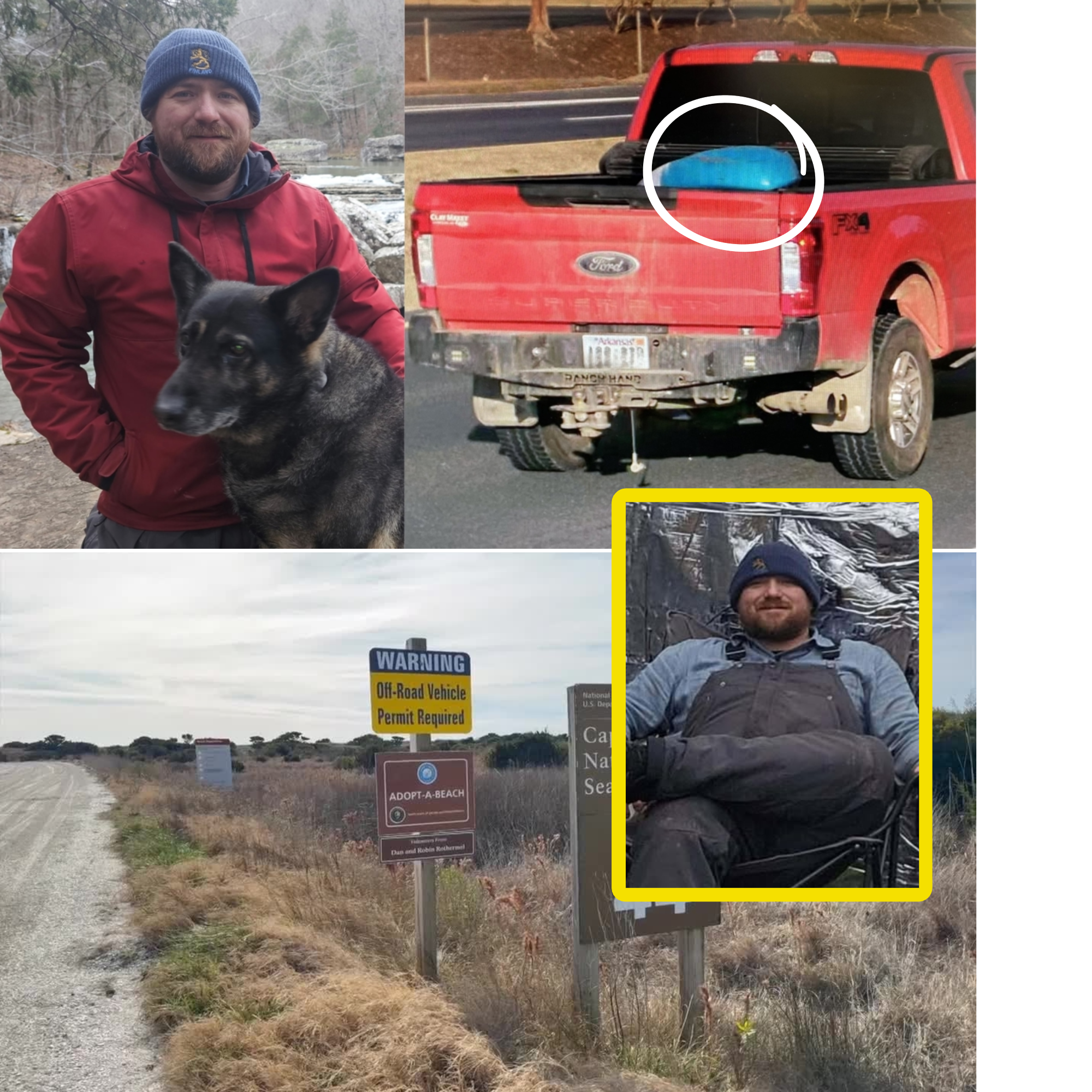
The disappearance of 39-year-old Chris Palmer has gripped communities across the Southeast, turning a familiar story of solo adventure into a haunting mystery. An avid camper from Arkansas with years of experience navigating national forests and remote trails, Palmer was known for his meticulous planning and regular check-ins with family. Yet since January 9, 2026, all contact ceased, and the discovery of his red 2017 Ford F-250 stuck in the sand at Cape Hatteras National Seashore has intensified concerns that something went terribly wrong during what should have been another routine outing.
Palmer embarked on an extended camping journey starting December 8, 2025, beginning in the Smoky Mountains. He moved methodically through areas like Boone Fork, then to George Washington National Forest in Virginia by late December, staying until around January 7. True to form, he texted family updates, including terrain videos when signal allowed. On January 9, his last message indicated he was heading to Monongahela National Forest in West Virginia—a logical northward progression. That communication marked the final trace of him.
Three days later, on January 12, National Park Service rangers patrolling Cape Hatteras National Seashore near Cape Point in Buxton, North Carolina, spotted the abandoned pickup mired in remote beach sand between Ramp 43 and the Point. Traffic camera footage later reviewed by investigators placed the vehicle in Dare County as early as January 10 afternoon, with pings from Palmer’s phone near Avon that evening and Cape Point on January 11. The truck’s location was strikingly inconsistent: Hatteras Island lies roughly six to eight hours southeast of his stated destination, in the opposite direction entirely. Authorities emphasize this is no accidental detour—it’s a deliberate deviation to a place not en route to anywhere else.
Inside the vehicle, searchers found keys in the ignition, a shotgun, a locked safe, camping supplies, and other personal items largely undisturbed. Notably absent were Palmer’s coat, some clothing, and Zoey’s dog bowls—suggesting he and his German Shepherd may have left voluntarily or in haste. The presence of these valuables rules out simple theft, while the stuck truck implies an attempt to drive onto the beach that ended in failure, perhaps during low tide or shifting sands common to the Outer Banks.
The National Park Service launched an extensive search using ground teams, infrared drones, and appeals for public assistance from boaters, beachgoers, and locals. Palmer, described as Caucasian, about 5 feet 6 inches tall with blue eyes and strawberry-blonde hair, was believed to be traveling with Zoey, his loyal companion. Officials stressed he might still be in the Cape Hatteras vicinity, possibly disoriented, injured, or sheltering in the vast dunes, maritime forests, or nearby inlets. Yet as days stretched into nearly two weeks without sightings, family and investigators grappled with unsettling possibilities.
Family members, particularly his parents, took to social media to share timelines, photos, and the last video Palmer sent on January 9—showing rugged terrain that matched his planned path. They insisted he would never vanish willingly or abandon Zoey, underscoring his reliability. Online discussions in missing persons forums highlighted the anomaly: why veer so far off course? Theories range from medical emergency prompting a desperate drive toward help, to foul play involving someone who forced or lured him southward, to an encounter gone wrong in the isolated area. The remote beach spot, accessible only via four-wheel drive and prone to sudden weather changes, adds to the peril—tides can rise quickly, isolating vehicles and people alike.
The Outer Banks’ history of disappearances and harsh coastal conditions fuels speculation. Cape Hatteras, with its shifting barrier islands, strong currents, and vast undeveloped stretches, has seen tragedies before—hikers lost in fog, vehicles swept by water, or individuals succumbing to exposure. Palmer’s experience as a camper makes outright accident seem less likely, yet the truck’s position suggests he may have attempted to reach a secluded camping spot or fishing area only to become stranded.
As of late January 2026, the search remains active, with Arkansas authorities coordinating alongside NPS and local agencies. Public appeals continue for any dashcam footage, witness accounts from January 10-12, or sightings of a man matching Palmer’s description with a German Shepherd. His family holds onto hope that he and Zoey are alive, perhaps injured but enduring in the wilderness he loved.
This case serves as a stark reminder of nature’s unpredictability, even for seasoned outdoors enthusiasts. What began as a cherished tradition of solitude has become a desperate race against time. Every shared post, every tip called in, could be the break needed to bring Chris Palmer home.