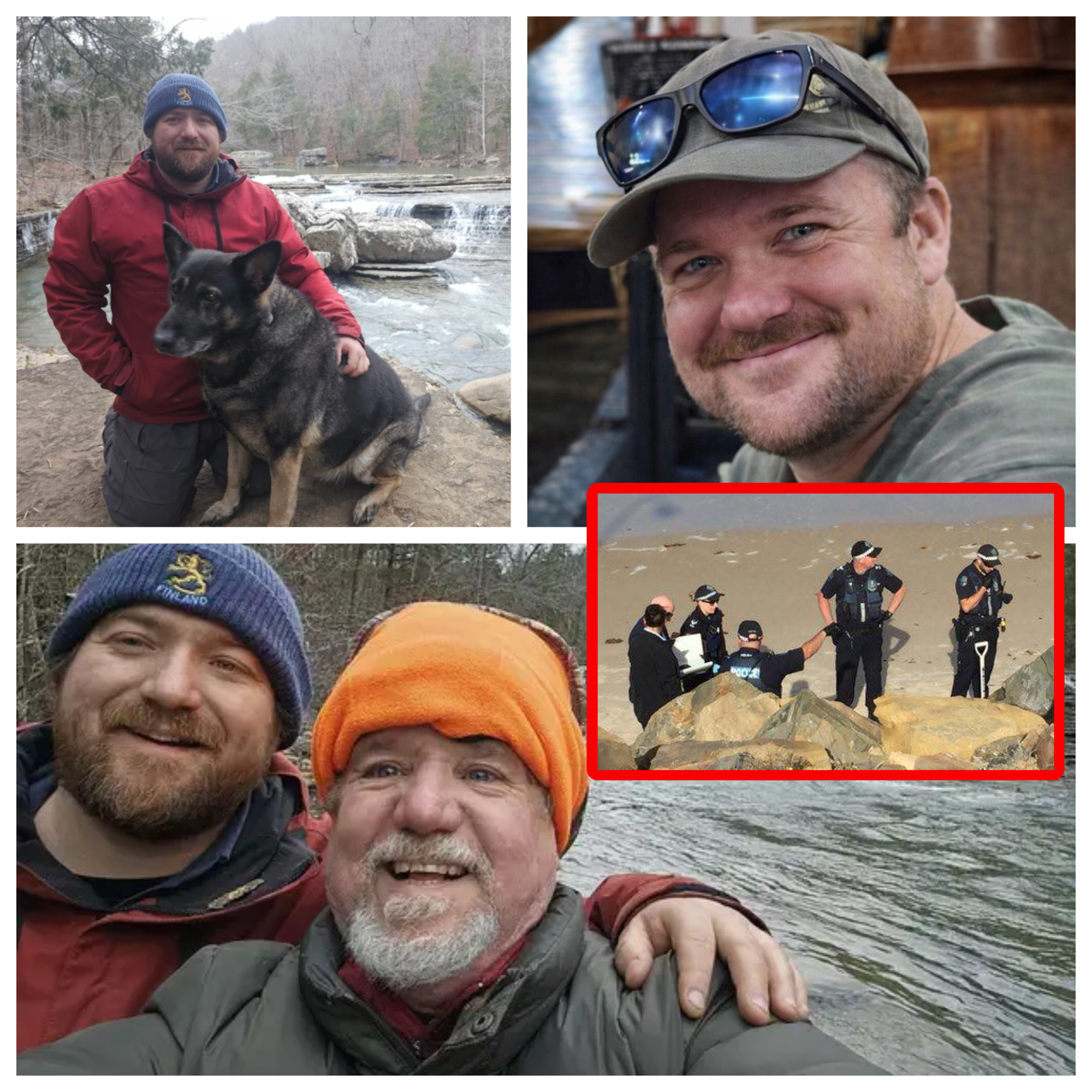
The family of Christopher Palmer has officially requested an end to all active search efforts for the 39-year-old Arkansas man who vanished from North Carolina’s Outer Banks in early January 2026. In a poignant social media statement, Palmer’s father, Bren Palmer, announced the difficult decision, revealing that the family recently learned their son had been privately battling a terminal illness—believed to be cancer—for approximately 18 months. This revelation has shifted the narrative from a tragic kayaking mishap to a deeply personal choice, leaving investigators and the public grappling with unsettling questions about the circumstances of his disappearance.
Chris Palmer was reported missing on January 16 after his truck was discovered abandoned on a remote beach near Cape Hatteras National Seashore on January 12. The vehicle, stuck in sand between ramps 43 and 44 in Buxton, contained personal belongings but no sign of Palmer or his 11-year-old German shepherd, Zoey. Surveillance footage showed a blue and white kayak in the truck bed the previous day, but the kayak was missing when rangers arrived. Phone pings placed Palmer near Avon on January 10 and Cape Point in Buxton on January 11, suggesting he spent time along the coastline before vanishing. Initial searches focused on the Atlantic waters, with helicopters, boats, and ground teams scouring the area amid rough winter conditions.
The family’s January 24 announcement changed everything. Bren Palmer wrote: “With heavy hearts and profound sorrow, we, the family of Christopher Palmer, have made the difficult decision to request that all active search efforts for our son cease. We recently learned that Christopher was facing a terminal illness. Knowing this has helped us understand the choices he made.” He described his son as someone who “loved the outdoors and valued his independence,” noting that upcoming treatments would have stripped away the freedom Chris cherished. Personal items found along the coastline reinforced the family’s belief that “our son perished in the sea.”
What has chilled investigators and fueled online speculation is the absence of any medical records or documentation related to his diagnosis in the vehicle. Despite the long road trip from Arkansas to North Carolina—a journey that would typically include health-related paperwork, prescriptions, or notes—nothing of the sort was recovered. This detail raises profound questions: If Chris knew his time was limited, did he deliberately leave evidence behind? Was the kayaking outing planned as a final farewell to the ocean he loved, rather than a spontaneous adventure gone wrong? Authorities have not classified the case as suicide, and no body or definitive proof has surfaced, but the family’s statement strongly implies Chris may have chosen to enter the water intentionally, possibly after spending time in the woods with his ailing dog.
Further heartbreak emerged regarding Zoey. In a follow-up post, Bren Palmer shared that the elderly German shepherd suffered from severe hip dysplasia, took multiple medications, and was in poor health. The family believes Chris spent his last days in the woods with Zoey during her final moments, before heading to the sea. “It is our belief that our son spent some time in the woods to be with her in her final days,” he wrote. This paints a picture of a man quietly saying goodbye to his loyal companion before facing his own end.
Chris Palmer’s life reflected his deep connection to nature. Described by loved ones as independent and adventurous, he often sought solitude in the wilderness. The Outer Banks, with its vast beaches and powerful Atlantic waves, held special meaning—perhaps the perfect place for a final act of autonomy. The family has expressed profound humility at the outpouring of support from strangers who followed the case, asking that Chris’s memory be honored and that others prioritize safety in outdoor pursuits.
The National Park Service confirmed the investigation remains ongoing, though active searches have ceased at the family’s request. No recovery of remains or the kayak has been reported, leaving the case officially unresolved in the eyes of authorities. Yet for the Palmers, the terminal diagnosis provides the closure they sought. They hope sharing the truth raises awareness about the emotional and mental burdens of serious illness, encouraging open conversations about end-of-life choices and support for those facing similar diagnoses.
Public response has been overwhelming. Vigils and online tributes honor Chris as a man who lived fully and chose dignity in his final chapter. Discussions about terminal illness, mental health during medical crises, and the right to autonomy have surged. Many express sympathy for the family’s grief, acknowledging the courage it took to go public with such private pain.
In the absence of medical records from the vehicle, questions persist: How long did Chris carry this secret alone? Did he confide in anyone, or was the silence part of his plan? The empty kayak spot in the truck, the coastline belongings, the long-hidden diagnosis—all point to a deliberate path. Whether viewed as tragedy or act of will, Chris Palmer’s story underscores life’s fragility and the quiet strength some find in facing the end on their own terms.
As the Outer Banks winds continue to sweep the shores where he was last seen, the Palmer family seeks peace. They ask for respect in their closure and remind others to cherish independence while holding loved ones close. Chris’s disappearance, once a mystery of the sea, now stands as a poignant reminder that some journeys end not in accident, but in chosen farewell.