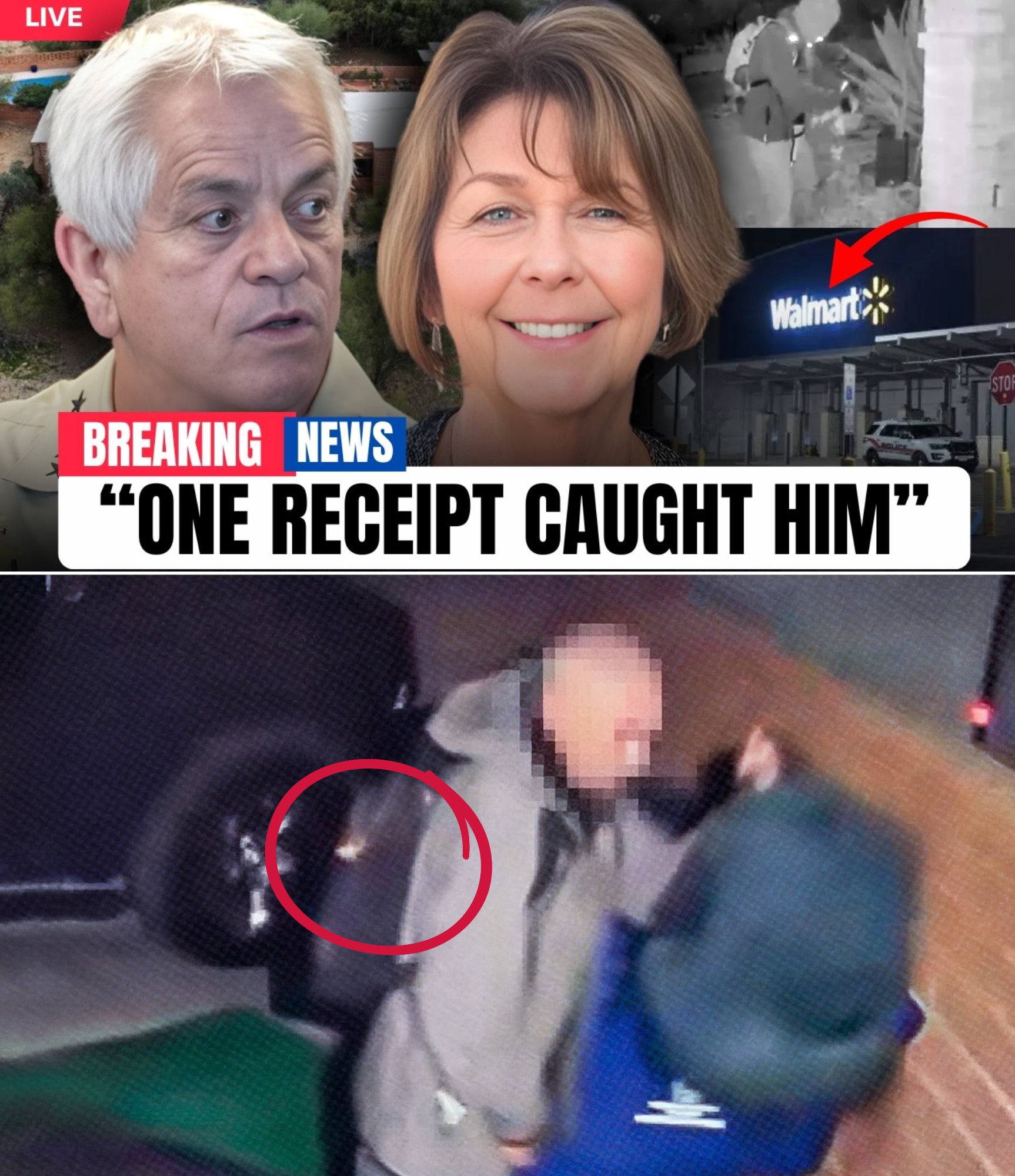
The disappearance of 84-year-old Nancy Guthrie from her Catalina Foothills home near Tucson, Arizona, on February 1, 2026, has entered its fourth week with investigators zeroing in on a seemingly mundane but potentially decisive lead: the suspect’s purchases at a local Walmart. Authorities believe the masked male captured on recovered doorbell footage acquired key items—most notably the black 25-liter Ozark Trail Hiker Pack backpack—at the retailer, where comprehensive surveillance and transaction records create a near-unbreakable chain of evidence despite his use of cash.
Nancy was last seen around 9:48 p.m. on January 31 after dinner and cards at daughter Annie’s home; family dropped her off, garage door closed at 9:50 p.m. She missed her online church service the next morning, leading to a welfare check that afternoon. Inside: her vehicle parked, wallet and untouched medications present. Outside: small blood droplets on the porch, DNA-tested and confirmed as Nancy’s, suggesting resistance during extraction. The Nest camera feed went dark at 1:47 a.m. after the intruder blocked the lens, pulled a plant for concealment, and detached the device. Motion briefly reactivated around 2:12 a.m.; her pacemaker stopped syncing at 2:28 a.m., a timeline experts tie to forced removal or interference.
Recovered footage—retrieved February 10 from Google server remnants—depicts the suspect: male, 5’9″–5’10”, average build, black ski mask, black gloves, dark jacket, light pants, sneakers, holstered firearm, and the distinctive Ozark Trail backpack. Behavioral analysis notes amateur traits—exposed facial hair, somewhat visible actions—mixed with planning: nighttime to evade witnesses, camera sabotage to delay alerts, firearm for control.
A glove discarded about two miles away visually matches those in footage; unknown male DNA extracted February 14 and submitted to CODIS yielded no match among over 26 million profiles. Additional biological material from inside the home undergoes processing, complicated by mixed profiles requiring advanced separation. Genetic genealogy testing via public databases proceeds to build familial links or phenotypic traits.
The Walmart angle emerged prominently after February 16 updates. Sheriff Chris Nanos confirmed family clearance as “100% cooperative victims,” no involvement. Focus shifted to external male perpetrator. The Ozark Trail backpack, $10 basic holster, ski mask, dark jacket, and gloves—all affordable, accessible—point to single-retailer sourcing. Walmart’s systems log timestamps, product SKUs, register footage, aisle cameras, entrance/exit videos, and parking lot surveillance. Even cash purchases leave visual trails: suspect entering, browsing, checking out, departing.
Retired FBI Assistant Special Agent Daniel Ramos described retail data as “binary evidence”—present or absent in databases—offering high reliability. CNN analyst John Miller stressed cross-referencing glove DNA with home samples for corroboration. Investigators subpoenaed Walmart for regional sales records of the backpack model and holster style, reviewing footage for matches to suspect description. Parking lot cameras, frequently overlooked by suspects assuming anonymity, could reveal vehicle details, arrival/departure times, or even facial glimpses pre-mask.
Ransom elements—multiple notes demanding Bitcoin, some with home layout specifics—largely deemed hoaxes. Derek Fella arrested February 5 for fraudulent demands. No verified proof-of-life or follow-up; deadlines passed without escalation. Savannah’s pleas evolved: February 4 video offering dialogue/celebration; later messages quoting Psalm 23, empathizing with captors, affirming belief Nancy lives. She paused broadcasting; yellow roses vigil outside home.
Rewards exceed $300,000. Over 40,000–50,000 tips pursued by 400+ agents; cellphone data, neighbor videos (January 11/31 requested), blockchain tracing for crypto notes ongoing. Cross-border outreach to Mexico persists, though no evidence Nancy transported south. Helicopter searches for pacemaker signals limited utility post-sync failure.
Nancy’s profile adds urgency: born January 27, 1942, Fort Wright, Kentucky; Tucson resident since 1970s; widowed 1988 after husband Charles’s death in Mexico; raised three children; St. Andrews Presbyterian Church member; pacemaker-dependent heart condition, limited mobility (50 yards unaided), mentally sharp, independent. No random burglary: targeted, premeditated.
The Walmart oversight—cash anonymity undermined by pervasive cameras—stands as the probe’s strongest pivot. Experts view it as the “only real mistake” in an otherwise cautious plan. Every aisle frame, register interaction, parking lot pass could yield the breakthrough: a license plate, gait confirmation, companion sighting. Combined with glove DNA genealogy, retail forensics may soon identify the individual who planned for months yet faltered at the checkout.
As Day 23 dawns February 23, 2026, hope balances against time: Nancy’s age and health risks escalate daily. Community “mom detectives” analyze online; vigils continue. Investigators stress active status until resolution. The masked figure at 1:47 a.m. left traces—glove, backpack, now potentially his own image on Walmart tape. One overlooked camera array could end the nightmare and bring Nancy home.