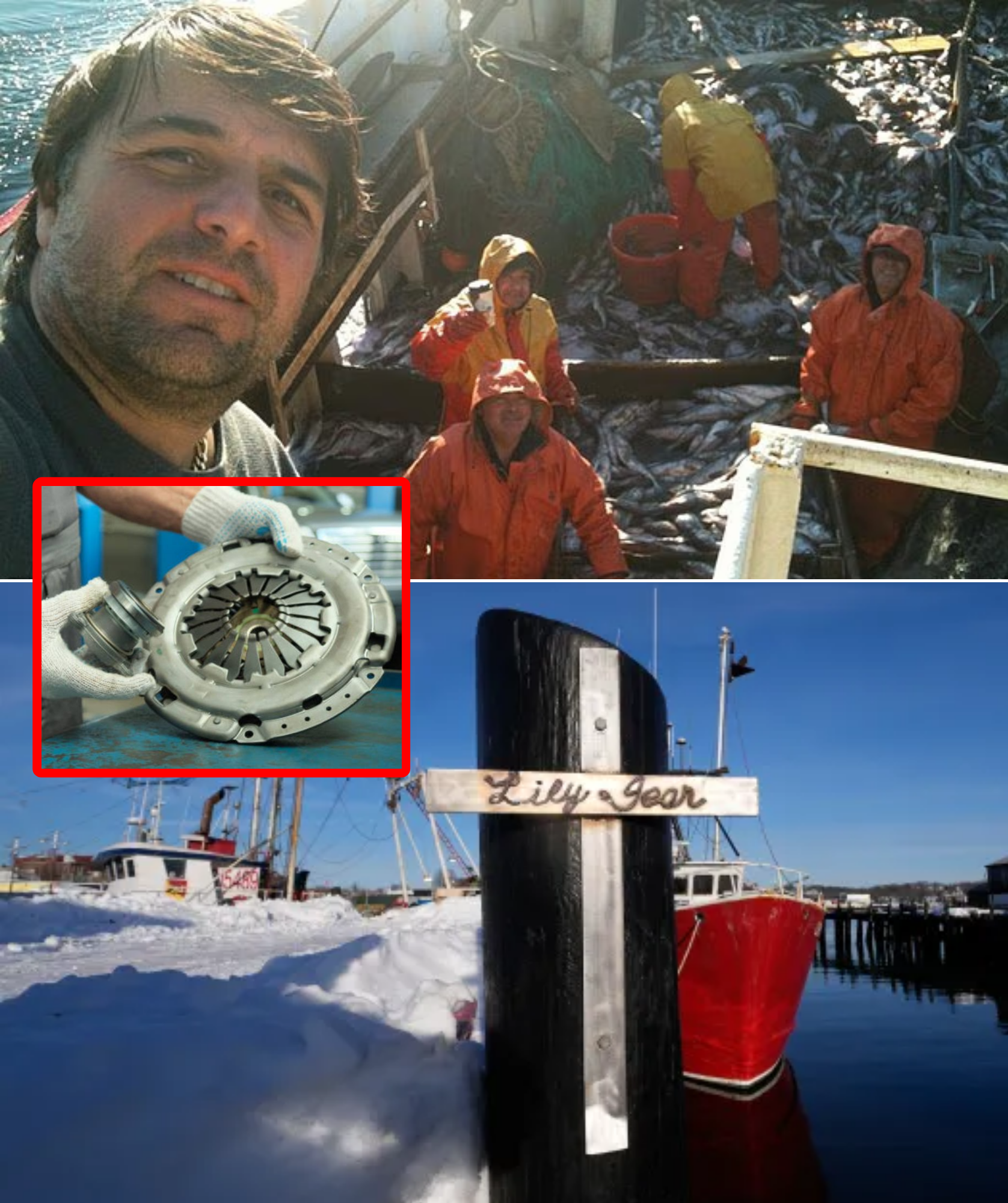
A stunning new revelation has emerged in the ongoing investigation into the sinking of the 72-foot Gloucester fishing vessel Lily Jean on January 30, 2026. According to sources close to the Coast Guard and NTSB inquiry, as well as statements reportedly obtained from dock workers and at least one crew member’s family, the vessel suffered a serious mechanical failure — specifically a malfunctioning clutch or air brake system in the propulsion/engine control — before the boat ever left the pier.
Multiple individuals allegedly warned Captain Accursio “Gus” Sanfilippo that the problem was serious enough to delay the trip. Some crew members are said to have been strongly opposed to departing, with one reportedly telling the captain point-blank: “We shouldn’t go out like this — it’s not safe.” Despite the objections, the decision was made to leave Gloucester harbor anyway.
The Lily Jean departed on schedule late on January 29 for what was supposed to be a routine groundfishing trip. Less than 24 hours later the boat would disappear beneath the surface 25 miles off Cape Ann — without a single human-initiated Mayday call. Only the automatic EPIRB activation alerted authorities at 6:50 a.m. on the 30th. When first responders arrived, they found only debris, one body, and an empty life raft.
The newly surfaced information about the pre-departure mechanical issue has dramatically shifted the focus of the investigation. Investigators are now examining whether a compromised clutch or air brake system could have severely limited the captain’s ability to maneuver the heavily loaded vessel in deteriorating weather conditions. In rough winter seas, quick throttle response, precise gear changes, and the ability to rapidly slow down or reverse are often critical for avoiding dangerous situations — especially when encountering large breaking waves, heavy following seas, or sudden course corrections to avoid other traffic.
If the propulsion control was sluggish, unresponsive, or intermittently failing, the Lily Jean would have been far more vulnerable to the exact kind of rapid stability loss that experts have long suspected: either a catastrophic rogue wave strike, extreme pitch-poling, or a combination of wave impact and already compromised maneuverability.
Multiple dock workers have reportedly told investigators they saw mechanics working on the engine/clutch area the morning of departure. One individual claims the repair was not completed and that “they were supposed to wait for parts.” Another source close to the crew said at least two fishermen had a heated discussion with the captain on the dock, urging him to postpone the trip. According to these accounts, Sanfilippo — widely respected as an experienced, decisive, and sometimes stubborn leader — made the call to leave anyway, possibly believing the issue was manageable or not immediately life-threatening.
The revelation has sent shockwaves through the Gloucester fishing community. Many are torn between grief for the lost captain and crew, and growing anger over the possibility that the tragedy might have been preventable. “Gus was one of the best,” said one longtime fisherman who asked not to be named. “But if he really knew the boat wasn’t right… that’s hard to swallow.”
The Coast Guard-NTSB investigation team has not yet officially confirmed the mechanical failure as the primary or contributing cause. However, sources indicate that maintenance logs, repair invoices, witness statements from the dock, and electronic data (if recoverable from the wreckage) are now among the highest-priority items being examined.
Even if the mechanical issue was not the sole cause of the sinking, experts say it could have been a critical aggravating factor. A vessel that cannot slow quickly, reverse effectively, or make sharp turns is exponentially more likely to be caught in a bad position when a large breaking wave approaches — especially in the chaotic, confused seas generated by a strengthening Nor’easter.
Captain Sanfilippo, Paul Beals Sr. and Jr., John Rousanidis, Freeman Short, Sean Therrien, and young NOAA observer Jada Samitt were all lost. Their families, the fishing fleet, and the entire city of Gloucester continue to mourn while demanding answers.
The new information has intensified calls for greater transparency around vessel maintenance, mandatory third-party pre-trip inspections for critical systems, and stronger protections for crew members who raise legitimate safety concerns. Many in the industry quietly admit that pressure to get out and make trips — especially when quotas, weather windows, and boat payments are all looming — can sometimes push even the most experienced captains to take calculated risks.
Whether that pressure played a role on the morning of January 29, and whether those risks proved fatal, is now one of the central questions of the Lily Jean investigation. As more dock workers and family members come forward, and as investigators dig deeper into the vessel’s mechanical history, the picture becomes clearer — and more painful.
The ocean took seven souls that morning. The question now is whether human decisions, made hours earlier on dry land, helped hand them over.