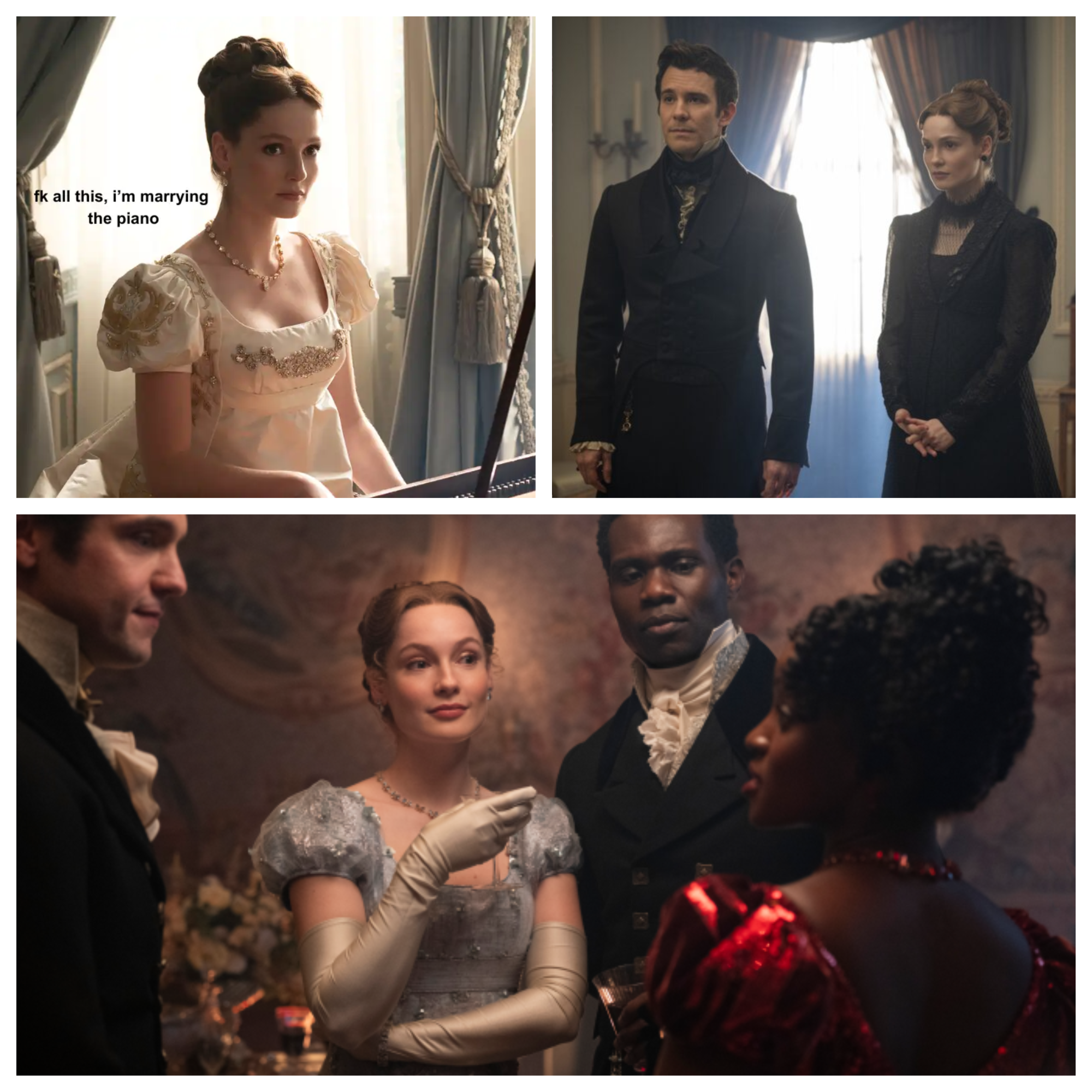
Bridgerton Season 4 delivered one of its most emotionally charged arcs yet with Francesca Bridgerton and John Stirling’s quiet, devoted marriage. From the moment they returned from their honeymoon, viewers watched Francesca grapple with mounting anxiety over her inability to conceive after a year of trying. She confided in John about her fears, linking her lack of “pinnacle” during intimacy to potential fertility issues, adding layers of vulnerability and pressure to their tender bond. John, ever supportive, reassured her that time was on their side and their love remained perfect regardless.
The storyline built tension as Francesca’s worry deepened, reflecting real struggles many couples face. Then came the gut-punch: John’s sudden, peaceful death in his sleep, leaving Francesca widowed and shattered. In the aftermath, she clung to the belief she was pregnant with his child, viewing it as a final gift from her husband. She tried to stay composed during the mourning period, prioritizing the potential heir to the Kilmartin line.
The turning point arrived after John’s funeral when Francesca underwent a medical examination to confirm the pregnancy. The devastating revelation: she was not expecting at all. It had been a false pregnancy, born of grief and desperate hope rather than the miscarriage depicted in Julia Quinn’s When He Was Wicked. In the book, Francesca does miscarry shortly after John’s death, compounding her sorrow before she eventually finds love and family with his cousin Michael.
Showrunner Jess Brownell opened up exclusively about the deliberate shift in an interview, explaining the creative choice stemmed from tonal considerations and character compassion. “Ultimately, I think John’s death and the funeral are already in so many ways such a departure from the tone of the show,” Brownell said. “I think Episode 7 has hints of lightness, but it is a much darker version of Bridgerton in a way that I think is really interesting, and especially in the way we get to watch the family come together.” She continued, noting that layering a miscarriage on top felt excessively morbid: “We’re still very interested in honoring the fertility storyline. It’s something we tried to honor this season, and we will continue honoring in her future season. But yeah, the miscarriage just felt like, for the screen, a bit too far. I think it would be difficult for Fran to come back from all that.”
The decision allowed the series to maintain emotional depth without overwhelming viewers with unrelenting tragedy. Brown’s emphasis on family unity during grief—seen in the Bridgertons rallying around Francesca—provided moments of warmth amid the darkness. By opting for a false pregnancy, the show preserved Francesca’s longing for motherhood while giving her a path forward that feels recoverable, especially as her story evolves toward Michaela Stirling.
Author Julia Quinn, whose book inspired the arc, fully supported the adaptation. Drawing from personal experience, she shared: “I think [Francesca’s] emotions are the same. I have experienced pregnancy loss. I had three failed pregnancies between my two children. And so I wrote her character very deeply from my own experiences. And I think changing up sort of how her loss happened really doesn’t affect her grief with that.” Quinn also reflected on the suddenness of John’s death, comparing it to her own losses: “Almost five years ago, I lost my dad and my sister to a drunk driver, so that is obviously a very sudden thing, just like Francesca. I thought they handled it really well, especially the sense of bewilderment.”
The change ties into broader updates for Francesca’s journey. With Michael’s gender swap to Michaela, the infertility theme—central in the book’s second epilogue where Francesca and Michael struggle for years before having children—remains a core element but shifts context. Brownell has stressed ongoing respect for Francesca and John’s relationship, noting grief is nonlinear and the show will continue processing it. This sets up deeper exploration in future seasons, potentially focusing on acceptance, new beginnings, and Francesca’s enduring desire to become a mother.
Fans have debated the alteration extensively. Some praise it for sensitivity, avoiding graphic depictions of miscarriage while still portraying fertility challenges authentically. Others miss the book’s raw progression, where infertility fueled Francesca’s second-chance romance. The series counters that by highlighting Francesca’s self-blame and societal pressures in the Regency era, where producing an heir carried immense weight.
Hannah Dodd’s portrayal captured the nuance beautifully—Francesca’s quiet intensity, her internal turmoil, and eventual heartbreak resonated deeply. Victor Alli’s John provided steady comfort, making his absence all the more poignant. Masali Baduza’s Michaela introduces fresh dynamics, with hints that their connection will unfold differently yet meaningfully.
As Bridgerton marches toward Seasons 5 and 6, covering remaining siblings, Francesca’s arc promises continued emotional richness. Brownell has affirmed the fertility storyline’s persistence, ensuring it honors real experiences without unnecessary darkness. The adjustment reflects the show’s commitment to modern storytelling—balancing historical romance with contemporary sensitivity—while staying true to the characters’ hearts.
In the end, Francesca’s Season 4 journey underscores love’s fragility, grief’s complexity, and hope’s resilience. By sparing the miscarriage, Bridgerton carves space for healing, allowing Francesca to emerge stronger, her dreams of family intact for whatever path lies ahead in the ton.