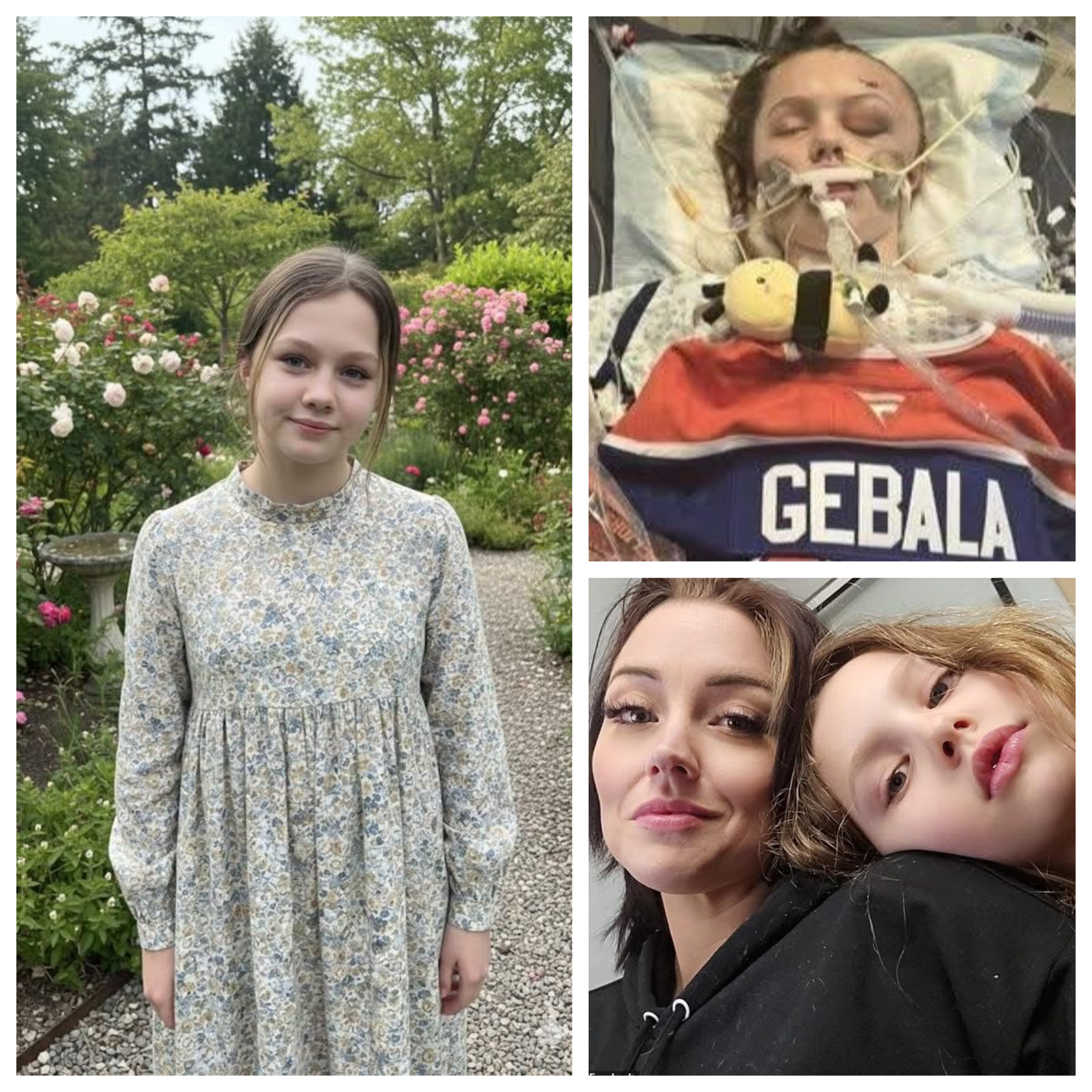
Twelve-year-old Maya Gebala has captured the hearts of an entire province—and far beyond—since the horrific shooting at Tumbler Ridge Secondary School on February 10, 2026. In the chaos of the library attack that claimed eight lives and wounded many more, Maya did not freeze or run for cover. Instead, she sprinted toward the double doors in an instinctive act to lock them and shield her classmates from the gunman. That split-second decision cost her dearly: multiple gunshot wounds to the head and neck left her critically injured and airlifted to BC Children’s Hospital in Vancouver, where she has remained in intensive care ever since.
The initial prognosis was bleak. Neurosurgeons identified entry and exit wounds on the left side of her skull, significant bleeding around the brain, damage to the brain stem where one bullet passed through, and widespread swelling that quickly led to hydrocephalus. Within hours of arrival, Maya was rushed into emergency surgery to relieve pressure by placing an external ventricular drain. Doctors warned her family—Cia Edmonds (mother) and David Gebala (father)—that survival through the first 24–48 hours was not guaranteed. Yet Maya stabilized against every expectation, showing the first fragile signs of resilience that have defined her recovery so far.
Over the following weeks, her journey has been one of incremental victories punctuated by terrifying setbacks. She developed pneumonia complicated by methicillin-resistant Staphylococcus aureus (MRSA), followed by bacterial meningitis and repeated cerebrospinal fluid leaks that required additional operations to repair dural defects and manage intracranial pressure. Each complication demanded more surgery, more antibiotics, more days on full ventilatory support. Through it all, updates from her mother have remained unflinchingly honest yet threaded with fierce hope: Maya is “still fighting like the warrior she is.”
The most recent medical bulletin has brought both relief and sorrow. After successful management of the hydrocephalus and gradual weaning from mechanical ventilation, Maya began breathing independently—a monumental step that moved her out of the highest-acuity phase of ICU care. She has intermittently opened her right eye, tracked voices and gentle touch, and demonstrated small, purposeful movements in her right fingers and toes during periods of lighter sedation. These responses, though limited, have been celebrated as proof that significant portions of her consciousness and motor pathways remain intact.
However, the long-term neurological outlook is far more guarded. Specialists have compared the pattern and severity of damage to that seen in survivors of massive ischemic or hemorrhagic strokes. The left-hemisphere trauma—where the bullets entered and exited—destroyed substantial cortical and subcortical tissue involved in motor control, sensory processing, and language on the right side of the body. Brain-stem involvement adds another layer of complexity, potentially affecting basic functions such as swallowing, balance, and autonomic regulation. Current consensus among the neurology team is that complete or near-complete right-sided hemiplegia is a realistic long-term possibility. Fine motor recovery, independent ambulation, and full use of the right arm and leg may remain out of reach even with the most aggressive rehabilitation.
Maya’s youth is one of the few factors working in her favor. Pediatric brains retain greater neuroplasticity than adult brains, meaning undamaged regions can sometimes assume functions lost to injury. Intensive physiotherapy, occupational therapy, speech-language therapy, and emerging neuromodulation techniques will form the backbone of her rehabilitation plan. Yet progress is expected to be slow, nonlinear, and measured in months and years rather than weeks. Adaptive equipment—wheelchairs, communication devices, orthotics—will likely become part of daily life, and the psychological impact on a pre-teen who was previously active in hockey, dance, and school will require sustained emotional support.
The Tumbler Ridge community and people across British Columbia have responded with extraordinary solidarity. A GoFundMe campaign launched by family cousin Krysta Hunt has surpassed its original goal several times over, providing resources for future therapies, home modifications, and family travel between Tumbler Ridge and Vancouver. Local hockey associations have dedicated games and retired jerseys in Maya’s honor, while schools and youth groups have organized fundraisers and letter-writing campaigns so that she knows how many lives she touched by her actions that day.
Maya’s parents have shared raw, unfiltered glimpses into the emotional toll. Cia has spoken of the unbearable moments of watching machines breathe for her daughter, the guilt of wondering whether she could have done anything differently, and the simultaneous gratitude that Maya is still here at all. David has described holding her hand and feeling the tiniest squeeze as “the best sound in the world right now.” Both emphasize that Maya’s courage did not end when the bullets hit—it continues every time she fights through pain, sedation, and uncertainty.
The broader tragedy at Tumbler Ridge Secondary School left deep wounds across the Peace River region. Eight families mourned loved ones, dozens more carried physical and psychological scars, and an entire town grappled with how to move forward. Maya’s survival and ongoing battle have become a focal point of collective healing—a living reminder that even in the darkest moments, one child’s bravery can inspire thousands.
As Maya transitions toward longer-term rehabilitation, her medical team remains cautiously optimistic about cognitive preservation while realistic about motor deficits. The right side of her body may never fully recover, but the spirit that drove her to protect others that February morning is unmistakably still present. In a story defined by loss, Maya Gebala stands as proof that heroism and hope can endure even the most devastating injuries.