Body Recovered Near Barceloneta: Grim Discovery in Search for Missing Student James Gracey.
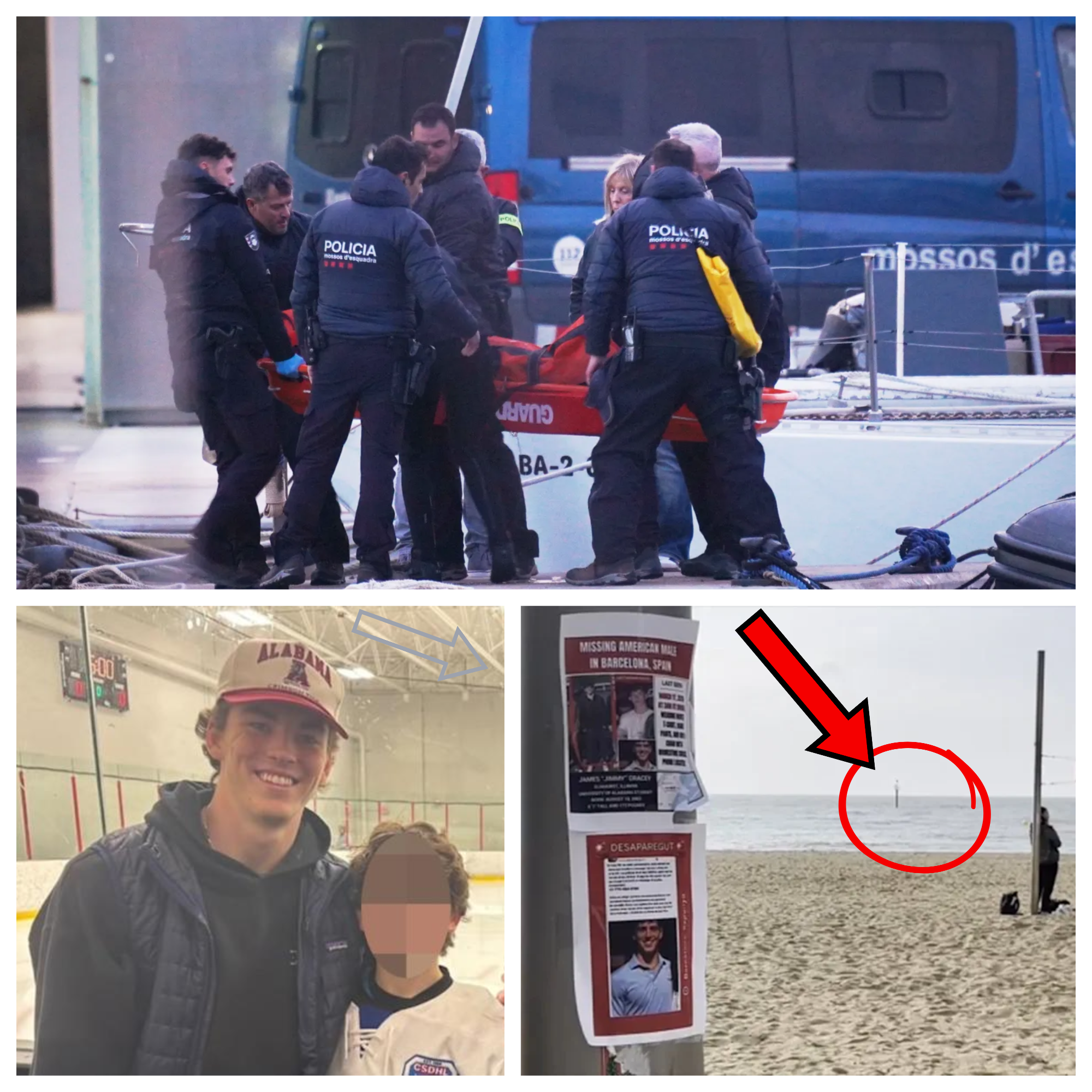
A grim discovery in the waters off Barcelona’s Barceloneta Beach has cast a dark shadow over the ongoing search for 20-year-old James “Jimmy” Gracey, the University of Alabama student who vanished during spring break on March 17, 2026. On March 20, 2026, divers from the Mossos d’Esquadra’s underwater unit recovered a body from the Mediterranean Sea, approximately 300 meters offshore from the area where Gracey was last seen leaving Shôko nightclub four days earlier. While official identification has not yet been confirmed, sources close to the investigation and the Gracey family have been notified that the physical characteristics and clothing match those of the missing student.
Jimmy Gracey, a junior from Elmhurst, Illinois, had traveled to Spain to visit friends studying abroad. On the night of March 16 into 17, he was at Shôko—a popular beachfront nightclub in the Port Olímpic district—celebrating with the group. CCTV footage captured him exiting alone around 3 a.m., with a shadowy figure later identified trailing him in the corner of one frame. A security guard testified that someone appeared to be deliberately following Jimmy as he walked toward the promenade. His phone was later recovered from an unrelated individual, his wallet found empty near the beach, and deleted text messages revealed he had arranged to meet an unidentified American woman at 4:12 a.m.—a meeting that never concluded safely.
The recovery of the body came after days of intense searching along the coastline, in nearby ports, and through expanded CCTV analysis. Divers were deployed following analysis of tidal patterns and witness statements suggesting Jimmy may have entered the water—either voluntarily, accidentally, or against his will. The location of the discovery—roughly 300 meters from the beach near where he was last seen—aligns with currents and drift models used by maritime rescue teams. The body was found in approximately 8 meters of water, clothed in items consistent with what Jimmy was wearing that night: a white T-shirt and dark pants. A gold chain with a rhinestone cross pendant, distinctive jewelry he was known to wear, was reportedly still on the body.
While forensic identification—including dental records, fingerprints, and DNA comparison—is ongoing, the Gracey family has been privately informed of the likelihood that the remains are those of their son. Therese Gracey, Jimmy’s mother, released a brief statement through a family spokesperson: “We are devastated beyond words. Our hearts are broken, but we cling to the hope that we will soon have confirmation and can begin to bring our boy home.” The family has asked for privacy during this time while urging anyone with information about Jimmy’s final moments to come forward.
The circumstances surrounding the recovery have intensified suspicions of foul play. Earlier CCTV showed Jimmy walking alone, yet the trailing shadow and the security guard’s testimony suggested he was being followed. Deleted texts arranging a late-night meet-up with an unidentified woman, the phone found on another person, and the emptied wallet near the beach all pointed toward criminal involvement. The body’s location in the water—rather than on land or in a public area—has led investigators to consider whether Jimmy was taken to the shoreline, assaulted, and either pushed or fell into the sea. The Mossos d’Esquadra have classified the death as suspicious pending autopsy results, which will determine cause and manner of death.
Jimmy’s friends and University of Alabama fraternity brothers, who remained in Barcelona assisting the search, were visibly distraught when news of the recovery broke. One friend told reporters: “We prayed every day he’d just walk back into the apartment with a crazy story about getting lost. This is our worst nightmare.” The group had spent days distributing flyers, reviewing CCTV from surrounding businesses, and speaking with Shôko patrons in hopes of identifying the woman from the texts or the figure trailing Jimmy.
The Port Olímpic and Barceloneta area, while a major tourist destination, has documented risks after dark. Opportunistic crime, drink tampering, and occasional targeted incidents against visitors are known realities. The combination of a planned late-night meet-up, a trailing figure, missing belongings, and now a body recovered from the sea has led investigators to treat this as a homicide inquiry rather than an accidental drowning or voluntary disappearance.
The Gracey family continues to appeal for information. They urge anyone who was at Shôko that night, who saw Jimmy after he left the club, who recognizes the woman he was texting, or who has any knowledge of what happened in the early hours of March 17 to contact Mossos d’Esquadra, the U.S. Embassy in Madrid, or the family tip line immediately. Social media campaigns under #FindJimmyGracey have transformed into #JusticeForJimmyGracey, with supporters worldwide sharing his photo and demanding answers.
This case has gripped international attention, highlighting the vulnerabilities young travelers face abroad during peak party seasons. Spring break hotspots can shift from celebration to tragedy in moments, especially when crowds thin and alcohol clouds judgment. For the Gracey family, the discovery of a body in the waters near where Jimmy vanished is the devastating confirmation they had prayed never to receive.
As forensic examination continues and the identity is formally confirmed, the world waits for answers. Was Jimmy lured to the water? Was he attacked? Did the meet-up arranged at 4:12 a.m. lead directly to this outcome? The chilling find in the waters near Spanish beach has turned a spring break disappearance into a potential murder investigation—one that may finally reveal what happened in the final hours of James Gracey’s life.