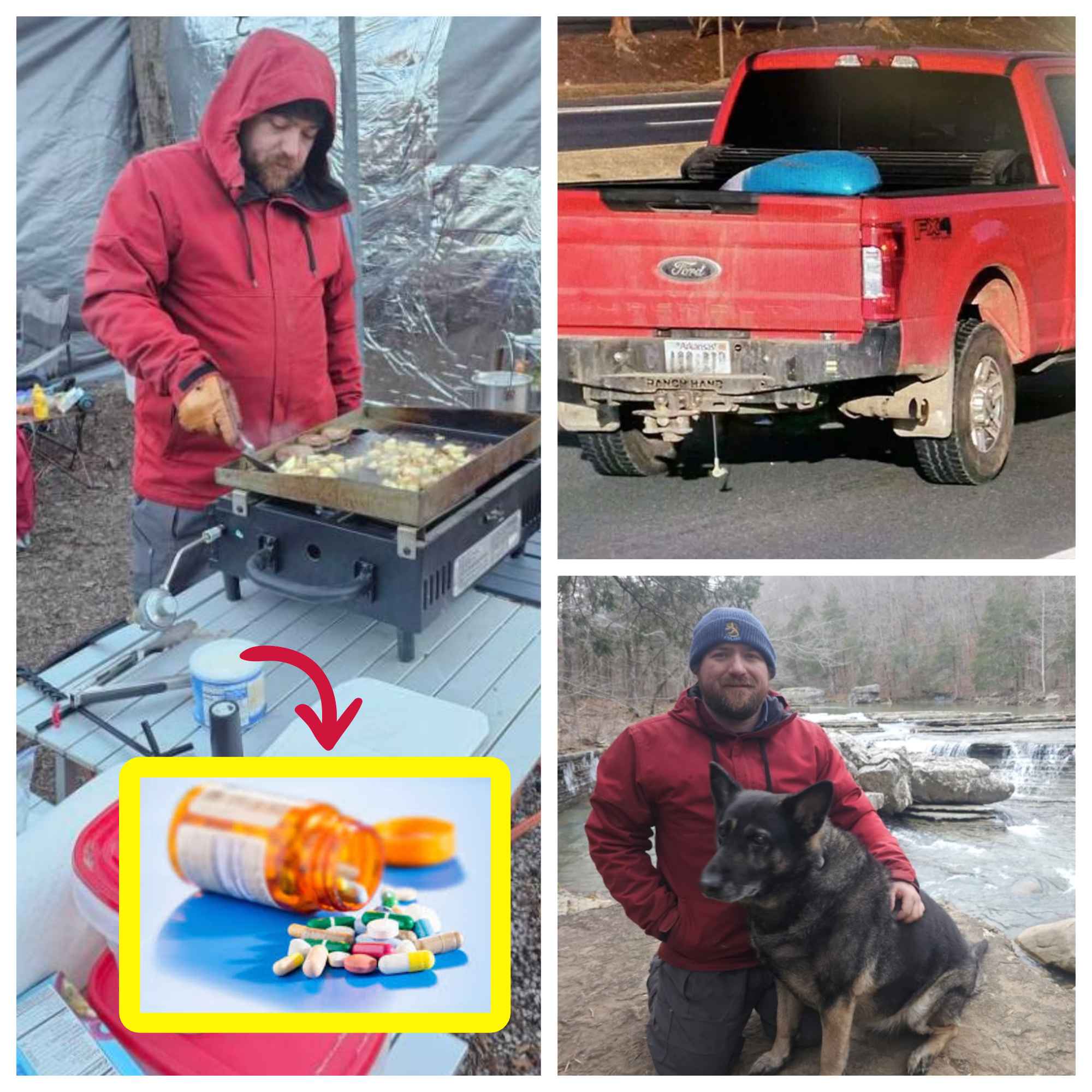
Christopher Palmer, 39, an avid outdoorsman from Arkansas, faced a terminal illness in silence before vanishing from North Carolina’s Outer Banks in early January 2026. His disappearance, initially treated as a missing hiker case alongside his beloved 11-year-old German Shepherd Zoey, unfolded into a heartbreaking revelation from his family: Palmer had been diagnosed with stage 4 cancer, a diagnosis kept private even from those closest to him. The family believes he chose a path of peace, first ensuring Zoey’s comfort in her final days before walking into the sea together, ending their shared journey free from pain.
Palmer’s story began with a camping trip in the Great Smoky Mountains starting December 8, 2025. He maintained regular contact with family until January 9, when communication ceased. Days later, on January 12, National Park Service rangers discovered his abandoned Ford F-250 truck on the beach at Cape Hatteras National Seashore. Personal belongings scattered along the coastline suggested he had perished at sea. Search efforts—coordinated by multiple agencies including the NPS, Coast Guard, and local authorities—continued until January 24, when his father, Bren Palmer, requested they be suspended.
In a series of emotional Facebook posts, Bren shared the truth that reframed the entire ordeal. “We recently learned that Christopher was facing a terminal illness,” he wrote. “Knowing this has helped us understand the choices he made. Christopher loved the outdoors and valued his independence. The treatments ahead would have taken much of that away, and he did not want that future for himself.” The post emphasized Palmer’s lifelong passion for nature—hiking, camping, exploring national forests—activities that defined him long before illness entered the picture.
Central to the family’s grief was Zoey, the loyal companion Palmer had raised from puppyhood. Described as a “beautiful, well-behaved” German Shepherd who shadowed him everywhere, Zoey suffered from severe hip dysplasia, required multiple medications, and was in her final days. Evidence found in Palmer’s truck—a shovel—led the family to conclude he spent time in the woods during the trip, staying by her side as her health declined. “It’s our belief that our son spent some time in the woods to be with her in her final days,” Bren explained. “After her passing he laid her to rest and continued his trip to the coast.” This act of devotion—burying his lifelong friend before facing his own end—underscored the depth of their bond.
The family’s updates quelled rampant speculation online, where rumors and false narratives had spread quickly. Some claimed Zoey was found alive or injured; others invented darker scenarios. Bren addressed these directly, urging compassion and discouraging exploitation of grief. “Please do not believe all the false stories floating around the internet,” one related post warned. The reality, as shared by those who knew him best, painted a portrait of quiet resolve: a man confronting unbearable loss—his health, his companion—and choosing dignity in farewell.
Palmer’s battle with stage 4 cancer remained hidden until after his disappearance. No public details emerged about the specific type or timeline of diagnosis, but the family’s words suggest it was advanced and aggressive, leaving little room for prolonged treatment without eroding the independence he cherished. His decision to forgo invasive interventions and instead seek solace in nature with Zoey reflected a deliberate embrace of autonomy. In his final days, he ensured his dog—already frail and medicated—did not face the end alone, then stepped into the ocean, a place of vast peace that mirrored his love for the wild.
Zoey’s fate added layers of sorrow. While some early reports suggested she might have been located or survived, family statements clarified she passed before Palmer reached the coast. The shovel in the truck served as silent testimony to a private burial in the woods, allowing her to rest before he continued alone. Many who followed the case found comfort in the image of reunion: Palmer and Zoey crossing the rainbow bridge together, a metaphor drawn from pet-loss poetry that envisions animals waiting for their humans in a painless afterlife. Online tributes echoed this sentiment, with commenters writing, “I hope she and Chris are reunited now,” and “Rest easy, Zoey and Chris—free from pain.”
The Outer Banks setting—remote beaches, crashing waves, endless horizon—became the unintended backdrop for Palmer’s farewell. Cape Hatteras National Seashore, with its rugged coastline and isolation, offered the solitude he sought. His truck, left on the sand, marked the transition from land to sea, a final hike without return. Search teams scoured the area, but ocean currents made recovery unlikely, leading to the suspension of efforts. The family expressed gratitude for the dedication shown by rescuers while accepting the probable outcome: bodies lost to the waves, yet spirits at peace.
Palmer’s story resonated far beyond Arkansas and North Carolina. It sparked conversations about terminal illness, mental health, the human-animal bond, and end-of-life autonomy. Supporters praised his courage in facing cancer privately and his devotion to Zoey, refusing to let her suffer alone. Critics of assisted dying or euthanasia debates found parallels, though Palmer’s choices appeared self-determined without external intervention. Pet owners shared similar experiences of losing companions to age or illness, drawing comfort from the idea that loyalty endures beyond death.
In the wake of the announcement, vigils and online memorials emerged. Photos of Palmer kneeling beside Zoey—her silver muzzle and trusting eyes—circulated widely, capturing a bond unbroken by time or hardship. Messages poured in: prayers for healing, acknowledgments of grief, affirmations that love like theirs transcends physical separation. The rainbow bridge imagery, though rooted in pet-loss tradition, offered solace: a place where pain ends, where old dogs run free and their humans wait no longer.
Bren Palmer’s posts closed a chapter of uncertainty with grace. He thanked volunteers, search teams, and the public for kindness, while gently redirecting focus to remembrance over rumor. “May Chris and Zoey forever rest in peace,” one update concluded. The words captured the essence: not tragedy alone, but a life defined by love, loyalty, and a final, deliberate choice for peace.
Christopher Palmer’s legacy endures in quiet acts—the man who hiked vast forests, who carried his aging dog through trails, who faced terminal cancer without burdening others, and who ensured companionship until the end. In the vast sea that claimed him, perhaps he found the freedom he sought. Beyond the rainbow bridge, he and Zoey run together again—healthy, whole, inseparable.
News
Driver Breaks Silence on Deep River Crash — Claims “Short Argument” with Rico Montes Caused the Truck to Flip.
The driver of the black pickup truck involved in the fatal Deep River crash has finally spoken publicly for the first time since the March 2026 incident that claimed the…
Phone Recovered from Deep River Still Trying to Send Final Location — The Last Desperate Act of Rodrigo “Rico” Montes.
In the early hours of March 23, 2026, 18-year-old high school senior Rodrigo “Rico” Montes made one final, heartbreaking attempt to reach his family. As police divers searched the murky…
“Mom, I’m Riding Home With a Friend, See You Soon” — The Final Text Before Rodrigo “Rico” Montes Was Found in the Overturned Truck in Deep River.
On a quiet Sunday night in March 2026, 18-year-old Rodrigo “Rico” Montes sent his mother a simple, reassuring text that would become the last words she ever received from her…
The Black Bag in the Ravine: Chilling Discovery in the Death of American Airlines Flight Attendant Eric Gutierrez.
The tragic case of 32-year-old American Airlines flight attendant Eric Fernando Gutierrez Molina took an even darker turn as investigators in Colombia recovered a black bag linked to the missing…
The Secret Weekend Pattern: How the FBI’s Latest Breakthrough May Finally Trap Nancy Guthrie’s Abductor.
As March 2026 draws to a close, the disappearance of 84-year-old Nancy Guthrie from her home in Tucson’s Catalina Foothills has entered its 55th day with no arrest and no…
The Insider Who May Have Opened the Door: FBI Hunts for the Person Who Knew Nancy Guthrie’s Home Too Well.
In the affluent Catalina Foothills neighborhood of Tucson, Arizona, where residents often leave garage doors open and security feels routine, the abduction of 84-year-old Nancy Guthrie on the night of…
End of content
No more pages to load