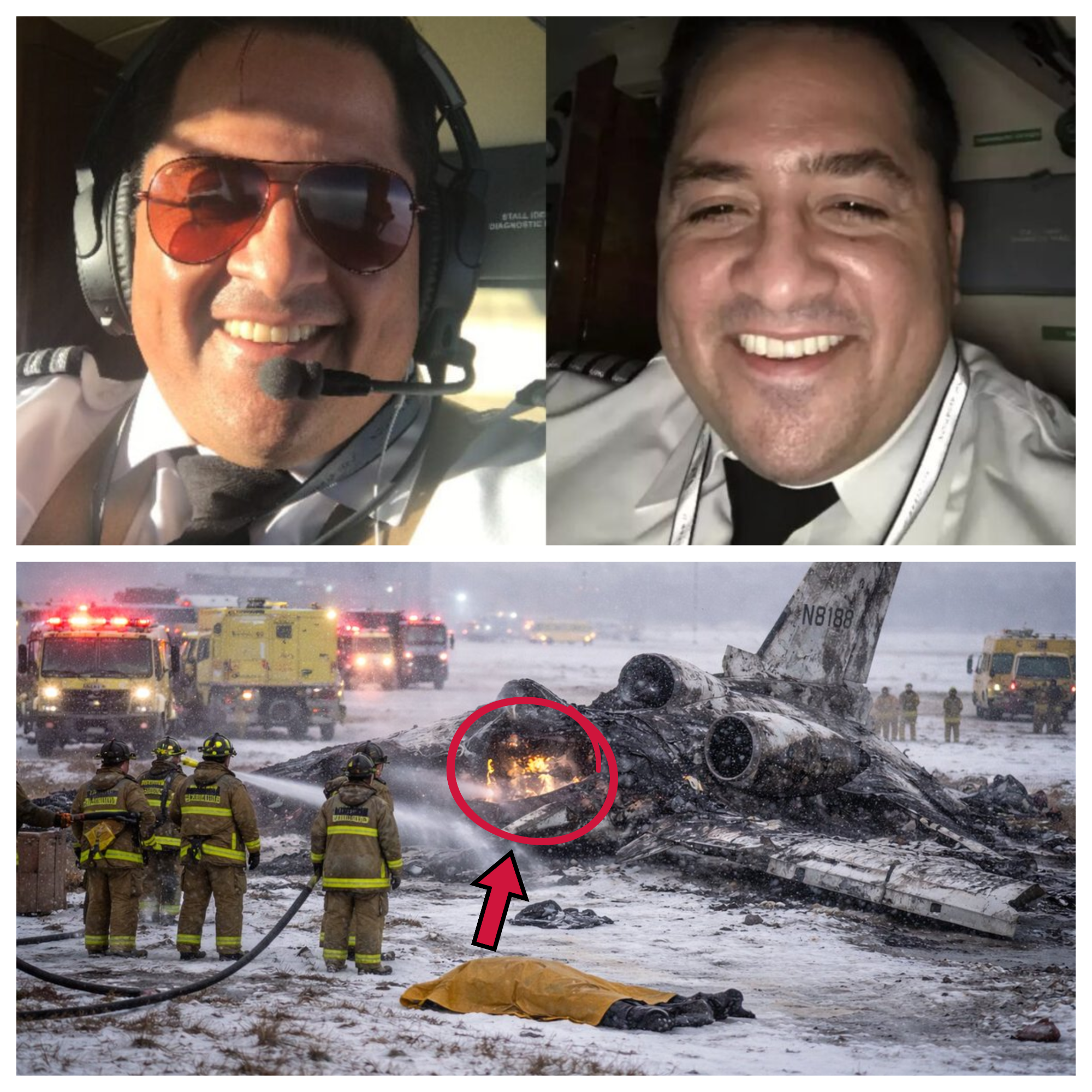
Jacob Hosmer’s family has opened their hearts in the wake of the January 25, 2026, private jet crash at Bangor International Airport that claimed all six lives on board. The 47-year-old pilot, described by those who loved him as a man who radiated kindness and joy, was at the controls of the Bombardier Challenger 600 when it inverted during takeoff and erupted into flames amid Winter Storm Fern. In statements shared with local news outlets, his father Gary said simply, “He’s in Heaven now with Jesus,” while a close friend of 15 years offered a portrait of warmth: “He was always kind. He was always laughing. A great pilot, a loving husband, a phenomenal father.”
Hosmer joined Houston personal injury law firm Arnold & Itkin LLP as a pilot in May 2025, bringing a reputation for professionalism and calm competence. Colleagues recalled his meticulous preparation, steady hand in challenging conditions, and genuine care for passengers and crew. Aviation peers emphasized that he treated every flight with the seriousness it deserved, yet never lost his approachable, good-humored nature. Friends outside work described a man who balanced long hours in the air with being fully present at home—coaching his children’s sports teams, attending school events, and filling family gatherings with laughter.
The doomed flight had departed Houston’s Hobby Airport earlier that day, stopping in Bangor to refuel before crossing the Atlantic to Paris. The group included attorney Tara Arnold, event planner Shawna Collins, executive chef Nick Mastrascusa, sommelier Shelby Kuyawa, and a second crew member. The purpose blended business scouting for a new luxury hospitality venture with elements of exploration and celebration. What should have been a brief, routine tech stop turned catastrophic around 7:45 p.m. as the jet accelerated down the snow-covered runway.
Witness accounts and preliminary video evidence describe normal acceleration followed by a sudden, violent roll to the left. The aircraft completed an inversion, struck the runway upside down, and exploded in a massive fireball. The combination of heavy snow, gusting winds, sub-freezing temperatures, and the intensity of the post-impact fire made immediate rescue impossible. Firefighters contained the blaze, but no one survived. The National Transportation Safety Board recovered the flight data recorder and cockpit voice recorder, offering potential insight into the critical seconds before loss of control.
Early investigative focus includes possible residual wing contamination despite de-icing, runway surface conditions (snow, slush, ice), control surface anomalies, or asymmetric thrust. Experts note that even trace amounts of ice or snow can severely degrade lift during rotation, especially on a contaminated runway. The rapid inversion points to an unrecoverable upset—potentially stall-induced, control reversal, or external influence—though definitive conclusions await full data analysis and wreckage study.
Hosmer’s death has left a deep void in multiple communities. At Arnold & Itkin, colleagues mourned a trusted team member whose professionalism and positivity were constants. In aviation circles, peers shared stories of his reliability and warmth, calling him the kind of pilot you would trust with your own family. Family and friends highlighted his devotion to his wife and children—balancing demanding schedules with presence at home, weekend adventures, and simple moments of joy. “He lived to make people smile,” one tribute read, echoing the laughter that defined him.
The other victims were remembered with equal sorrow. Tara Arnold as a fierce advocate and loving mother; Shawna Collins as a joyful organizer whose events brought people together; Nick Mastrascusa as a creative chef whose kindness extended far beyond the kitchen; Shelby Kuyawa as a passionate expert full of life. Fundraisers and memorial pages quickly emerged, filled with photos of happier times—family vacations, professional milestones, shared celebrations—contrasting sharply with the sudden, violent end.
The crash occurred during one of the most severe winter storms to hit the Northeast in years, with heavy snowfall, high winds, and dangerously low temperatures. Bangor serves as a key refueling point for transatlantic private flights, but winter operations require precise execution of de-icing, performance calculations, and go/no-go decisions. The incident has prompted renewed examination of protocols for contaminated runways and the challenges of winter departures in marginal conditions.
Emergency responders faced extraordinary risks to contain the fire and recover remains amid the blaze and weather. The airport shut down temporarily, diverting flights and disrupting travel across the region. NTSB investigators, initially slowed by deep snow covering debris, continue a comprehensive probe involving multiple agencies and manufacturers.
In the days since, tributes have continued to pour in. Colleagues posted memories of Hosmer’s steady presence during long nights and difficult weather; friends recalled his infectious laugh and unwavering kindness. Community leaders in Houston and Maine acknowledged the collective loss, with moments of silence observed at local gatherings. For his family, the grief is ongoing and profound. His father’s quiet affirmation of faith and the friend’s simple, powerful words—”He was always kind. He was always laughing”—have become a refrain in memorials, encapsulating a life lived with decency, dedication, and joy.
As the investigation unfolds, those who knew Jacob Hosmer cling to the legacy he left: a man who flew with skill, loved with heart, and touched everyone around him with gentleness and laughter. In the silence after the flames, his memory endures—not in the final moments of tragedy, but in every smile he brought, every person he comforted, and every life he made brighter simply by being himself.
News
Driver Breaks Silence on Deep River Crash — Claims “Short Argument” with Rico Montes Caused the Truck to Flip.
The driver of the black pickup truck involved in the fatal Deep River crash has finally spoken publicly for the first time since the March 2026 incident that claimed the…
Phone Recovered from Deep River Still Trying to Send Final Location — The Last Desperate Act of Rodrigo “Rico” Montes.
In the early hours of March 23, 2026, 18-year-old high school senior Rodrigo “Rico” Montes made one final, heartbreaking attempt to reach his family. As police divers searched the murky…
“Mom, I’m Riding Home With a Friend, See You Soon” — The Final Text Before Rodrigo “Rico” Montes Was Found in the Overturned Truck in Deep River.
On a quiet Sunday night in March 2026, 18-year-old Rodrigo “Rico” Montes sent his mother a simple, reassuring text that would become the last words she ever received from her…
The Black Bag in the Ravine: Chilling Discovery in the Death of American Airlines Flight Attendant Eric Gutierrez.
The tragic case of 32-year-old American Airlines flight attendant Eric Fernando Gutierrez Molina took an even darker turn as investigators in Colombia recovered a black bag linked to the missing…
The Secret Weekend Pattern: How the FBI’s Latest Breakthrough May Finally Trap Nancy Guthrie’s Abductor.
As March 2026 draws to a close, the disappearance of 84-year-old Nancy Guthrie from her home in Tucson’s Catalina Foothills has entered its 55th day with no arrest and no…
The Insider Who May Have Opened the Door: FBI Hunts for the Person Who Knew Nancy Guthrie’s Home Too Well.
In the affluent Catalina Foothills neighborhood of Tucson, Arizona, where residents often leave garage doors open and security feels routine, the abduction of 84-year-old Nancy Guthrie on the night of…
End of content
No more pages to load