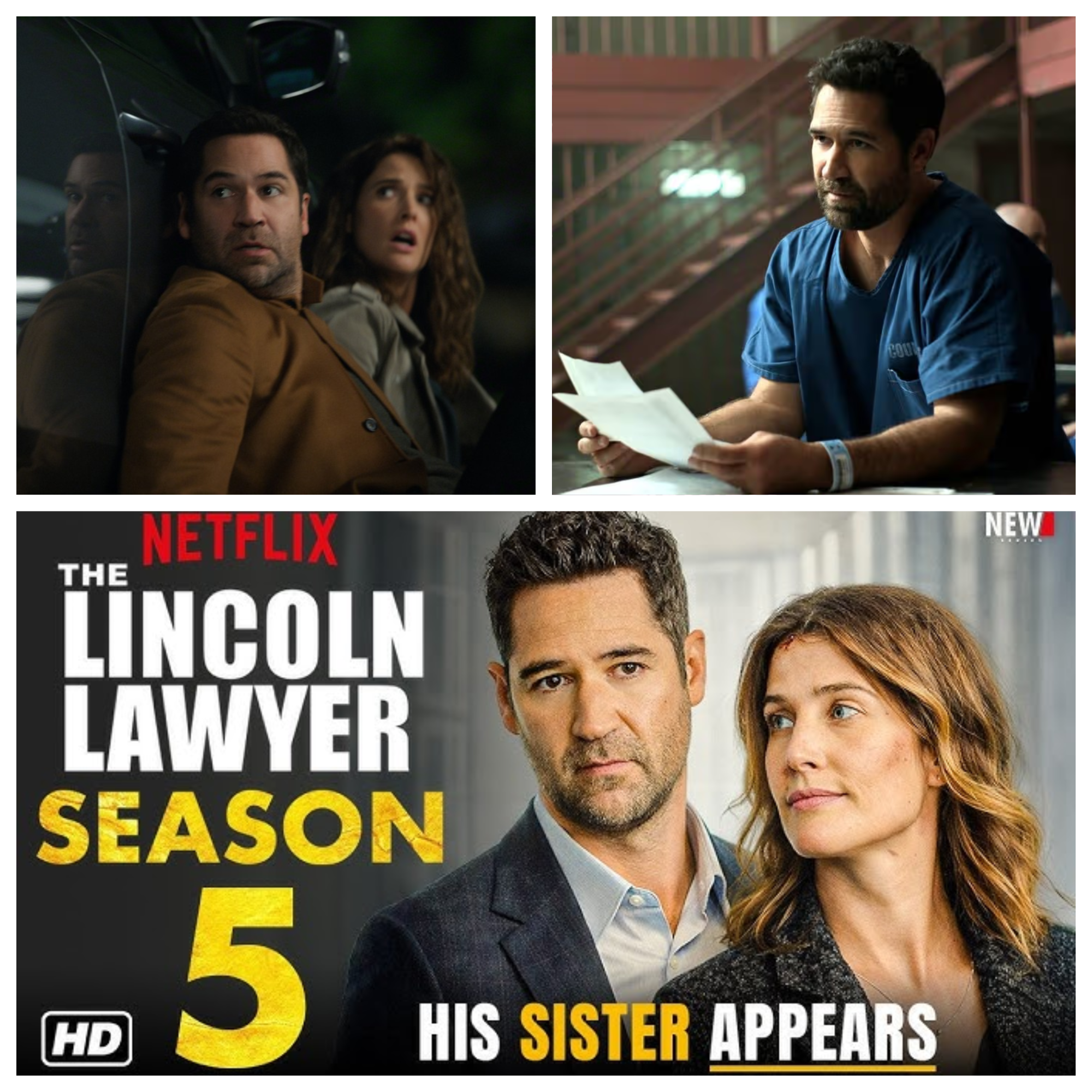
The back seat of the Lincoln Town Car has always been Mickey Haller’s domain—a mobile office where deals are struck, cases dissected, and justice bent just enough to win. But in the gripping first-look trailer for Season 5 of Netflix’s The Lincoln Lawyer, that familiar leather interior feels suddenly confining. Mickey, the charismatic defense attorney who has spent years outmaneuvering prosecutors and saving clients from impossible odds, now faces the ultimate reversal: he is the one in handcuffs, staring down a murder charge that could end everything.
The renewal for Season 5 came swiftly after Season 4’s explosive finale, signaling Netflix’s confidence in the series’ growing audience. Adapted from Michael Connelly’s bestselling novels, the show draws inspiration for this chapter from “The Resurrection Walk,” the seventh book in the Mickey Haller series. Yet the trailer hints at a narrative that blends elements of personal peril with courtroom drama in ways that feel fresh and urgent. The cliffhanger from Season 4 looms large: former client Sam Scales lies dead, and mounting evidence—including witness statements and forensic links—points accusing fingers directly at Haller. What begins as a routine defense spirals into a fight for survival.
Mickey has built his reputation on defending the indefensible. He operates from the margins, taking cases others won’t touch, often for clients society has already condemned. His methods—sharp intuition, relentless preparation, and a willingness to push ethical boundaries—have earned him both admiration and enemies. Season 5 forces him to confront the consequences of that life. The trailer shows flashes of past victories now twisted against him: a heated argument with Scales replayed in court, a gun traced to connections in his orbit, a timeline that aligns too neatly with motive. Prosecutors who once lost to him now circle like sharks, eager to prove the system finally caught up to the man who gamed it.
Central to the tension is Mickey’s inner circle, tested like never before. Lorna Taylor, his steadfast second chair, grapples with loyalty versus self-preservation. Cisco Wojciechowski, the investigator with street smarts and unwavering allegiance, digs for holes in the case while questioning whether Mickey is telling him everything. Izzy Letts, the driver turned paralegal, provides quiet support but carries her own scars from the streets. Even District Attorney Andrea Freemann, a recurring adversary, appears conflicted—her pursuit of justice clashing with the nagging sense that something doesn’t add up. The trailer teases fractured alliances and whispered doubts: can they defend a man who has always defended others when the evidence feels damning?
The visual language shifts to match the stakes. Gone are the sun-drenched Los Angeles exteriors that once symbolized Mickey’s freedom on the move. Interiors dominate—dim courtrooms, sterile holding cells, the shadowed confines of the Lincoln at night. Close-ups linger on Haller’s face as realization dawns: the strategies he used to free others could now bury him. Quick cuts interweave flashbacks of client meetings with present-day interrogations, blurring the line between defender and accused. The score pulses with urgency, strings tightening during key revelations, silence amplifying moments of dread.
Thematically, Season 5 delves deeper into redemption and the cost of winning at all costs. Mickey has long justified his tactics as necessary in a flawed system. Now that system turns on him, forcing introspection. Did he cross lines that created this moment? Have the enemies he made along the way finally found their opening? The trailer hints at a broader commentary on justice: how power dynamics shift when the powerful become vulnerable, how truth becomes secondary to narrative in high-profile cases. Haller’s journey mirrors real-world debates about accountability, privilege, and the presumption of innocence—even for those who routinely challenge it.
New characters promise to complicate the landscape. A dangerous new client from the trailer suggests connections to the murder charge, perhaps a setup or a genuine threat. Legal experts and investigators from opposing sides bring fresh perspectives, while potential witnesses from Mickey’s past resurface with motives of their own. The ensemble cast returns intact: Manuel Garcia-Rulfo as Mickey Haller delivers a performance layered with vulnerability beneath the trademark confidence. Becki Newton as Lorna, Jazz Raycole as Izzy, Angus Sampson as Cisco—all anchor the emotional core. Guest stars and recurring faces add texture to the unfolding conspiracy.
Production details reflect the show’s elevated status. Filming in Los Angeles captures the city’s dual nature—glamour masking grit. The ten-episode order allows room for intricate plotting, character development, and multiple courtroom showdowns. Showrunners maintain the balance of legal procedural with personal drama that has defined the series. Each episode promises twists that upend expectations, building toward a resolution that could redefine Mickey’s career and legacy.
Fan anticipation runs high. Social media buzzes with theories: Was Scales’ death retaliation for a past case? Is there a larger frame job involving powerful figures Mickey once crossed? Could this force Haller to question his entire approach to law? The trailer masterfully withholds key answers, ending on a shot of Mickey alone in his car, staring at the city lights, the weight of accusation pressing down. It is a powerful image—a man who once controlled the narrative now at its mercy.
As Season 5 approaches, The Lincoln Lawyer evolves from a compelling legal thriller into a profound character study. Mickey Haller has always believed justice is worth fighting for, even when the odds are stacked. Now he must prove it when the fight is for his own freedom. The trailer sets the stage for a season where every argument carries personal risk, every victory comes at a cost, and the line between guilt and innocence blurs in the glare of the courtroom lights. Viewers who have followed Mickey’s journey from the back seat to the bench will find this chapter impossible to look away from—one that questions not just who did it, but what justice truly means when the system finally calls your name.