Authorities in Providence, Rhode Island, announced late Sunday night, December 14, 2025, that a person of interest detained in connection with the deadly shooting at Brown University would be released, as new developments in the probe pointed investigators in a different direction. The reversal came during a surprise press conference, leaving the gunman—who killed two students and injured nine others—at large as the manhunt entered its second day.
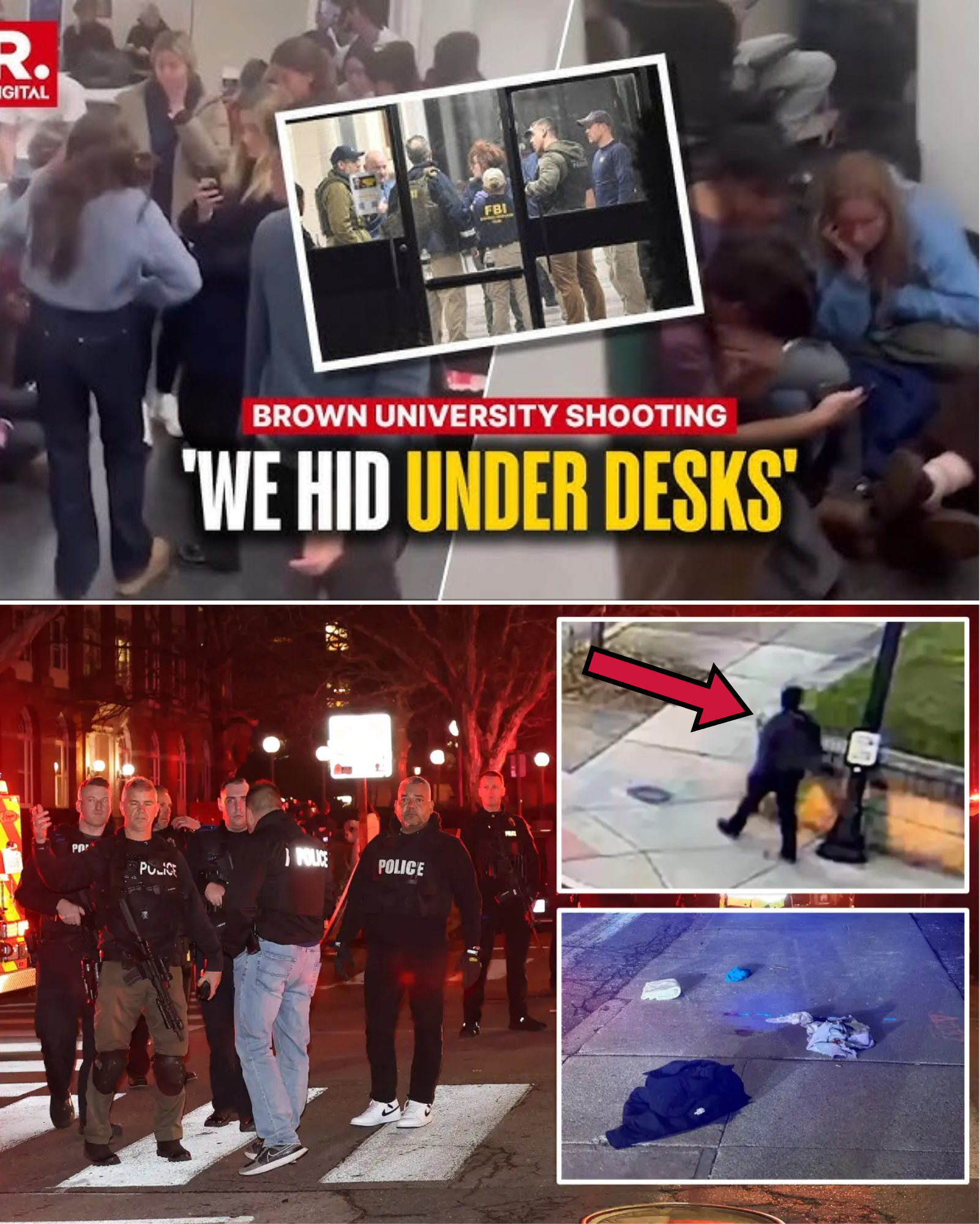
The shooting unfolded on Saturday afternoon, December 13, around 4 p.m., inside the Barus and Holley building on campus, during a final exam review session for an economics class. A lone individual entered the classroom, fired more than 40 rounds from a 9mm handgun, and fled the scene. Witnesses described chaos as students and faculty sought cover, with the assailant shouting something indiscernible before escaping through a side exit.
Security footage released by Providence police shows a figure dressed in all black, face covered, walking calmly down Hope Street away from campus shortly after the incident. Officials confirmed this individual remains the primary focus of the search, urging the public to submit tips via an FBI portal or local lines.
Early Sunday morning, law enforcement detained 24-year-old Benjamin Erickson at a hotel in Coventry, Rhode Island, approximately 28 miles from Providence. Sources indicated he was found with firearms, prompting initial optimism about a breakthrough. However, by evening, Rhode Island Attorney General Peter Neronha stated there was now “no basis” to consider Erickson involved. “This is what these investigations look like,” Neronha explained. “Sometimes you head in one direction, sometimes you regroup and go in another.”
Providence Mayor Brett Smiley echoed the update, assuring increased security presence on campus without reinstating shelter-in-place orders. He acknowledged potential anxiety from the news but emphasized no credible ongoing threats. Rhode Island Governor Daniel McKee noted coordination with federal resources, including FBI Director Kash Patel.
All victims were confirmed as Brown students by university President Christina Paxson, who canceled remaining classes, exams, and projects for the fall semester in a message expressing profound sorrow. Hospital updates from Rhode Island Hospital indicated varying conditions among the injured, with several in critical but stable status.
The campus, typically bustling during finals week, saw heightened police activity Sunday, including FBI Evidence Response Teams processing the scene. Crime tape marked building entrances, and vigils formed nearby, with flowers and candles placed in remembrance.
Erickson’s detention stemmed from leads that initially aligned with investigative criteria, but evolving evidence cleared him. Officials criticized media leaks of his name, noting the challenges of retracting public information. No charges were filed, and he was released without further designation as a person of interest.
Motive remains undisclosed, with detectives executing search warrants and canvassing for additional footage. Limited internal cameras in the building complicated early efforts, prompting appeals for community-submitted video.
Brown University, an Ivy League institution known for its open campus policy, faced immediate questions about security. Student petitions circulated advocating for enhanced access controls, such as mandatory ID swipes for buildings. Administrators prioritized support services, including counseling and early departures for those wishing to leave.
Community response included interfaith gatherings and statements from leaders nationwide. The incident disrupted a period of academic intensity, with evacuations affecting thousands as police cleared buildings late Saturday.
Federal involvement ramped up, with specialized teams aiding geolocation and digital analysis. No connections between the detained individual and the university were confirmed publicly.
As Monday dawned, classes remained suspended, and remote options extended where feasible. Students shared accounts of barricading doors and silencing phones during the lockdown, underscoring the trauma’s lasting impact.
Providence police Chief Colonel Oscar L. Perez Jr. defended the initial detention as standard procedure based on available leads. “It’s not a mistake,” he said. “It’s just how investigations work.”
The search broadened to surrounding neighborhoods, with officers patrolling residential areas near the engineering building. Tips flooded in, processed through dedicated channels.
Victim families received notifications privately, with identities withheld pending full confirmations. Support funds activated through university and local organizations.
Broader discussions emerged on campus safety protocols amid national patterns of such events. Brown’s leadership committed to reviewing measures while focusing on immediate healing.
The released footage of the fleeing figure became a focal point, with enhancements sought to aid identification. Witnesses recalled the assailant’s deliberate movements, adding to the profile.
Erickson’s brief involvement highlighted investigative fluidity, with authorities stressing thoroughness over haste.
Campus morale efforts included virtual town halls and resource directories. Many students opted for early winter break departures.
Law enforcement maintained visible patrols, balancing reassurance with vigilance.
The probe’s pivot underscored complexities in real-time evidence gathering.
Public cooperation remained key, with digital submissions encouraged.
Brown’s community, resilient in past challenges, rallied around affected members.
Administrative decisions prioritized wellbeing over academic deadlines.
Ongoing forensic work aimed at reconstructing the sequence.
No additional suspects named as focus narrowed on the video subject.
Holiday plans altered for many in the aftermath.
Support extended to faculty and staff witnesses.
Investigation timelines anticipated weeks for comprehensive review.
Authorities pledged transparency within operational limits.
The incident’s timing, during finals, amplified disruption.
Recovery resources expanded regionally.
Leaders urged patience amid evolving details.
Campus landmarks served as impromptu memorials.
Digital tip lines handled increased volume.
Probe coordination spanned local, state, and federal levels.
Community solidarity evident in shared statements.
The shift in direction refocused resources efficiently.
Brown prepared for spring semester adjustments if needed.
Healing processes initiated campus-wide.
Public awareness campaigns reinforced tip importance.
The event’s ripple effects felt broadly.
Authorities remained committed to resolution.