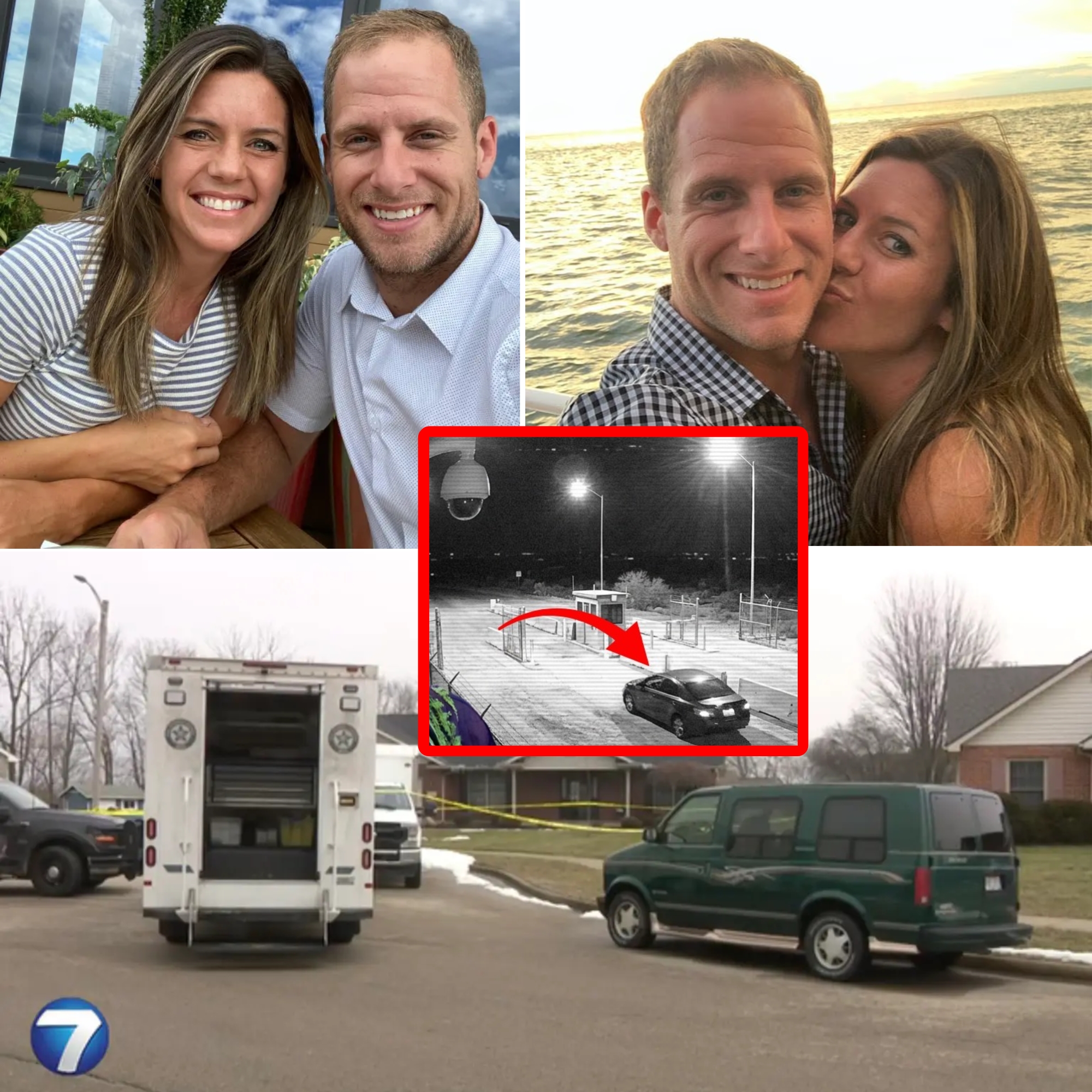
Seventeen seconds of seemingly ordinary dashcam footage have become the linchpin in the prosecution’s case against Caleb Carl Flynn, the 39-year-old Tipp City man accused of murdering his wife Ashley Flynn on February 16, 2026. The brief clip, pulled from the vehicle’s forward-facing camera parked outside the couple’s Cunningham Court home, shows Flynn engaging in deliberate, preparatory actions immediately prior to his 911 call—actions that investigators say directly contradict his panicked emergency report of a home invasion and shooting.
According to court filings and sources close to the investigation, the timestamped segment begins roughly 30 seconds before Flynn dials emergency services at approximately 2:30 a.m. In those 17 critical seconds, he is seen exiting the driver’s seat, briefly stepping toward the garage area, returning to the vehicle, handling an object (possibly clothing or a small item), and appearing to check or adjust something on his person or in the car. The movements are methodical, not frantic—standing in stark contrast to the breathless, distressed voice he uses moments later when telling the dispatcher, “My wife has been shot… there’s been a burglary… please hurry.”
The dashcam evidence was pivotal in shifting the investigation from an active search for an unknown intruder to a focused homicide probe targeting Flynn himself. Police had initially accepted his account: an open garage door allowed entry, the shooter fired twice while the family slept nearby, and Flynn discovered the scene upon arriving home. Yet forensic inconsistencies quickly mounted. The autopsy confirmed Ashley died from two contact-range gunshot wounds to the torso, fired from a 9mm handgun later recovered in the home. No signs of forced entry beyond what could be easily staged existed; no foreign DNA or fingerprints were found; and neighborhood surveillance—including multiple Ring cameras—showed no suspicious vehicles or pedestrians approaching the residence in the hours before the shooting.
The 17-second clip filled crucial gaps in the timeline. Phone metadata placed Flynn’s cell near the home well before the reported discovery time. Combined with the dashcam, it suggested he had been present during or immediately after the shooting, used the interval to alter the scene or his appearance, and only then called for help to sell the intruder narrative. Prosecutors allege the actions constitute tampering with evidence: possibly wiping prints, repositioning the weapon, or ensuring his clothing showed no blood spatter inconsistent with a just-arrived witness.
Tipp City Police Chief Greg Adkins, in a brief press statement following Flynn’s arrest on February 19, confirmed the dashcam played a “significant role” in establishing probable cause for the charges: one count of murder, two counts of felonious assault (for the shots fired), and two counts of tampering with evidence. The multi-agency task force—including the FBI, Ohio BCI, and Miami County Sheriff’s Office—praised the integration of digital evidence in cracking what initially appeared as a random violent crime.
Ashley Flynn, 37, was a cornerstone of the Tipp City community. As a substitute teacher with Tipp City Schools, former full-time educator, and dedicated seventh-grade volleyball coach at Tippecanoe Middle School, she was remembered for her infectious smile, genuine kindness, and ability to make every student feel seen and supported. Active in the Christian Life Center in Butler Township alongside her husband—who once served in music ministry and gained brief fame as a Season 12 American Idol contestant—Ashley embodied warmth and faith. Caleb’s on-air declaration during his Hollywood week segment, “I love my wife more than anything. She is very, very pretty. I love her,” now carries a tragic irony in light of the allegations.
The couple’s two elementary-aged daughters, unharmed during the incident, have become the emotional center of the community’s response. An online fundraiser surpassed $80,000 within days, earmarked for the girls’ care, counseling, and future stability. Red-and-white ribbons adorn streetlights and mailboxes as symbols of solidarity and remembrance. Vigils and school memorials have celebrated Ashley’s legacy as an educator who inspired young athletes and a mother whose love was boundless.
Flynn entered a not-guilty plea at his arraignment, with bond set at $2 million. He remains detained in Miami County Jail pending trial. Prosecutors have withheld full release of the dashcam clip, 911 audio, and additional forensic reports to safeguard the case, but legal analysts note that short bursts of video like this often prove decisive in domestic homicide prosecutions—especially when they capture intent or deception in real time.
The case underscores the double-edged nature of consumer technology in criminal justice. Dashcams, originally designed for accident documentation and insurance claims, now routinely expose lies in violent crimes. Here, 17 seconds dismantled months of potential deception, turning a grieving husband’s story into an accused killer’s undoing. For investigators, it reinforced the importance of scrutinizing every digital trace; for the public, it served as a chilling reminder that appearances can be meticulously crafted—even in moments of supposed crisis.
Tipp City, a quiet suburb known for safe streets and strong community ties, continues to reel. Colleagues, neighbors, and friends struggle to reconcile the Ashley they knew—kind, involved, radiant—with the violence that ended her life. The daughters’ future remains the priority: therapy, stable guardianship, and efforts to preserve positive memories of their mother amid the unfolding legal storm.
As the judicial process moves forward, those 17 seconds stand as silent, irrefutable testimony. They capture not just a man in a car, but the final preparations for what authorities allege was a calculated act of betrayal. Justice, for Ashley and her children, demands that every detail—down to the briefest fragment of video—be examined without mercy.