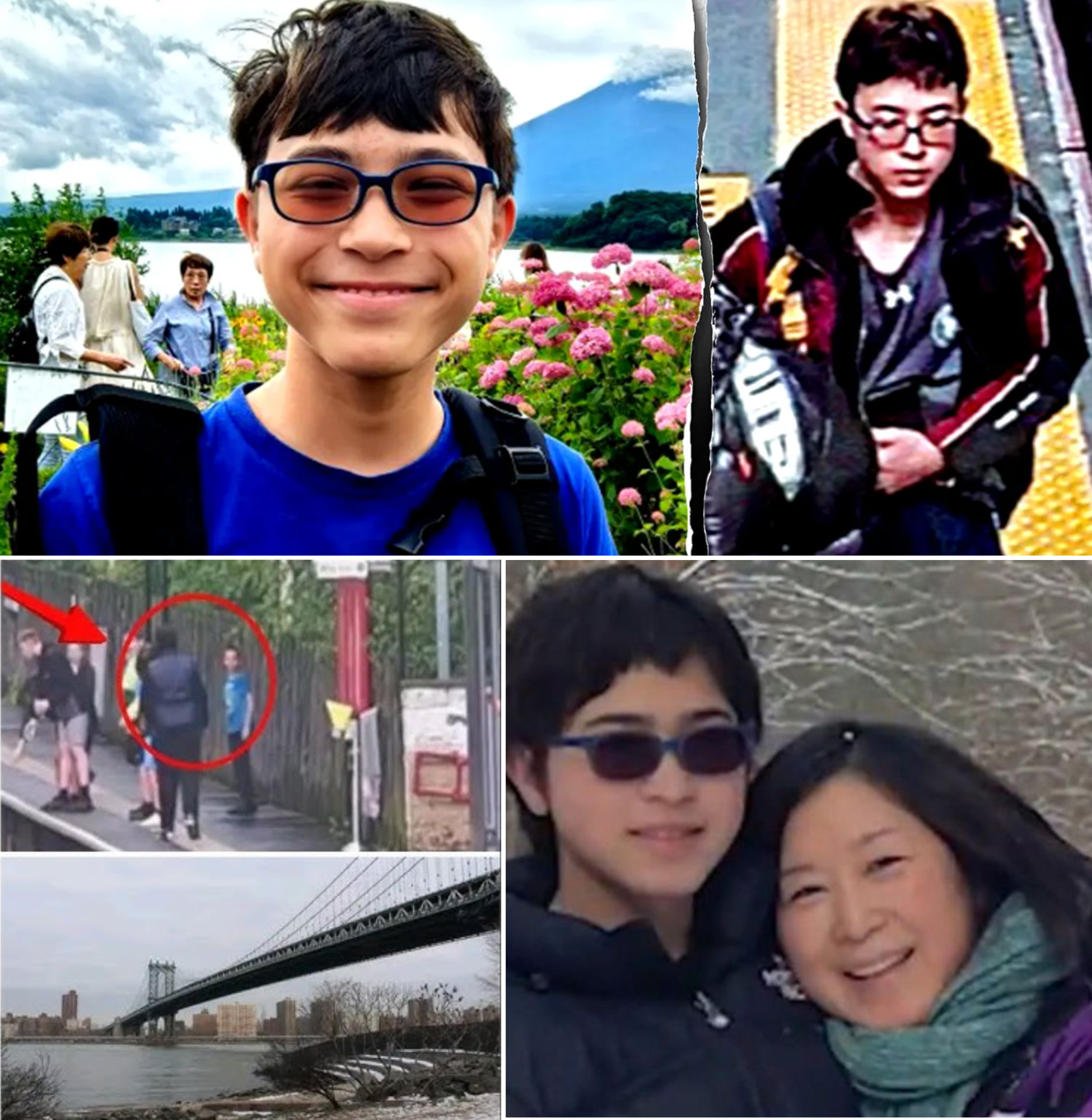
Suffolk County Police have pieced together a tighter, more ominous timeline in the disappearance of 15-year-old Thomas Medlin from Saint James, Long Island, revealing cellphone location data in Lower Manhattan and a fleeting surveillance sighting in Brooklyn mere seconds before all traces end. The updates, drawn from digital forensics and widespread video canvassing, narrow the window of his final movements on January 9, intensifying the mystery surrounding the teen who left school and traveled alone into New York City.
Thomas departed The Stony Brook School around 3:30 p.m., heading to the nearby Long Island Rail Road station for a train to Manhattan. He appeared on security cameras at Grand Central Terminal approximately 5:30 p.m., marking his arrival in the city. From there, investigators traced his path through Lower Manhattan, where cellphone pings placed him in areas near Cherry and Rutgers streets. These signals indicate active movement and communication in the bustling downtown zone before the trail shifted eastward toward the East River crossings.
The most startling revelation involves a brief but critical surveillance capture in Brooklyn. Footage from the Brooklyn side—specifically near Sands Street and Jay Street—shows Thomas just 14 seconds prior to his complete disappearance from all monitored paths. This sighting, on or near the Manhattan Bridge’s pedestrian walkway as it transitions into Brooklyn, aligns with the bridge’s role as a connector between the boroughs. Police emphasize that no subsequent video from pedestrian exits on either end records him leaving the structure on foot, creating a void where every second counts.
Cellphone activity ceased abruptly at 7:09 p.m., with the final ping traced to Lower Manhattan coordinates before the device went dark. Investigators had been actively pinging the phone during the search, losing contact at that precise moment. One minute later, at 7:10 p.m., a nearby camera on the bridge captured a distinct splash in the East River waters below. The convergence of these elements—the Brooklyn glimpse 14 seconds before blackout, the dropped signal, and the water disturbance—has redirected efforts toward the river as a potential site of incident, whether accidental or otherwise.
Authorities maintain there is no current evidence of criminal involvement, though they have not ruled out any possibility. The East River’s powerful currents, combined with January’s cold temperatures and variable visibility, have made recovery operations extraordinarily difficult. Divers, marine units, and aerial teams continue sweeps near the bridge’s midpoint, focusing on the area beneath where the splash occurred, but debris, depth, and flow repeatedly hinder progress.
Earlier speculation tied Thomas’s journey to an online connection via Roblox, with family members initially believing he intended to meet someone met through the gaming platform. His mother described him as a gentle, introverted teen passionate about video games and friends, making the solo trip to the city atypical and alarming. However, Suffolk County Police conducted thorough examinations of his social media, gaming profiles, and digital communications, concluding no link exists between the disappearance and online interactions or Roblox. The department has urged the public to avoid unverified theories and concentrate on verifiable leads.
The Manhattan Bridge, with its pedestrian path offering sweeping views yet feeling exposed at dusk, has become the focal point. The 14-second Brooklyn sighting adds a layer of urgency: it places Thomas on the cusp of crossing into Brooklyn, yet he never fully emerges on the other side. Analysts review the clip for subtle cues—pace, direction, any interaction with others, or signs of distress—that might explain the abrupt end. Witnesses from that evening, particularly those in Lower Manhattan, on the bridge, or in Brooklyn’s Dumbo or Downtown areas between 6:00 p.m. and 9:00 p.m., are encouraged to submit dashcam footage, personal recollections, or any detail.
Public response remains intense. Vigils on Long Island draw crowds holding photos of Thomas in his black jacket with red stripes, dark sweatpants, glasses, and backpack. The Suffolk County tip line overflows with calls, though many Manhattan and Brooklyn sightings have been discounted. Online campaigns with hashtags like #FindThomasMedlin and #BringThomasHome amplify police appeals, recirculating timelines and urging vigilance.
The family’s anguish is palpable. Relatives have thanked supporters profusely while pleading for privacy amid the strain. They have offered rewards for video or information yielding answers, underscoring desperation for resolution. Police persist in digital analysis—reviewing messaging apps, location history, and additional January 9 data—to refine the sequence.
This case illustrates the razor-thin margin in missing-persons probes, where a cellphone ping in Lower Manhattan and a 14-second Brooklyn frame can eclipse weeks of searching. The Lower Manhattan activity suggests purposeful navigation through the city, perhaps toward the bridge, while the Brooklyn glimpse hints at a decision point—crossing, pausing, or turning back—cut short. The river splash, timed so closely, looms as a grim punctuation.
Officials renew calls for tips to the Fourth Squad Detectives at 631-854-8452 or the anonymous line at 800-222-TIPS. As the investigation deepens into its third week, the East River flows unchanged beneath the bridge, concealing whatever transpired in those final 14 seconds. Hope persists that new evidence—a overlooked camera angle, a witness memory, or river recovery—will provide clarity, whether reuniting Thomas with his family or granting them the painful truth they need to grieve.
The Brooklyn sighting and Lower Manhattan ping stand as haunting bookends to a disappearance that defies easy explanation. In a city of millions, one teen’s path narrowed to seconds on a bridge, leaving behind a family clinging to every fragment of data. Until answers surface, those 14 seconds remain the most tantalizing, tormenting clue in an unrelenting search.