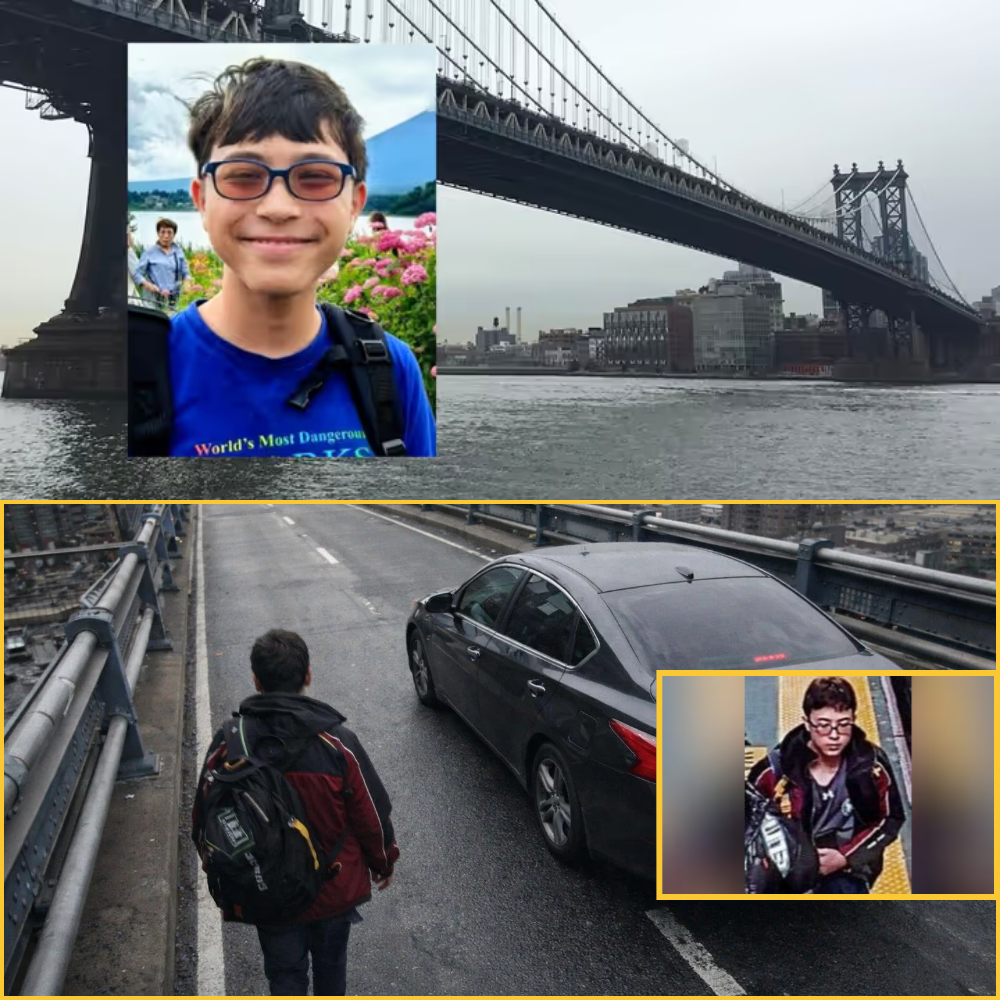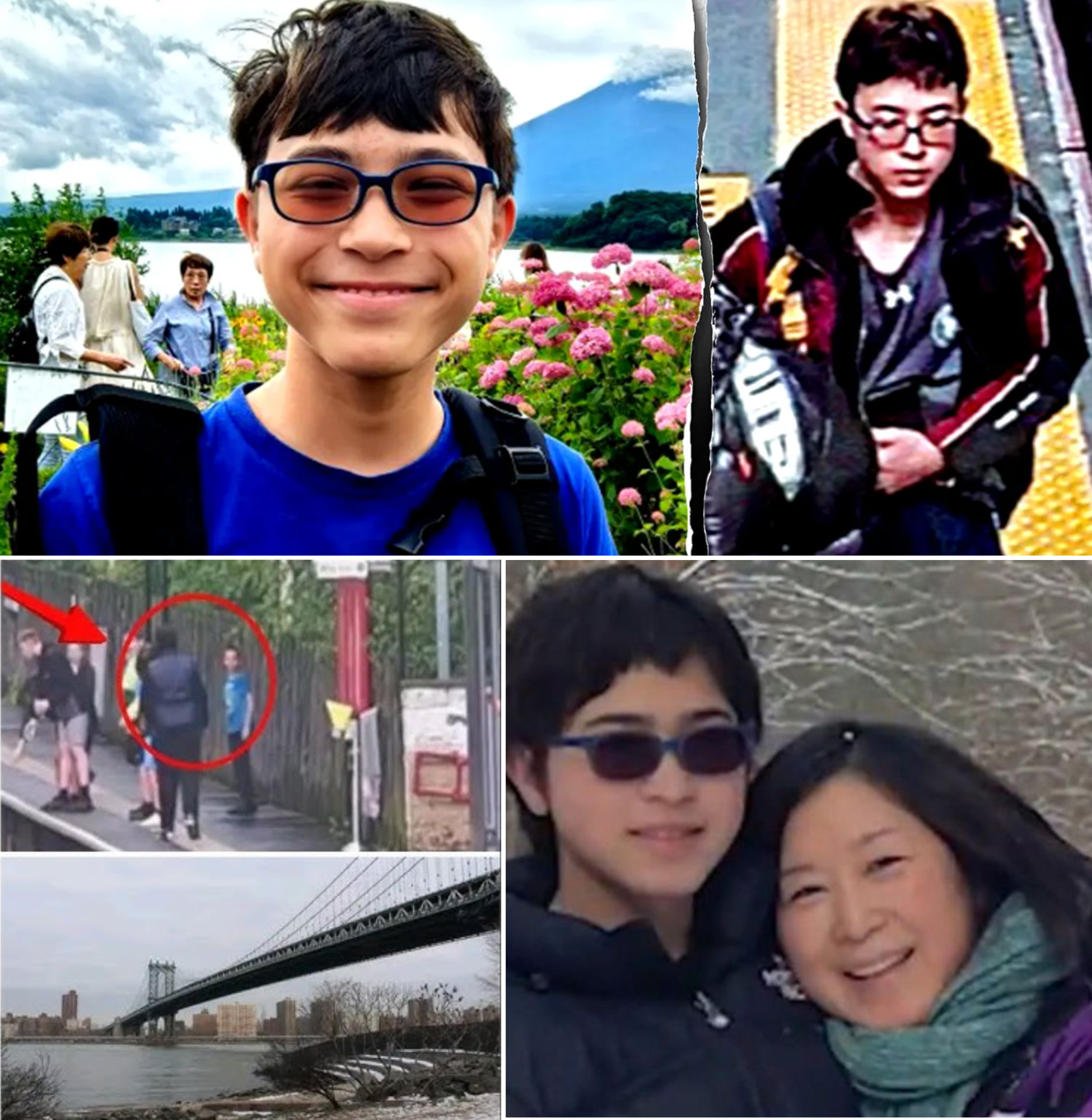
Suffolk County Police have sharpened the timeline in the disappearance of 15-year-old Thomas Medlin from Saint James, Long Island, incorporating cellphone location data from Lower Manhattan and a critical surveillance sighting in Brooklyn just 14 seconds before all visibility ends. The details, released amid ongoing searches and digital analysis, compress the events of January 9 into a sequence that leaves investigators—and the public—confronting a narrow, terrifying window on the Manhattan Bridge.
Thomas left The Stony Brook School around 3:30 p.m., heading to the adjacent Long Island Rail Road station for a train to Manhattan. He surfaced on security footage at Grand Central Terminal about 5:30 p.m., confirming his entry into the city. From Grand Central, his movements traced through Lower Manhattan, where cellphone pings registered activity near Cherry and Rutgers streets. These signals suggest deliberate navigation in the dense downtown area, possibly toward the East River bridges, before the path converged on the Manhattan Bridge pedestrian walkway.
The Brooklyn sighting marks the sharpest edge of the mystery. Surveillance near Sands Street and Jay Street—points where the Manhattan Bridge feeds into Brooklyn—captured Thomas 14 seconds prior to vanishing from monitored paths. This brief appearance positions him at the bridge’s Brooklyn terminus, yet no footage from pedestrian exits on either side records him completing the crossing or departing on foot. The absence creates an abrupt cutoff: he reaches the edge of Brooklyn visibility, then ceases to exist in the surveillance net.
Cellphone data adds lethal precision. The device showed final activity at 7:09 p.m., with investigators actively pinging it during the search until the signal vanished. One minute later, at 7:10 p.m., a nearby camera recorded a clear splash in the East River beneath the bridge. Police note Thomas was never observed leaving via any path exits, directing resources toward the river as the likely endpoint—whether from an accidental fall, deliberate act, or other circumstance. No criminality is indicated at present, but the convergence of ping loss, unseen exit, and water disturbance keeps all scenarios open.
The East River’s conditions—strong tidal currents, January cold, and variable depths—have severely hampered recovery. Marine units, divers, and aerial support focus sweeps around the bridge’s midpoint, targeting the splash zone, yet debris, flow, and low visibility repeatedly thwart efforts. Searches extend along adjacent shorelines and waterways, but progress remains slow.
Initial family reports suggested Thomas traveled to Manhattan to meet someone from the Roblox gaming platform. His mother portrayed him as a quiet, kind teen fond of video games and friends, making the independent city trip unusual and worrisome. Suffolk County Police, after thorough review of social media, gaming accounts, and communications, ruled out any connection to online interactions or Roblox. The department stresses avoiding speculation and prioritizing solid leads over unverified narratives.
The Manhattan Bridge pedestrian path, scenic yet solitary at dusk, amplifies the isolation. The 14-second Brooklyn frame implies a near-completion of crossing—perhaps a pause, glance back, or final step—interrupted irreversibly. Analysts examine the clip for nuances: gait, head turns, proximity to railings, or encounters with others. Witnesses from Lower Manhattan, the bridge walkway, or Brooklyn’s Dumbo and Downtown zones between 6:00 p.m. and 9:00 p.m. on January 9 are urged to provide dashcam video, observations, or fragments that might fill gaps.
Community mobilization stays robust. Long Island vigils feature photos of Thomas in his black jacket with red stripes, dark sweatpants, glasses, and backpack. The Suffolk tip line receives steady calls, though many reported sightings prove unrelated. Digital efforts via #FindThomasMedlin and #BringThomasHome recirculate police timelines, photos, and appeals for information.
The family’s pain surfaces in public statements of thanks for support alongside requests for privacy amid grief. They have posted rewards for actionable video or tips, reflecting urgent need for closure. Police maintain digital scrutiny—cross-referencing messaging, location logs, and January 9 patterns—to solidify the sequence.
Missing-persons cases often hinge on such slivers: a Lower Manhattan ping tracing intent, a 14-second Brooklyn capture marking proximity to escape or endpoint. The Lower Manhattan signals indicate purposeful city traversal, possibly bridge-bound, while the Brooklyn glimpse suggests a threshold moment severed abruptly. The timed splash casts a somber shadow over the facts.
Authorities renew pleas for information to Fourth Squad Detectives at 631-854-8452 or the anonymous Crime Stoppers line at 800-220-TIPS. Three weeks on, the East River persists beneath the bridge, silent guardian of January 9’s unresolved seconds. Hope endures that overlooked footage, witness recall, or eventual river yield will deliver answers—reunion or the grim certainty families dread yet require.
Those 14 seconds before vanishing linger as the case’s sharpest fracture: a boy almost across, almost safe, then gone in the span of a breath. In New York’s vast grid, one teen’s journey shrank to Brooklyn’s edge, leaving loved ones anchored to fragments of data and an unyielding search.