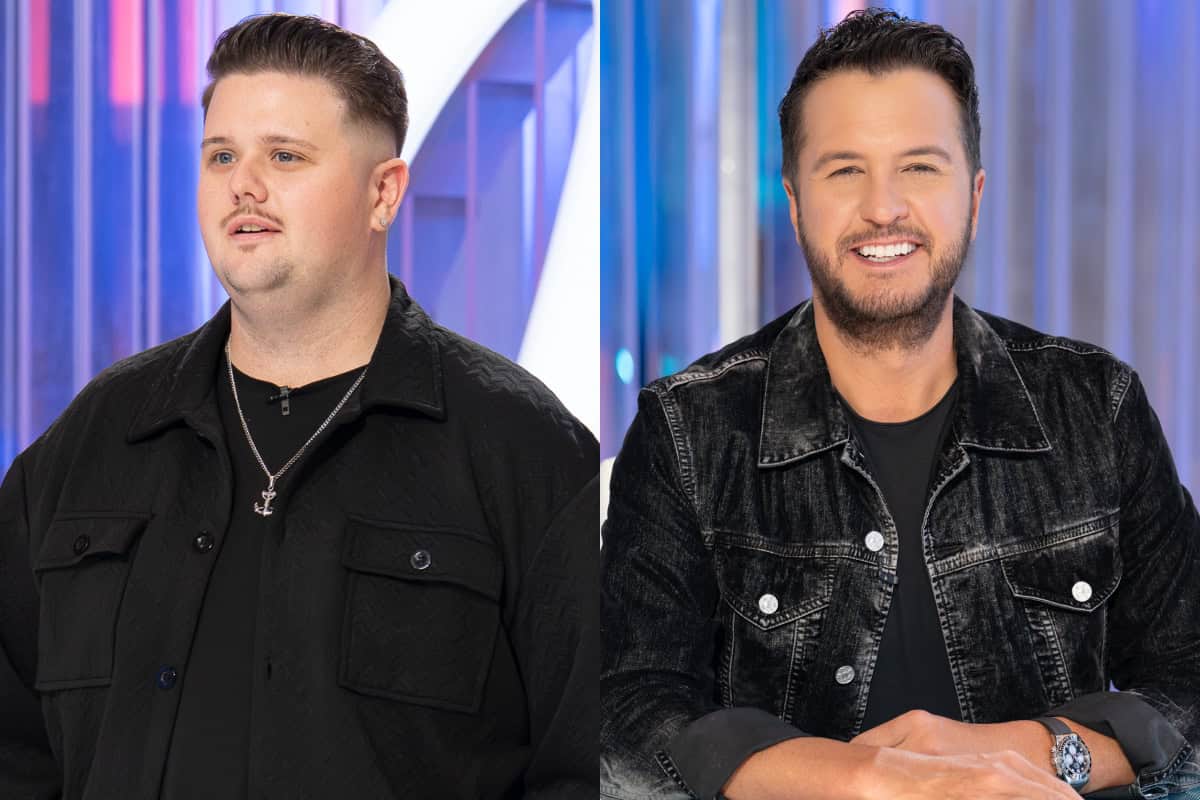
Philmon Lee didn’t stumble onto the American Idol stage by accident. The 25-year-old singer-songwriter from LaGrange, Georgia, carried a lifetime of preparation, setbacks, dreams, and family support into that audition room. When the truth of his story unfolded during his powerful performance in Season 24 auditions (airing in early 2026), the judges’ reaction crystallized everything in one unforgettable line from Luke Bryan: “You look like you were born to sing.”
Growing up in a music-loving household, Lee was immersed in melody from childhood. His father, Philmon Sr., served as his greatest mentor, guiding him through early musical explorations and instilling a deep appreciation for performance. The family often gathered around the television to watch American Idol, turning the show into a shared ritual and planting the seed of aspiration. “Growing up, you always watched ‘American Idol,’ especially in our house,” Lee recalled in pre-audition interviews. “It was always a topic that we talked about… to try and get on.” Those evenings fueled daydreams of one day standing before the judges himself.
Music became more than a hobby—it defined his identity. After dropping out of college, Lee pursued his passion full throttle, eventually signing with a major label and hitting the road as a musician. The experience was exhilarating: late-night gigs, studio sessions, and the thrill of connecting with audiences. Yet the industry’s unpredictability took its toll. Opportunities dried up, contracts shifted, and life pulled him in new directions. He stepped away from the spotlight, finding stability in a day job selling life insurance. By all outward appearances, he settled into a conventional routine—professional, reliable, grounded.
But the fire never extinguished. Lee continued writing songs, performing locally when he could, and nurturing the belief that his voice deserved to be heard. His family remained his anchor: supportive through the highs of early success and the lows of doubt. “My family, they were there every step of the way,” he shared. “The nights that I would cry because I’m not singing, I’m not doing music, and I thought I would never have another chance at it. They were definitely there for every single one of those moments.” When the chance to audition for American Idol arose again, it felt like a full-circle moment—a second shot at reclaiming the dream he’d once chased so fiercely.
On audition day, Lee walked in calm and unassuming. To the casual observer, he was just another hopeful: a young professional in everyday clothes, no flashy persona or entourage. But as soon as he opened his mouth to sing Percy Sledge’s (and later Michael Bolton’s) classic “When a Man Loves a Woman,” the room transformed. His raspy, soulful tone filled the space with effortless power—smooth runs, emotional depth, and a natural command that belied his day-job exterior. He closed his eyes at times, lost in the music, bending slightly at the waist as the notes poured out. The delivery was raw, heartfelt, and technically impressive, showcasing years of honed skill.
The judges—Luke Bryan, Lionel Richie, and Carrie Underwood—were visibly stunned. Lionel Richie leaned forward, praising the authenticity and storytelling in Lee’s voice. Carrie Underwood nodded appreciatively, moved by the vocal control and emotional resonance. But it was Luke Bryan, a fellow Georgian, who captured the moment’s essence. After the final note faded, Bryan declared, “You look like you were born to sing.” The words hung in the air, summing up not just the performance but the entire arc of Lee’s life. Richie echoed the sentiment, marveling at how someone who spent his days in insurance could unleash such innate talent. The panel’s unanimous “yeses” came swiftly, along with a golden ticket to Hollywood Week.
Lee’s backstory added profound layers to the moment. He revealed his past major-label deal, the road life, the eventual pivot to stability, and the lingering pull of music. “I do insurance now, but that’s not the end goal,” he told the judges. “I want to sing every single night if I can. I have a voice, and I want it to be heard.” The vulnerability—admitting doubts, tears, and family support—made the triumph feel earned. His father’s influence, the childhood Idol viewings, the professional detours—all converged in that audition, proving the path, though winding, had led exactly where it was meant to.
The performance quickly went viral, with clips circulating on YouTube, TikTok, and social media. Fans praised his raspy tone, stage presence, and emotional delivery, with many predicting a deep run in the competition. Comments flooded in: “What a voice,” “He’s the winner,” “Incredible.” Local Georgia outlets celebrated their hometown hero, highlighting how his story inspires others to chase dreams regardless of age or circumstance. “I want to inspire people and never stop chasing your dreams,” Lee said post-audition. “There’s not an age limit on it.”
As Lee advances to Hollywood, the pressure builds, but so does the momentum. His journey reminds viewers why American Idol endures: it uncovers hidden talent, celebrates perseverance, and proves that destiny often waits patiently behind ordinary doors. Philmon Lee arrived on that stage not by chance, but by years of quiet dedication, family encouragement, and an unyielding belief in his gift. When Luke Bryan spoke those simple, powerful words—“You were born to sing”—it wasn’t just praise for a performance. It was recognition of a truth that had been shaping his life all along.